

AI CERTS
2 hours ago
SoftBank AI Deal: $4B DigitalBridge Infrastructure Buy
However, skeptics warn of regulatory hurdles and capital intensity. Meanwhile, market watchers see a direct link between the transaction and Masayoshi Son’s bold AI vision. This article breaks down strategic motives, financial terms, market response, and technical implications. Furthermore, it highlights forthcoming approvals and possible headwinds. Professionals will also find certification pathways to deepen their understanding of AI trends.
Deal Overview Snapshot Details
SoftBank will pay $16.00 per DigitalBridge share, a 15 percent premium to the December 26 close. Consequently, the enterprise value reaches roughly $4 billion. DigitalBridge’s board unanimously approved the agreement after a special committee evaluation. Therefore, the SoftBank AI Deal now awaits shareholder and regulatory consent, with closing expected in late 2026. Meanwhile, SoftBank plans to retain DigitalBridge as a distinct platform under CEO Marc Ganzi. That structure should minimize immediate integration friction while preserving talent.
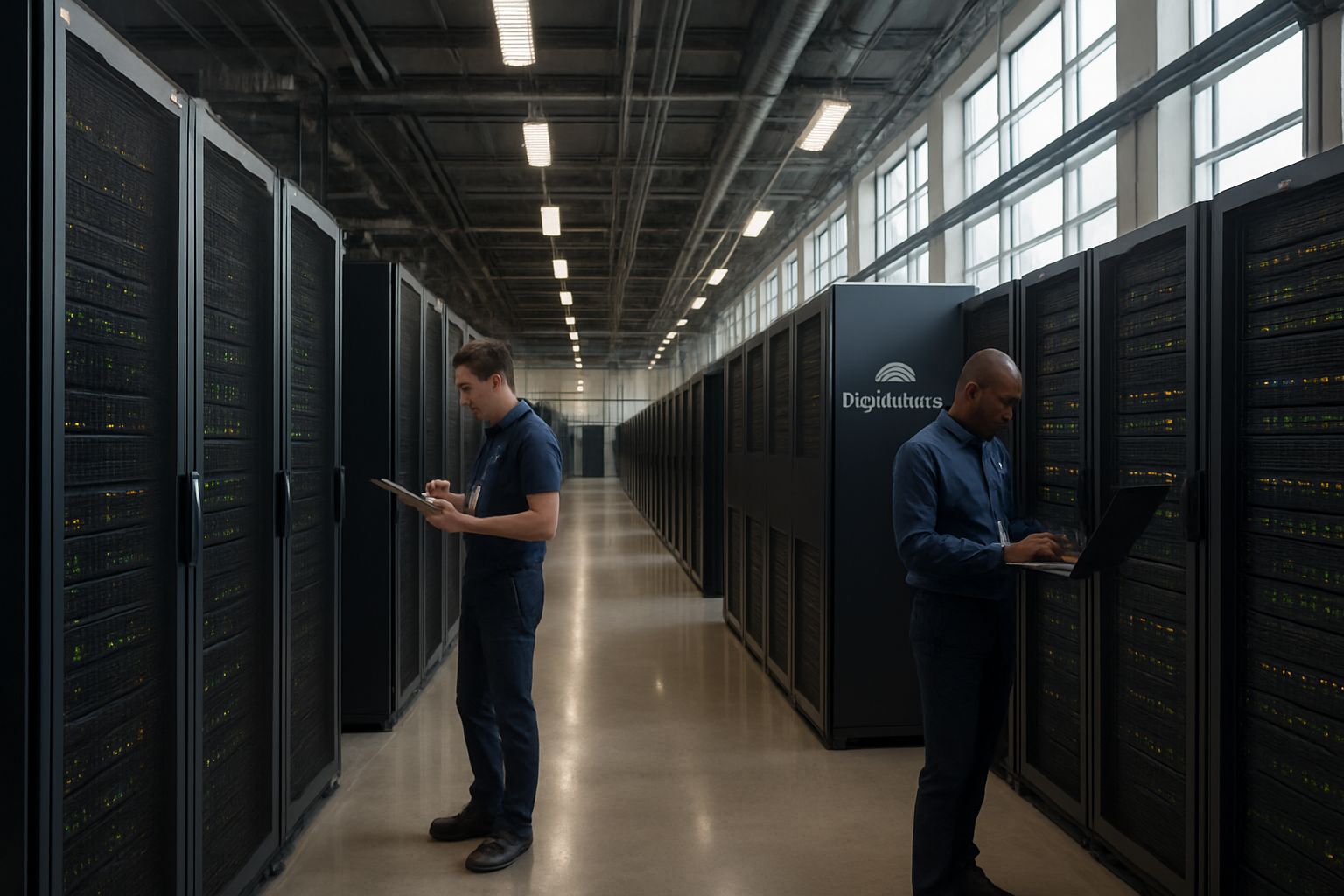
In short, the acquisition offers speed without dismantling the target’s operating model. Next, we examine why infrastructure capacity sits at the heart of SoftBank’s strategy.
Strategic Infrastructure Ambitions Drive
Masayoshi Son argues that future AI systems require unprecedented compute, connectivity, and power. Moreover, the SoftBank AI Deal secures a diversified portfolio of data centers, towers, and fiber routes. DigitalBridge manages approximately $108 billion in assets, giving SoftBank instant global infrastructure reach. Consequently, SoftBank can support mega-projects such as the Stargate AI facility backed by OpenAI. In contrast, building comparable capacity from scratch would consume years and billions in additional capital. Additionally, DigitalBridge’s 5.4 GW development pipeline offers a ready power bank for intensive model training.
These strategic benefits explain the deal’s rich valuation. Overall, infrastructure access, not financial engineering, drives this transaction. Financial specifics further clarify SoftBank’s aggressive posture.
Financial Terms And Premiums
The bid offers a 15 percent premium to the pre-announcement close and roughly 50 percent to the 52-week average.
- Purchase price: $16.00 per share.
- Enterprise value: approximately $4 billion.
- Premiums: 15 percent to last close, 50 percent to average.
- Assets under management: about $108 billion.
Furthermore, analysts note the SoftBank AI Deal valuation caps near-term upside for public shareholders. Nevertheless, many funds accepted the price, citing limited alternative buyers for such specialized infrastructure. SoftBank funded the SoftBank AI Deal with existing cash, recent asset sales, and flexible credit lines. For instance, the group liquidated its remaining Nvidia stake for $5.8 billion in October. Consequently, liquidity appears sufficient without dilutive equity issuance. However, execution risks persist because operating AI-grade data centers demands continuous reinvestment.
The financial math looks manageable, yet long-term capital needs remain significant. Market sentiment reflects this mixed picture.
Market Reaction And Risks
DigitalBridge stock immediately rallied toward the $16 offer, confirming market confidence in deal closure. Additionally, RBC downgraded the shares, arguing upside is now capped until completion. Meanwhile, JPMorgan highlighted strategic logic but warned about regulatory scrutiny. Commentators repeatedly referenced the SoftBank AI Deal as the year’s boldest infrastructure wager. In contrast, Financial Times columnists questioned SoftBank’s increasing concentration in speculative AI ventures. Moreover, energy experts caution that global data centers could boost electricity demand 165 percent by 2030. Consequently, overbuilding capacity might erode returns if demand projections miss. Nevertheless, Masayoshi Son insists the risk is outweighed by first-mover advantage.
Thus, the market remains divided over the risk-reward balance. Technical factors shed additional light.
Technological And Power Requirements
AI training clusters need dense GPUs, high-bandwidth interconnects, and advanced cooling. Therefore, data centers optimized for AI workloads differ from traditional enterprise facilities. DigitalBridge already operates hyperscale campuses with liquid cooling and multi-gigawatt power feeds. Furthermore, its pipeline adds 5.4 GW, positioning SoftBank to serve power-hungry clients. In contrast, rivals still scramble for land, permits, and transformers. Consequently, the SoftBank AI Deal could accelerate model development timelines for partners like OpenAI. Professionals may upskill via the AI Learning & Development™ certification.
Overall, the SoftBank AI Deal shows that technical readiness underpins the economic thesis. Leadership perspectives reinforce this theme.
Regulatory Path And Outlook
The transaction requires antitrust clearance and possible national security review under CFIUS. Moreover, European regulators may scrutinize cross-border control of critical infrastructure. SoftBank and DigitalBridge expect closure in the second half of 2026. Nevertheless, extended reviews could delay synergies and raise financing costs. Consequently, SoftBank inserted customary break-fee provisions to protect downside. Analysts view the SoftBank AI Deal timetable as realistic but not guaranteed. Masayoshi Son plans to maintain DigitalBridge leadership to ease political concerns.
Regulatory approval remains the largest external variable. We now summarize key takeaways.
Conclusion And Next Steps
SoftBank has wagered $4 billion to secure essential AI capacity at scale. Consequently, the SoftBank AI Deal could reshape competition for compute, power, and fiber. Benefits include instant global reach, proven management, and a vast data centers pipeline. However, regulatory reviews, capital needs, and volatile demand introduce significant uncertainty. Nevertheless, Masayoshi Son remains convinced that speed outweighs risk in the race toward artificial super intelligence. Industry professionals should watch approval milestones and capacity buildouts closely. Additionally, enhancing skills through the referenced certification can prepare teams for upcoming AI projects. Explore the course today and position your organization for next-generation opportunity.


