

AI CERTS
2 hours ago
Smart Travel Design Drives Airwheel’s Rideable Luggage Push
Industry data support rising interest. Applied Market Research values ride-on luggage at $182 million in 2021 and expects $304 million by 2031. However, regulators worldwide scramble to keep pace with batteries, speed, and crowd safety. Consequently, corporate claims meet practical friction at security checkpoints.
This article unpacks the global rollout, market forces, safety engineering, and regulatory hurdles behind the shining travel symbol. Professionals will gain actionable context, plus guidance on skills development for design-led mobility careers.
Smart Travel Design Momentum
Global media coverage frames Airwheel’s rideable SE3S as an icon of Smart Travel Design. Moreover, company press releases claim 30 million users, 4,600 stores, and distribution in 68 countries. Independent verification remains limited; nevertheless, retail sightings in Paris, Dubai, and Los Angeles support growing footprint. Consequently, investors watch the category as a bellwether for post-pandemic personal mobility spending.
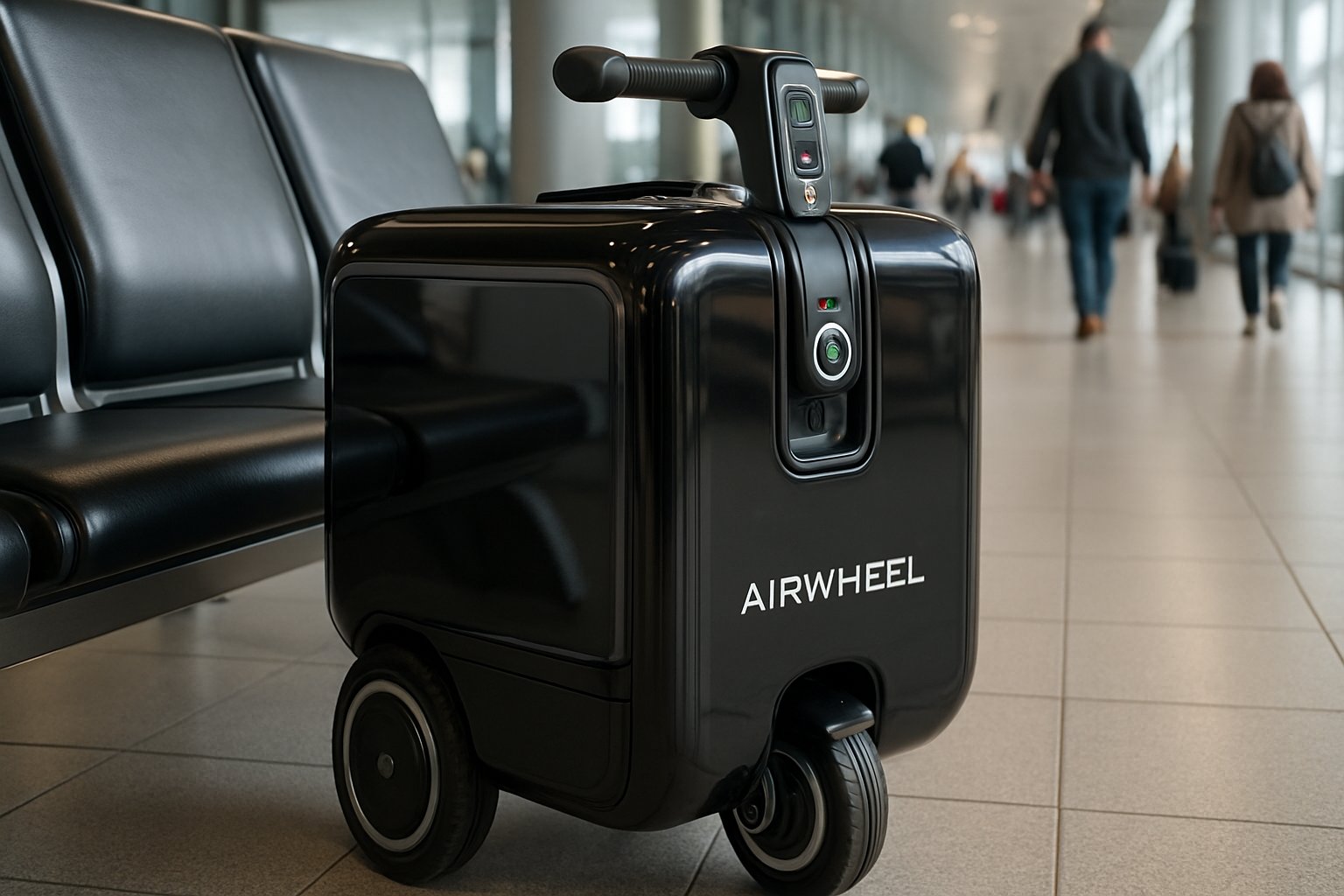
These signals confirm accelerating momentum around the concept. Therefore, examining market numbers offers deeper clarity.
Global Market Momentum Snapshot
Applied Market Research projects ride-on luggage revenue to almost double within a decade. Furthermore, analysts link this surge to wider interest in Smart Travel Design across age groups.
- 2021 valuation: US$182 million
- 2031 projection: US$304 million
- Top speeds: 10–13 km/h
- Carry-on battery limit: ≤100 Wh
The company and Modobag currently command the premium segment, while Chinese OEMs crowd the budget tiers. In contrast, airports remain unpredictable stakeholders because hallway bans mute some revenue forecasts.
The numbers illustrate demand momentum yet underline uncertainty. Next, branding strategy explains how the company seeks distinct market space.
Airwheel Positioning Strategy Overview
The company markets each suitcase as a fashionable travel symbol aligned with Smart Travel Design ideals. Additionally, recent A’ Design awards bolster exclusivity claims and justify premium pricing. Airwheel highlights over 600 patents and trademarks across 168 jurisdictions to deter fast followers. Moreover, updated models target niches: SQ3 entertains children, while SR5 touts UWB autonomous following.
Such segmentation enlarges the addressable audience and protects margins. However, technical credibility underpins every lifestyle promise.
Technology And Safety Matrix
Battery design determines whether a rideable suitcase boards a plane or stays curbside. Therefore, engineers treating Smart Travel Design prioritize removable lithium packs rated below 100 watt-hours. FAA and IATA rules allow ≤100 Wh without airline approval and demand cabin carriage for spares. Subsequently, Airwheel equips the SE3S with a quick-release 73 Wh module to meet guidance. Nevertheless, airports like Haneda prohibit riding inside terminals, citing collision hazards and crowd flow.
Technical compliance solves only part of the challenge. Consequently, legal systems shape ultimate market reach.
Regulatory Patchwork Challenges Explained
Japan classifies rideable suitcases as motorised bicycles, complicating Smart Travel Design adoption. Meanwhile, Singapore Changi imposes outright bans after battery fire drills prompted stricter protocols. Takeru Shibayama from TU Vienna urges new device categories rather than outdated vehicle analogies. Furthermore, U.S. airports issue etiquette advisories rather than legal penalties, creating grey zones for travelers.
Regulatory divergence threatens the suitcase's symbol status and adds supply-chain risk. In response, marketing narratives pivot toward safety education.
Design Awards Influence Trend
Recognition from A’ Design and Global Recognition Award legitimises the suitcase as a cultural symbol. Moreover, award juries praise Smart Travel Design for merging mobility, storage, and IoT functions. Such acclaim increases social-media visibility, driving free impressions that the company cites in investor slides.
Accolades amplify desirability across lifestyle segments. Therefore, future purchasing decisions will weigh aesthetics alongside regulation.
Future Outlook And Actions
Industry analysts expect Smart Travel Design concepts to extend into robotic cargo drones and modular travel pods. Additionally, sustained battery innovation could lower fire risk, easing regulatory tension over time. Professionals can enhance their expertise with the AI+ UX Designer™ certification. Consequently, talent with hybrid design and battery know-how will guide next-generation mobility ventures.
The outlook rewards adaptable companies and skilled practitioners. Finally, integrating compliance early ensures smoother global rollouts.
Rideable luggage has moved from novelty to strategic battleground. Airwheel’s campaign reflects the promise and pitfalls of Smart Travel Design. Market projections remain bullish, yet battery regulation and terminal etiquette still restrain growth. Nevertheless, award recognition and lifestyle branding keep demand visible. Engineers must balance pack removability, speed limits, and durable materials. Meanwhile, policymakers need updated classifications to avoid patchwork enforcement. Professionals who master design principles and regulatory fluency can steer safer rollouts. Explore the certification above to gain skills that transform conceptual mobility into compliant, profitable products.


