

AI CERTs
2 hours ago
Slate V1 Launch: Worker Summary And Swarm Coding Breakthrough
March 2026 delivered another jolt to the developer tools market. Random Labs officially unveiled Slate V1, a “swarm-native” autonomous coding agent. The launch attracted attention because it promises parallel agent workflows across million-line repositories. This analysis offers a Worker Summary for engineering leaders evaluating the fresh platform. Consequently, readers will grasp how Slate orchestrates agents, controls budget, and mitigates risk. Moreover, the article positions Slate within the broader trend toward multi-agent “swarm coding” architectures. Transitioning from single-prompt assistants to coordinated swarms could reshape daily engineering practice. However, the shift introduces new operational and security questions that demand scrutiny. Therefore, a balanced, data-driven view remains essential. The following sections deliver that perspective in precise, compressed form.
Swarm Coding Core Ideas
Swarm coding describes many specialized AI agents working concurrently under a central orchestrator. Instead of one large model, the tool deploys smaller expert workers for planning, execution, and research. Consequently, tasks like refactoring, test generation, and documentation proceed in parallel.
The tool’s kernel assigns subtasks, collects episode results, and weaves them into a persistent memory. In contrast, single-agent assistants often lose relevant context during long sessions. Furthermore, episodic storage preserves decision chains without generating endlessly growing transcripts.
These concepts underpin the platform’s performance and cost promises. Subsequently, understanding the architecture clarifies where advantages and risks emerge.
Inside Slate V1 Architecture
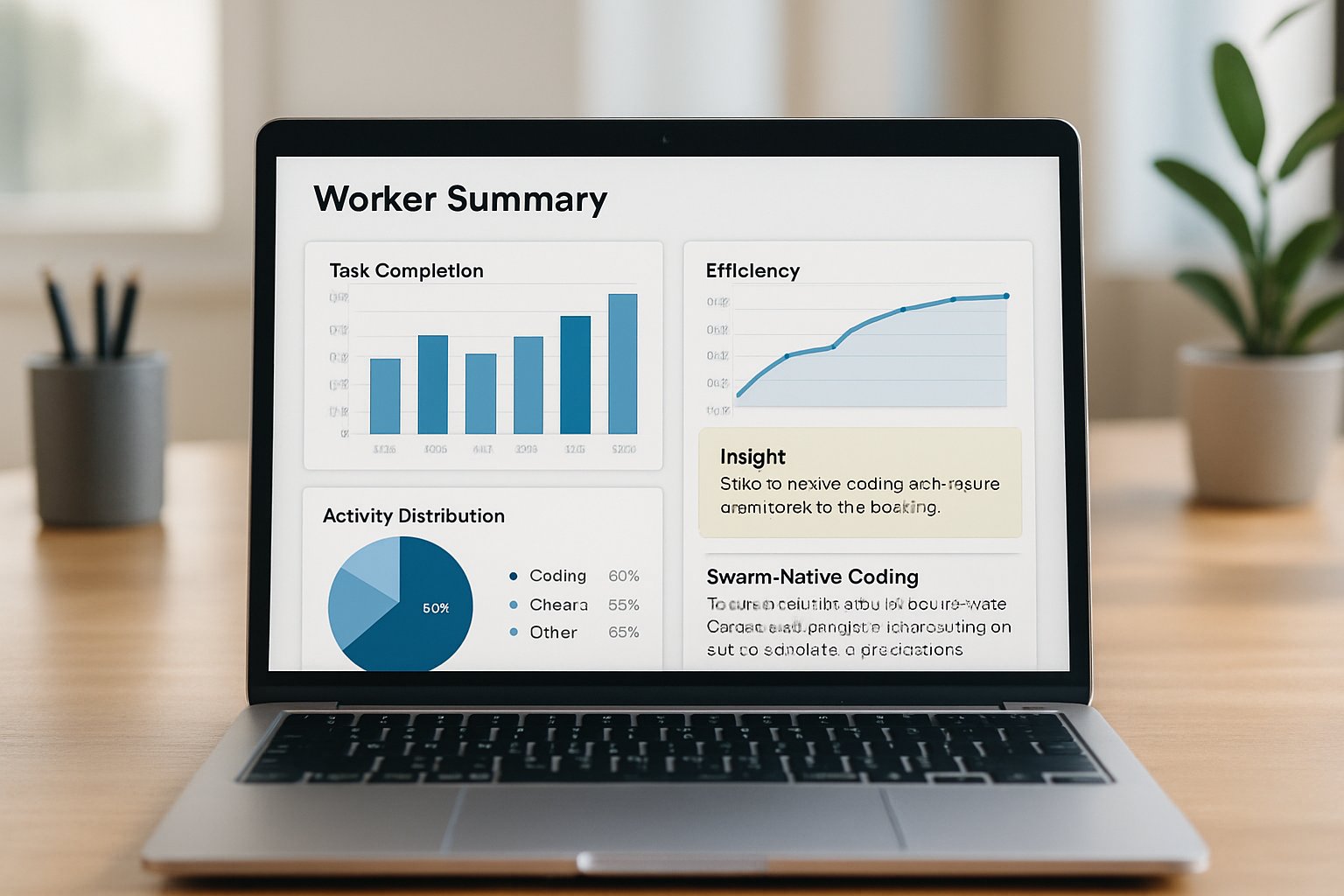
VentureBeat reports that Slate V1 combines a command-line interface, dashboard, and documentation set. Engineers interact through the CLI while the orchestrator coordinates remote models. A real-time Worker Summary appears in the CLI, showing active tasks. Additionally, Random Labs brands this orchestration approach “Thread Weaving” because worker outputs become linked episodes.
Each worker may call models such as Claude Sonnet 4.5 or GPT-5.1. Model selection happens automatically based on task complexity and budget. Moreover, upcoming integrations with Anthropic Codex promise broader model diversity.
Random Labs claims the system handles repositories up to two million lines. Meanwhile, long-horizon sessions can run for several hours without manual supervision. Worker Summary dashboards visualize active agents, credit burn, and memory depth.
The architecture blends orchestration, memory, and automatic model choice into one compressed layer. Nevertheless, memory management deserves deeper inspection next.
Thread Weaving Memory Model
Thread Weaving captures each worker’s interaction as a compact episode containing goal, tool calls, and results. Those episodes become stitched together, enabling coherent reasoning across thousands of steps. Consequently, the platform avoids lossy, compressed summaries that degrade code context.
Random Labs compares the process to Git commits: small, meaningful snapshots rather than a monolithic diff. Additionally, the orchestrator prunes irrelevant episodes, keeping attention focussed on active objectives. The vendor argues this approach cuts token costs while maintaining crucial state.
Industry analysts appreciate the idea but request independent benchmarks before embracing the claims. Therefore, leaders should demand measurable evidence during trials.
Thread Weaving offers promising context retention. However, pricing mechanics shape whether benefits translate into net savings.
Pricing And Budget Controls
Slate sells usage through credits assigned per worker action. For example, Normal agents cost 0.1 credits, Smart cost 0.2, and Extended cost 0.15. Moreover, permission modes—Default, Auto-accept, or Yolo—govern whether agents execute shell commands unprompted.
The CLI exposes limits, warnings, and aggregated Worker Summary reports for finance teams. Consequently, unexpected loops should surface before invoices spiral. Nevertheless, multi-agent systems can still generate billing surprises during long exploratory runs.
Leaders ought to set daily credit ceilings and enforce review gates on expensive tasks. In contrast, single-model assistants rarely require such granular guardrails.
Cost controls exist but demand disciplined configuration. Subsequently, teams must weigh these efforts against potential productivity gains.
Benefits For Engineering Teams
Parallelism stands as the headline advantage. Developers can request simultaneous bug hunts, documentation fixes, and test generation without manual context switching. Furthermore, specialized agents accelerate complex refactors by dividing labor among domain experts.
Early users quoted in docs claim debugging hours dropped by 40%. Moreover, VentureBeat cites internal Terminal Bench boosts on select tasks. Meanwhile, episodic memory supports multi-day feature delivery without repeating prompts.
The standout advantages include:
- Faster turnaround through parallel worker threads.
- Lower token spend via dynamic model selection.
- Better context retention from compressed episodes.
- CLI visibility with real-time Worker Summary metrics.
Collectively, these gains hint at measurable ROI. However, challenges still lurk beneath the surface.
Challenges And Open Questions
Security ranks first among skeptic concerns. Agent swarms expand the attack surface through automated shell and network operations. Therefore, permission tuning and audit logs become mandatory.
Secondly, cost unpredictability persists despite credit dashboards and caps. In contrast, fixed-price SaaS tools feel simpler for finance teams. Additionally, analysts caution against “agent washing” marketing without third-party benchmarks.
Independent case studies remain limited; only an unnamed fintech founder is quoted so far. Consequently, potential buyers should seek reference calls and proof-of-concept trials.
The unknowns warrant careful due diligence. Subsequently, skill development may mitigate some operational risk.
Future Outlook And Skills
Multi-agent orchestration appears poised to complement, not replace, human engineers. Meanwhile, demand for prompt architects and swarm coordinators will rise. Professionals can deepen expertise through the AI+ UX Designer™ certification. Moreover, Random Labs suggests forthcoming training that teaches best practices for orchestrating worker swarms. Maintaining a clear Worker Summary will likely become an accepted engineering ritual.
Career paths could include “agent reliability engineer” roles focused on safety, benchmarking, and memory optimization. Consequently, tooling familiarity combined with governance knowledge will command premium salaries.
The skills landscape is shifting quickly. Therefore, ongoing learning secures competitive advantage as swarm coding matures.
Slate V1 exemplifies the momentum behind agentic development tooling. Its parallel workers, episodic memory, and dynamic model selection promise meaningful productivity gains. However, security and budget concerns require disciplined processes, dashboards, and clear Worker Summary monitoring. Balanced evaluation, pilot projects, and independent benchmarks will separate hype from durable value. Meanwhile, engineers who master orchestration concepts will shape the next generation of software delivery.
Consequently, now is the time to experiment, learn, and certify your skills. Start by reviewing Slate’s docs, launching a small swarm, and pursuing specialized credentials. Take action today and turn experimentation into competitive edge.


