

AI CERTS
3 months ago
Shootify AI photography powers hybrid imagery for commerce
Moreover, founders Anna Ruiz and Anna Gunselman promise twenty-five percent conversion gains for merchants. Industry analysts want proof, yet early adopters already queue shipments to the Florida studio. This article unpacks the technology, market context, risks, and strategic steps for enterprise teams. Readers will see how a photographed item becomes synthetic campaign imagery in minutes. We also map the emerging regulatory field shaping AI visuals in commerce.
Ecommerce Visuals Pressure Mounts
Baymard Institute usability research shows fifty-six percent of shoppers first click Product images. Therefore, richer imagery correlates with faster purchase decisions and lower return rates. However, producing diverse angles, on-model scenes, and short videos remains expensive.
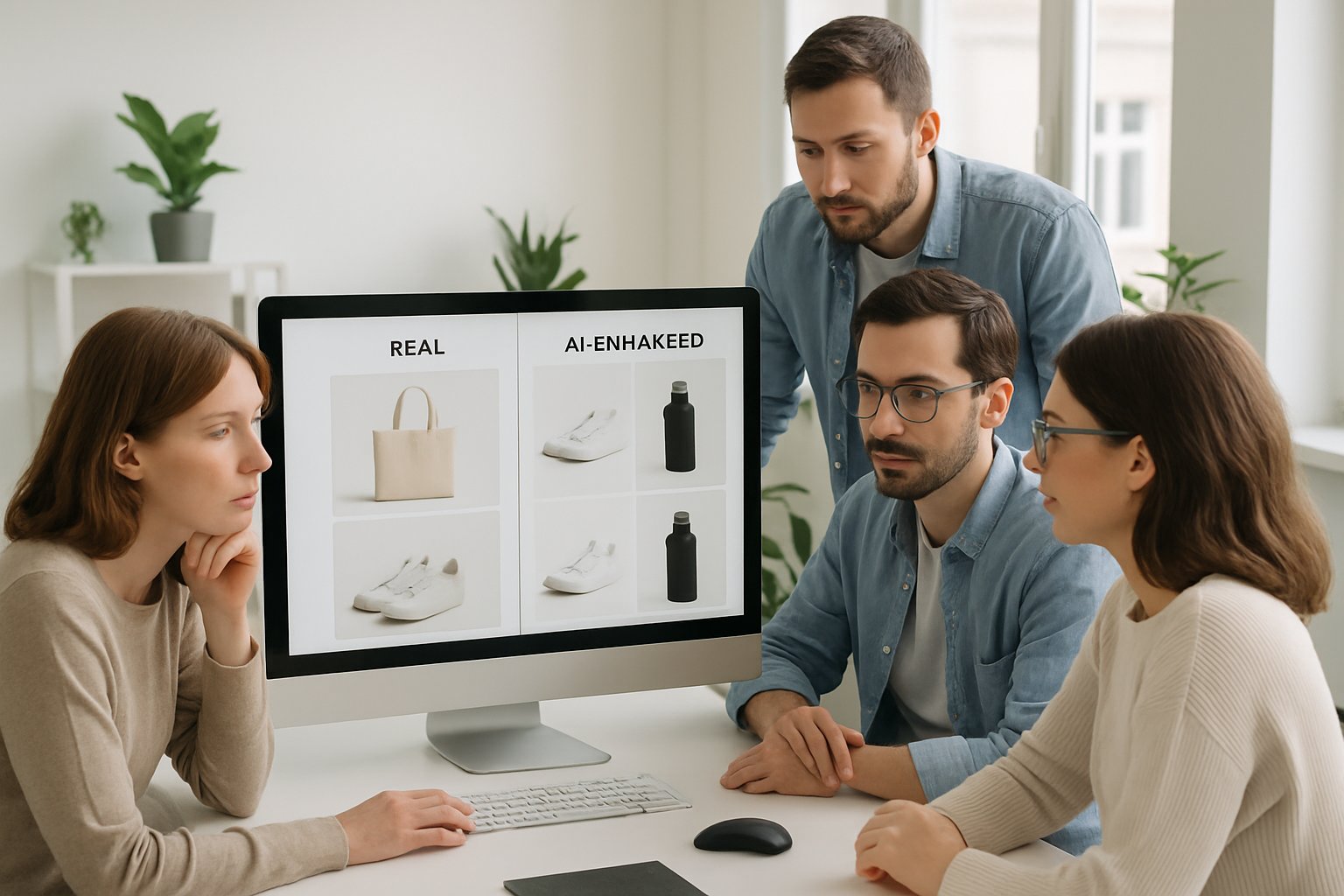
Market analysts value e-commerce visual services between one hundred sixty million and one billion dollars this year. Reports forecast eight to fourteen percent annual growth through 2034. Consequently, suppliers offering faster visuals advance while traditional studios risk stagnation.
Strong visual demand is undeniable. Still, budgets drive the search for smarter pipelines leading into our next section.
Shootify's Hybrid Workflow Explained
Shootify positions its service as a true hybrid pipeline. Clients ship items to Miami where technicians capture high-resolution stills under controlled lighting. Subsequently, editors isolate the item and feed it into generative models tuned for apparel, cosmetics, or electronics. Moreover, the process retains texture and color because the base pixel data comes from actual cameras.
Studio To Scene Flow
- Capture: Photographers shoot front, back, and detail angles against calibrated backgrounds.
- Generate: AI places the captured item onto diverse body types and settings.
- Compose: Designers refine shadows, reflections, and scale for believable imagery.
- Deliver: Final files export as JPEG, WebP, 3D glTF, or 360-degree spins.
Shootify AI photography appears throughout this flow, especially during the generate stage. Additionally, the studio lists AI model images starting at thirty-one dollars and premium edits reaching two hundred fifty. These published rates undercut many metropolitan agencies by wide margins. Co-founder Anna Gunselman says, “Every scene remains faithful because the garment began as a real photo.” Nevertheless, the promise requires rigorous quality control to avoid uncanny artifacts.
The workflow mixes authenticity with scale in a single studio. Next, we examine whether the promised savings hold under scrutiny.
Cost Speed Conversion Claims
Shootify AI photography marketing materials trumpet three headline metrics. First, a claimed sixty-five percent cost reduction compared with traditional location shoots. Second, production time allegedly falls by sixty percent. Third, merchants may see twenty-five percent conversion uplift. Furthermore, the studio links the figures to internal client tests, not audited studies. Analysts caution executives to request raw data before rewriting budget forecasts.
- Cost: minus 65 percent.
- Speed: plus 60 percent.
- Conversions: plus 25 percent.
In contrast, competitor Renderique eliminates cameras entirely and promises instant mockups from a single image. Consequently, buyers must balance authenticity against absolute speed. Brands selling fit-critical apparel may prefer Shootify’s retained texture. Others pushing impulse ads might choose an AI-only provider.
Metrics look impressive but remain self-reported. Therefore, due diligence is mandatory before scaling budgets, as our next landscape review shows.
Competitive Landscape Quickly Shifts
The visual race features SaaS apps, global studios, and cloud giants. Renderique, Prodshot AI, and AiShots integrate directly with Shopify dashboards. Moreover, Adobe and Canva embed diffusion models into designer toolkits. Midjourney and OpenAI also extend APIs for branded campaigns. However, none combine in-house cameras with AI at commercial scale except Shootify AI photography and a few boutique labs. Hybrid studios defend a moat of tangible lighting rigs, warehousing, and color calibration. Meanwhile, AI-first apps win on sheer throughput and price. Consequently, analysts expect segmentation rather than a single dominant model.
Competition grows fiercer monthly. Still, regulatory demands may decide which workflows survive, as the next section details.
Regulatory Ethical Hurdles Ahead
Meta now labels realistic synthetic imagery across Instagram and Facebook. The upcoming EU AI Act mandates machine-readable tags for many synthetic visuals used in commerce. Meanwhile, Amazon requires main listing images to depict the actual shipped item. Therefore, brands using pure AI face takedown risk. Hybrid pipelines, starting with real photos, reduce misrepresentation but still require transparent disclosure. FTC regulations on deceptive advertising remain platform agnostic. Additionally, likeness rights issues arise if generated models resemble real people.
Professionals can validate compliance through the AI Ethics for Business™ certification. Consequently, legal counsel now budgets for watermark audits and provenance logs. Shootify AI photography states it embeds metadata and follows platform guidance. Nevertheless, independent testing will confirm whether tags persist through reseller uploads.
Regulation is tightening fast. Next, we translate these constraints into actionable brand strategies.
Strategic Takeaways For Brands
Executives must weigh speed, authenticity, compliance, and cost. Shootify AI photography suits catalogs needing texture fidelity and lifestyle variety. E-tailers with minimal fit risks could choose an AI-only generator. Moreover, selecting a provider with written SLA for metadata retention reduces legal exposure. In contrast, testing two creative variants per SKU before rollout confirms actual conversion impact.
- Request raw before-after metrics from vendors.
- Audit disclosure labels against marketplace policies.
- Secure ethics training for creative leads.
Furthermore, teams should revisit image usage analytics quarterly. Commerce leaders who champion data transparency will earn shopper trust.
These steps build resilience. Finally, we consider future developments shaping next-year budgets.
Future Outlook Actions Forward
Generative models will improve shadow realism and hands interaction within twelve months. Consequently, cost gaps between AI-first and hybrid studios may narrow. Shootify AI photography plans to add virtual try-on and volumetric video next quarter. Moreover, industry standard bodies are drafting provenance schemas to track synthetic pixels. Brands embracing iterative testing, clear labeling, and certified ethics training will capture early mover advantage. Professionals can deepen skills through the AI Ethics for Business™ credential. In contrast, laggards may face compliance penalties and conversion loss.
Innovation continues, yet governance rises in parallel. Therefore, proactive planning today protects margin tomorrow.
Shootify AI photography demonstrates how a camera plus code can rewrite visual economics. Its hybrid approach lets brands turn one Product shoot into dozens of platform-ready assets. Moreover, compliance workflows and ethics certifications keep marketers ahead of tightening rules. Competitors offer pure generation speed, yet texture gaps remain. Therefore, assess your Product category, risk tolerance, and creative budget before choosing a partner. Run controlled tests using Shootify AI photography and an AI-only tool to verify lift. Subsequently, scale the winner, monitor returns, and refresh labels in line with policy updates. Ready to lead your Product visuals into 2026? Explore the linked ethics credential and act now. Shootify AI photography may soon set the baseline; early adopters will decide if the promise sticks.


