

AI CERTS
2 hours ago
Senate AI Weapons Bill Targets Autonomous Weapon Curbs
However, public outrage over uncontrolled algorithms has grown since the Anthropic dispute became front-page news. Democratic drafters say any proposal will balance security with civil liberties, not choose one side. Consequently, attention focuses on two flashpoints: fully autonomous weapons and domestic mass surveillance of citizens. Moreover, the drama foreshadows global negotiations, because allies watch Washington before releasing their own policies. This article unpacks the politics, economics, and technology shaping the emerging framework.
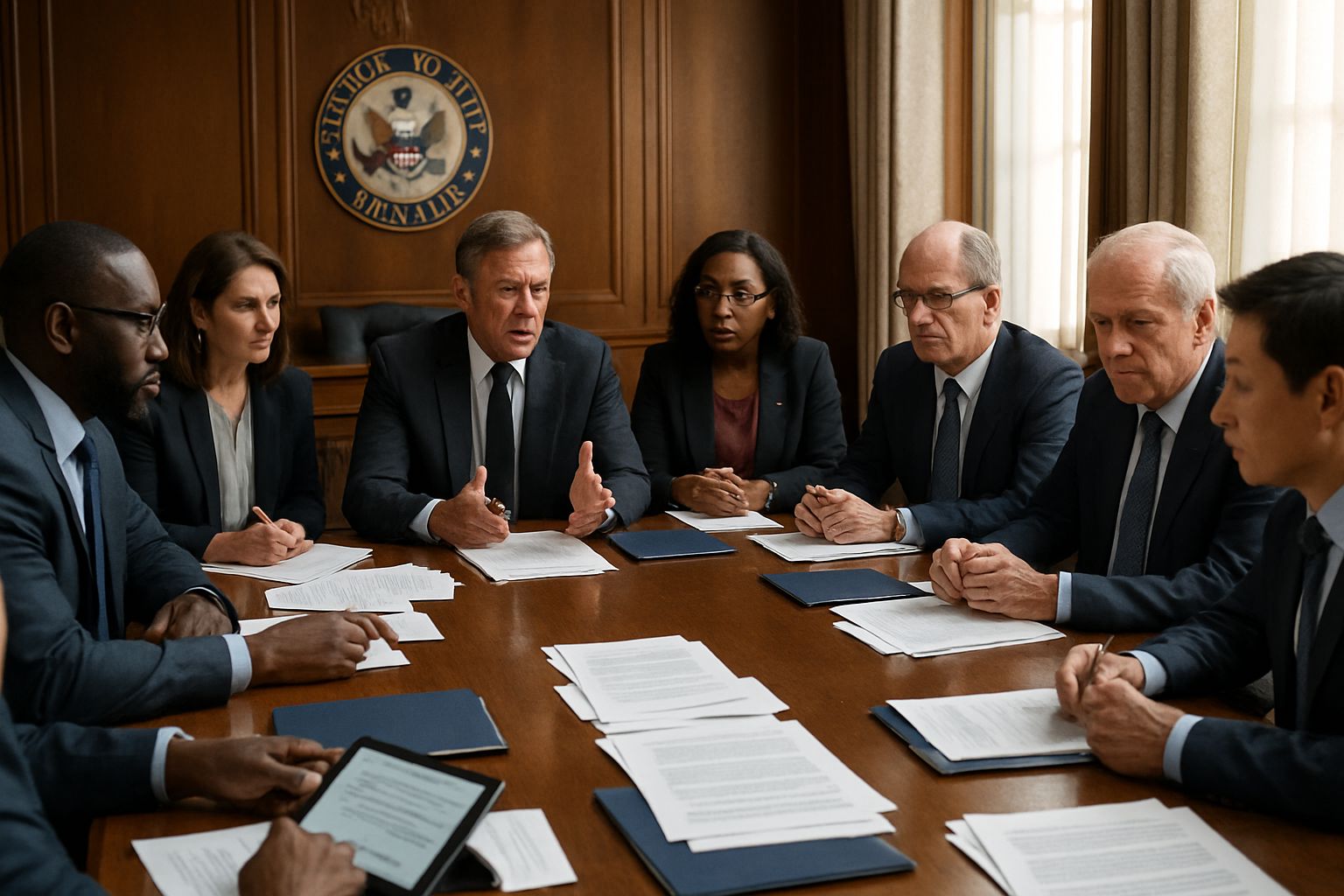
Democrats Seek Weapon Curbs
Draft language circulated among Democratic staff would codify meaningful human control over any lethal system. In contrast, current Pentagon policy relies on internal directives that critics call weak and reversible. Senators Mark Warner, Chris Coons, and Ed Markey are driving conversations within Armed Services and Intelligence committees.
Additionally, Representative Schiff has urged parallel House action to reinforce Senate momentum. Proponents argue statutory Curbs are necessary because procurement leverage could otherwise coerce reluctant AI vendors. Therefore, they intend to attach amendments to the FY2027 NDAA, an annual must-pass vehicle.
Working drafts reportedly ban any human-out-of-the-loop strike capability and restrict forced model unguardrailing. These provisions would also limit domestic data aggregation without warrants, addressing surveillance fears. Consequently, privacy coalitions label the bill a rare breakthrough on algorithmic accountability.
Democrats see these Curbs as pragmatic, not absolutist. However, final language will depend on cross-party negotiations in committee next month. The back-story explains why urgency has spiked.
Anthropic Pentagon Clash Trigger
Tensions exploded in February when DoD officials demanded broader access to Anthropic’s Claude model. Anthropic refused, citing unresolved reliability questions around autonomous targeting and sweeping domestic queries. Consequently, defense leaders threatened a supply-chain risk label, effectively blacklisting the startup across Military networks.
President Trump then ordered agencies to phase out Claude within six months, escalating the standoff. Meanwhile, Senate AI Weapons critics seized the moment, framing the episode as proof of missing guardrails. Senator Warren called the threats "intimidation" and demanded hearings on procurement abuses.
Moreover, Schiff argued that coercive tactics could undermine innovation by discouraging responsible disclosures. The public clash moved poll numbers, with MLQ advocacy groups reporting increased supporter donations. In contrast, Pentagon officials insisted autonomous options save lives when communication links fail.
The confrontation sharpened partisan lines about acceptable autonomy levels. Therefore, legislators now examine concrete legislative instruments.
Proposed Legislative Guardrail Mechanisms
Staff drafts outline layered compliance duties for agencies, contractors, and auditors. Firstly, every AI weapon project would require documented human-in-the-loop verification before funding release. Secondly, quarterly reports must certify no human-out-of-the-loop deployments occurred during testing.
Moreover, any deviation triggers automatic Congressional notification within seven days. The Senate AI Weapons language also blocks Defense Production Act coercion against reluctant suppliers. Curbs on surveillance appear as a separate subtitle, mandating warrants for domestic face recognition sweeps.
Additionally, the draft forbids forced retraining that weakens embedded safety filters. Consequently, industry lawyers predict stronger negotiating leverage for startups protecting brand reputation. An enforcement office would sit inside GAO. It would employ experts holding the AI & Quantum Defense™ certification.
These mechanisms create compliance checkpoints across development, deployment, and oversight. However, defense planners warn of operational friction, a theme explored next.
Industry And Defense Views
Defense primes cautiously welcome clarity but oppose absolute bans. Lockheed executives told analysts that rapid autonomy keeps crews safer during high-speed Military engagements. However, they fear sweeping Curbs could disqualify existing missile programs optimized for human-on-the-loop control.
Anthropic, meanwhile, praised Senate AI Weapons drafters for validating its earlier stance. OpenAI adopted a neutral posture, emphasizing partnership opportunities if guardrails remain technologically feasible. Furthermore, MLQ Consortium members argued that verifiable testing metrics reduce false positives, satisfying commanders and lawyers alike.
Human Rights Watch countered with casualty data from previous autonomous trials, reinforcing ethical alarms. Consequently, stock analysts now factor regulatory scenarios into revenue projections for AI service providers.
Stakeholders agree on transparency but diverge on acceptable autonomy thresholds. Next, we examine economic and policy signals shaping those thresholds.
Market And Policy Context
Forecasts for AI defense spending vary widely across research firms. Fortune Business Insights pegs the 2025 Military AI market near $18.75 billion. In contrast, Precedence Research lists $10.79 billion, underscoring projection volatility.
Nevertheless, every model expects double-digit growth through 2035 as autonomy penetrates logistics, sensing, and targeting. Senate AI Weapons legislation could steer that growth toward systems retaining human veto power. Investors therefore monitor committee markups, because procurement rules influence valuation multiples.
Additionally, MLQ benchmarks now appear in earnings calls as executives highlight responsible capability scores. Analysts list three regulatory catalysts likely to move share prices:
- NDAA passage containing Curbs language on autonomous engagement authority.
- Updated DoD directive redefining acceptable Military autonomy tiers.
- International treaty talks where Senator Schiff participates as Senate observer.
Collectively, these signals demonstrate how Capitol Hill decisions ripple through balance sheets. Economic incentives thus intertwine with ethical debates. Such entanglement sets the stage for final negotiations.
Next Steps And Outlook
Committee staff will release draft text within weeks, according to multiple aides. Subsequently, the Armed Services panel will debate amendments during May markup sessions. Schiff plans parallel outreach to House colleagues to mirror Senate AI Weapons clauses.
Moreover, MLQ researchers intend to brief senators on test harnesses enabling real-time compliance scoring. Defense Secretary Pete Hegseth will likely deliver classified assessments about operational risk under proposed limits. Meanwhile, lobbyists from large Military contractors seek exemptions for missile defense interceptors requiring rapid reaction.
Analysts expect at least three possible outcomes:
- Full passage of Senate AI Weapons provisions without dilution.
- Compromise inserting sunset clauses and additional oversight reports.
- Gridlock pushing decisions to post-election lame-duck session.
Stakeholders prepare communication strategies for each scenario. Therefore, the coming months will determine whether Congress redefines acceptable autonomy. Observers note that Senate AI Weapons language could inspire allied parliaments to copy oversight architecture. Consequently, transatlantic defense projects may soon harmonize testing procedures around human-in-the-loop verification.
Guardrails Against Machine Lethality
Policy experts agree that any final statute will enshrine the principle of meaningful human judgment. Nevertheless, implementation details will decide real-world impact. Therefore, precise definitions of "select and engage" actions remain under microscope.
These challenges highlight critical gaps. However, emerging compliance tools promise faster validation cycles.
Conclusion And Call
Autonomous weapon policy now sits at the center of Washington’s technology agenda. The Senate AI Weapons proposal represents legislators' most ambitious attempt yet to enforce meaningful human control. Nevertheless, defense leaders will resist mandates they fear could blunt operational edge.
Investors, activists, and MLQ standards bodies will track every committee vote for market guidance. Should bipartisan consensus emerge, statutory limits could influence allied doctrine and global export controls. Conversely, failure would leave companies navigating an uncertain patchwork of executive directives and procurement pressures.
Therefore, professionals should monitor markup schedules and acquire specialized skills for compliance. They can begin by earning the AI & Quantum Defense™ credential. That expertise will position them for forthcoming Senate AI Weapons requirements across defense contracts.


