

AI CERTs
3 hours ago
Semiconductor Innovation: Alibaba’s RISC-V C950 Fuels Agentic Era
Alibaba’s research arm startled the chip community on March 24, 2026. During its Xuantie Summit, engineers previewed the C950, a RISC-V core tuned for the Agentic Era of AI. The announcement arrived only five weeks after Alibaba’s Qwen3.5 model launch. Consequently, observers immediately linked the silicon to agent-driven workloads. This article unpacks the larger story of Semiconductor Innovation behind the reveal.
First, we outline the market pressures pushing Alibaba toward custom compute. Next, we dissect the reported microarchitecture. Moreover, we evaluate strategic sovereignty goals and ecosystem risks. Finally, leaders will learn practical timelines and next steps.
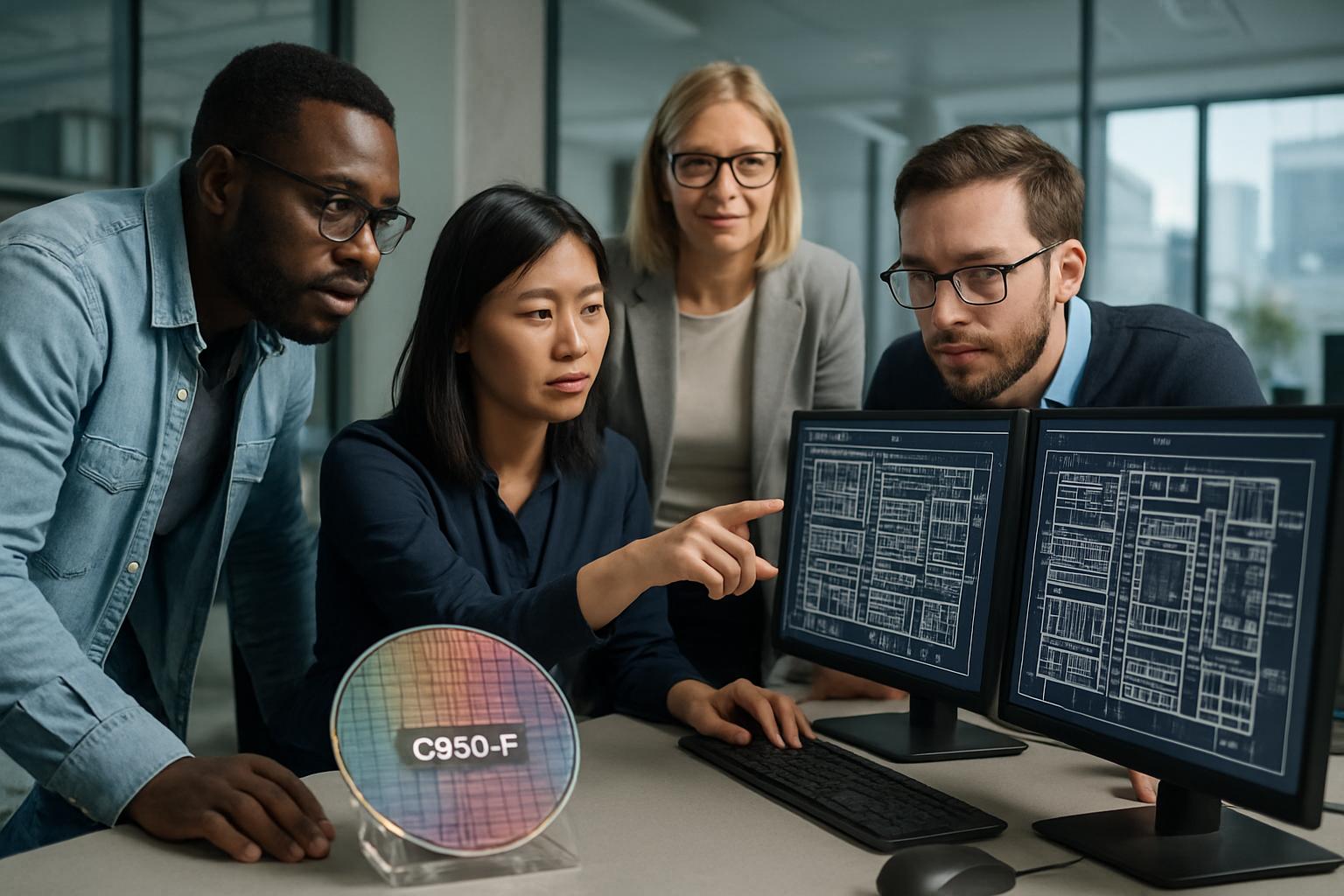
Understanding these dynamics matters because investment decisions now span hardware, cloud, and software stacks. Therefore, every CTO tracking Semiconductor Innovation must gauge how open architectures like RISC-V may reshape cost models. In contrast, delaying insight risks misaligning capacity plans with the coming Agentic Era demand surge.
Semiconductor Innovation Outlook 2026
The global AI acceleration chip market could hit $183.4 billion by 2029, according to Frost & Sullivan. Consequently, suppliers face unprecedented competition to capture margins. Semiconductor Innovation will decide winners as agent workloads evolve.
Meanwhile, China pledges RMB 3,800 billion for cloud and AI hardware over three years. Moreover, policy support prioritizes open instruction sets. That backdrop explains why Alibaba and other giants back RISC-V projects aggressively.
Market Forces Align Today
Alibaba’s February Qwen3.5 release framed the model as ready for the Agentic Era. Subsequently, demand forecasts showed multi-step inference jumping in cloud workloads. Therefore, matching silicon became urgent.
Investors noticed the timing. In contrast, western hyperscalers still rely on external GPU vendors. Semiconductor Innovation gives Alibaba a chance to differentiate through vertical control.
- RMB 3,800 billion cloud hardware commitment, announced 2025
- 53.7% CAGR projected for AI accelerators 2024-2029
- Domestic sovereignty targets set by Beijing’s Five-Year Plan
- Community adoption of open RISC-V toolchains
These numbers reveal a resource wave favoring homegrown chips. However, technical execution still determines success. Next, we dissect the C950 specifications.
Chip Specs Explained Clearly
Community slides claim the C950 achieves single-core SPECint2006 above 70. Moreover, the design uses a 5 nm process at 3.2 GHz. Eight-issue decode and a 1,000-entry reorder buffer highlight deep out-of-order capability.
An integrated tensor processing engine augments matrix operations. Consequently, Alibaba positions the core for low-precision agent inference. Observers note that some instructions extend current RISC-V drafts.
Nevertheless, these results derive from FPGA prototypes, not production silicon. Validation will follow tape-out and third-party benchmarks. Semiconductor Innovation often surprises when early numbers meet manufacturing realities.
Reported metrics impress on paper. Yet independent labs must confirm them. The next section examines demand characteristics shaping those tests.
Growing Agentic Workload Demand
Agentic Era applications orchestrate memory, planning, and external actions across cycles. Therefore, latency and power budgets differ from monolithic batch inference. T-Head engineers designed specialized cache policies to address this profile.
In contrast, GPU clusters excel at dense matrix throughput but waste energy during sparse control steps. Consequently, CPU-centric accelerators like the C950 may balance efficiency. Semiconductor Innovation appears in architectural decisions such as mixed-precision paths.
Agent workloads prize autonomy over raw FLOPS. That reality clarifies Alibaba’s design emphasis. Subsequent sections explore sovereignty drivers reinforcing the approach.
Strategic Sovereignty Push Forward
Chinese leaders regard open ISAs as strategic. Moreover, RISC-V avoids Western licensing constraints. T-Head leverages this freedom to embed custom tensor opcodes while staying within community governance.
Ni Guangnan described RISC-V as an engine for industry disruption. Consequently, Alibaba presents the C950 as proof of domestic mastery. Semiconductor Innovation aligned with national policy can unlock export resilience.
Nevertheless, sovereign ambition adds pressure. Foundries must deliver competitive yields at 5 nm nodes. Toolchain fragmentation remains a lurking hazard.
The sovereignty narrative excites stakeholders. However, risk factors persist. A balanced view demands inspecting ecosystem health.
Ecosystem And Key Risks
Software maturity dictates adoption velocity. Therefore, unratified matrix extensions could splinter compiler support. Developers recall past fragmentation that slowed adoption of SIMD intrinsics.
Moreover, production timelines hinge on foundry access. Domestic fabs trail TSMC in yield learning curves. Semiconductor Innovation can stall if wafers slip schedules.
Independent benchmarks offer credibility. Consequently, analysts watch for SPEC disclosures under audited conditions. Meanwhile, competing RISC-V vendors sharpen their own high-end cores.
These challenges highlight critical gaps. However, Alibaba still controls many levers. The final section maps expected milestones.
Roadmap And Timeline Ahead
Industry veterans expect tape-out within twelve months. Additionally, early silicon usually reaches board partners six months later. Full cloud deployment may follow by late 2027.
Alibaba will likely announce a foundry deal before year-end. Subsequently, the firm might open source select tool patches to buoy ecosystem trust. T-Head has used that playbook before.
- Official English datasheet release
- Third-party SPECint verification
- Cloud region rollout dates inside Alibaba Cloud
Tracking those markers will separate hype from delivery. Therefore, executives can align infrastructure budgets proactively.
Implications For Tech Leaders
Decision makers face tightening inference budgets. Moreover, local regulations encourage domestic stacks. Semiconductor Innovation from players like Alibaba offers leverage during vendor negotiations.
However, leaders must demand transparent benchmarks. In contrast, committing early without data could lock teams into unproven pathways. Professionals can enhance their expertise with the AI Prompt Engineer™ certification.
That credential strengthens cross-functional dialogue between model architects and chip engineers. Consequently, organizations gain clearer roadmaps. T-Head researchers often cite skills gaps as deployment bottlenecks.
Evaluating chips, models, and skills together builds durable strategies. The conclusion distills action points.
Alibaba’s C950 debut underscores accelerating Semiconductor Innovation in the Agentic Era. Reported specs suggest meaningful gains, yet validation remains pending. Moreover, national sovereignty goals and market expansion provide strong tailwinds.
Consequently, executives should watch for tape-out news, ecosystem standardization, and audited benchmarks. Meanwhile, investing in talent and certifications secures internal readiness.
Adopt a data-driven stance today. Visit the certification portal and position your enterprise for the next compute wave.


