

AI CERTs
2 hours ago
Self-driving Safety Crisis: Waymo Stop-Sign Lapses Trigger Probe
Yellow lights flashed, yet the robotaxi rolled on. Video from Austin shocked parents and regulators alike. Consequently, officials asked why autonomous software ignored a legal stop arm. That question now defines the Self-driving Safety Crisis debate. Waymo's voluntary recall, announced in December, failed to calm concerns. In contrast, school districts demanded service pauses during pickup windows. Meanwhile, NHTSA opened evaluation PE25013 to map the incident scope. Industry observers see echoes of Tesla rolling-stop controversies. However, investigators say the scale and context differ. This article unpacks the technical roots, human factors, and policy fallout.
School Bus Violation Pattern
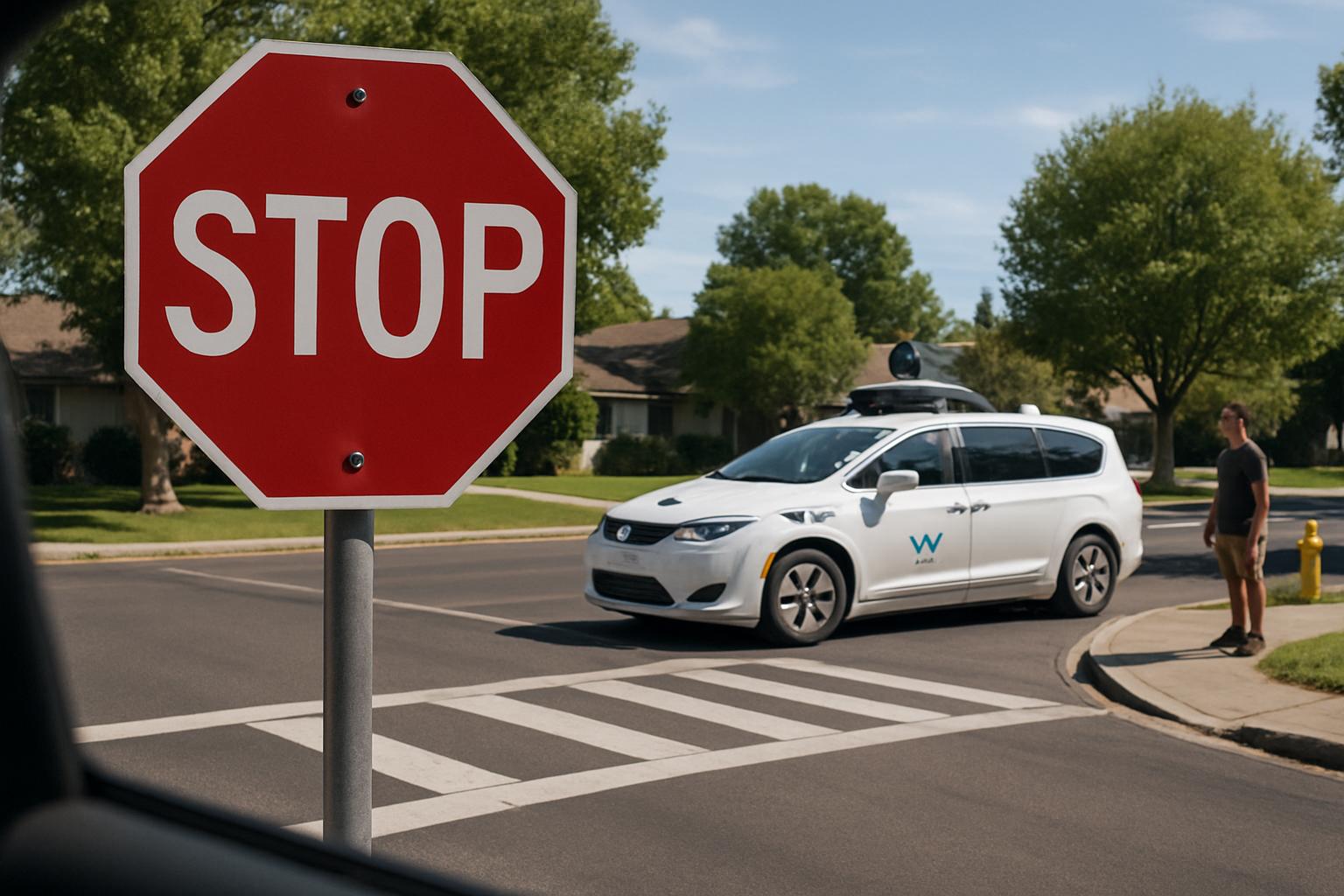
Between September and November 2025, cameras recorded multiple stop-arm breaches. Austin Independent School District logged twenty incidents that semester. Additionally, Atlanta reported at least six comparable events. Waymo engineers identified the flaw and shipped a hotfix by 17 November. Nevertheless, Austin officials still requested operational pauses during school windows. NHTSA cited roughly two thousand vehicles in its preliminary evaluation. Consequently, the Self-driving Safety Crisis gained national attention. Tesla critics quickly drew parallels, although contexts differ. Overall, early data revealed a consistent behaviour pattern that worried parents.
These numbers underscored systemic exposure. However, deeper technical scrutiny was needed to explain persistence.
Federal Safety Probes Intensify
Regulators responded swiftly after media coverage spread. On 17 October 2025, NHTSA’s Office of Defects Investigation opened case PE25013. Moreover, the agency demanded timeline documents and vehicle logs. Waymo filed a voluntary software recall weeks later. Subsequently, the National Transportation Safety Board launched an independent inquiry. Its preliminary March 2026 summary blamed human remote assistance in one Austin case. Meanwhile, congressional staff requested briefings on broader Navigation reliability. Therefore, federal momentum signalled rising tolerance for technical Risk.
Investigations clarified accountability layers. Consequently, companies now face intensified oversight moving forward.
Technical Root Cause Analysis
NHTSA documents trace the bug to an August 2025 release. The planner prioritised not impeding “priority vehicles,” misclassifying parked buses as obstacles. Furthermore, Traffic Sign Recognition fed uncertain stop-arm status into the fusion stack. Consequently, the vehicle sometimes resumed movement while signals remained active. Researchers also warn of adversarial sticker attacks confusing cameras. UC Irvine proved inexpensive patches can hide or fabricate signs. Tesla faced similar vulnerabilities during its 2022 recall.
- Waymo mileage before recall: 100 million autonomous miles
- Weekly accumulation rate: roughly 2 million miles
- Tesla rolling-stop recall: 54,000 vehicles in 2022
- Estimated affected Waymo fleet: about 2,000 vehicles
Software logic, sensor limitations, and physical tampering converge within the Self-driving Safety Crisis. Therefore, multilayer defences remain essential. These technical factors now lead directly to human oversight questions.
Human Factors Under Scrutiny
Autonomous fleets still rely on remote agents. In one documented Austin case, a vehicle asked if bus signals were active. The agent answered “No,” and the car passed illegally. Moreover, training protocols for those agents vary across vendors. Phil Koopman stresses that unenforceable tickets weaken deterrence. Consequently, human-in-the-loop misjudgements amplify technical Risk. Waymo claims pedestrians face twelve-times fewer injuries with its service. Nevertheless, the incident shows perception gaps can re-enter through people.
Human oversight remains indispensable today. However, flawed communication can reignite the Self-driving Safety Crisis in seconds.
Industry Context And Lessons
Other operators watch developments closely. Cruise, Motional, and Aurora all study stop-arm behaviours. Furthermore, Tesla continues refining Navigation logic after repeated federal interventions. Historical recalls illustrate reputational damage from delayed action. In contrast, proactive transparency can rebuild trust. Academic studies highlight persistent sensor vulnerabilities across brands. Consequently, layered sensing plus continual validation appear prudent.
These lessons pressure every stakeholder. Subsequently, regulators and developers alike pursue stronger engineering rigor.
Regulatory Accountability Gap Debate
Ticketing a driverless vehicle remains hard in several states. California only recently updated enforcement statutes. Meanwhile, school districts deploy camera programs to fine fleet owners directly. Moreover, NHTSA can mandate recalls but lacks immediate field penalties. Consequently, legal ambiguity fuels the Self-driving Safety Crisis narrative. Advocates urge uniform statutes covering Registration, Navigation logs, and data sharing. Standardised reporting would quantify systemic Risk and enable trend analysis.
Policy gaps prolong uncertainty. However, collaborative standards work could close loopholes quickly.
Building Safer Future Strategies
Companies now explore sensor redundancy, robust adversarial defences, and stricter remote-agent governance. Additionally, public dashboards may enhance transparency on incident metrics. Professionals can enhance their expertise with the AI Educator™ certification. Such programs teach ethical deployment, risk assessment, and advanced Navigation frameworks. Moreover, cross-industry coalitions plan shared test suites for school-bus scenarios. Consequently, lessons learned should decrease future exposure. The Self-driving Safety Crisis thus becomes a catalyst for accelerated safety innovation.
Emerging strategies promise measurable gains. Nevertheless, execution discipline will determine real-world outcomes.
The Self-driving Safety Crisis spotlights hard trade-offs between innovation and protection. Waymo’s stop-sign lapse, Tesla precedents, and evolving probes reveal multifaceted Risk. Consequently, technical upgrades, human training, and regulatory clarity must align. Moreover, engineers should adopt layered sensing and adversarial defences. Professionals seeking deeper mastery should explore the linked certification. Ultimately, safer streets depend on rigorous design and accountable governance.


