

AI CERTS
3 months ago
Search AI: Google Gemini Transforms the Future of Results
Meanwhile, regulators probe transparency as generative answers displace the historic ten blue Links. This article unpacks key milestones, technical advances, and the early business fallout. Moreover, it summarizes expert perspectives and outlines practical next steps for digital teams.
Search AI Transformation Overview
Search AI represents Google’s AI-first redesign of its core discovery interface. Rather than returning a static list, the new mode synthesizes information, images, and commerce signals in real time. Additionally, Google asserts the experience can handle longer conversational requests through Gemini’s multimodal context window. Therefore, users receive interactive cards, code snippets, and direct action buttons within one fluid screen. Early testers described the interface as conversational yet visually rich. Reviewers also praised fast load times despite heavy generative processing.
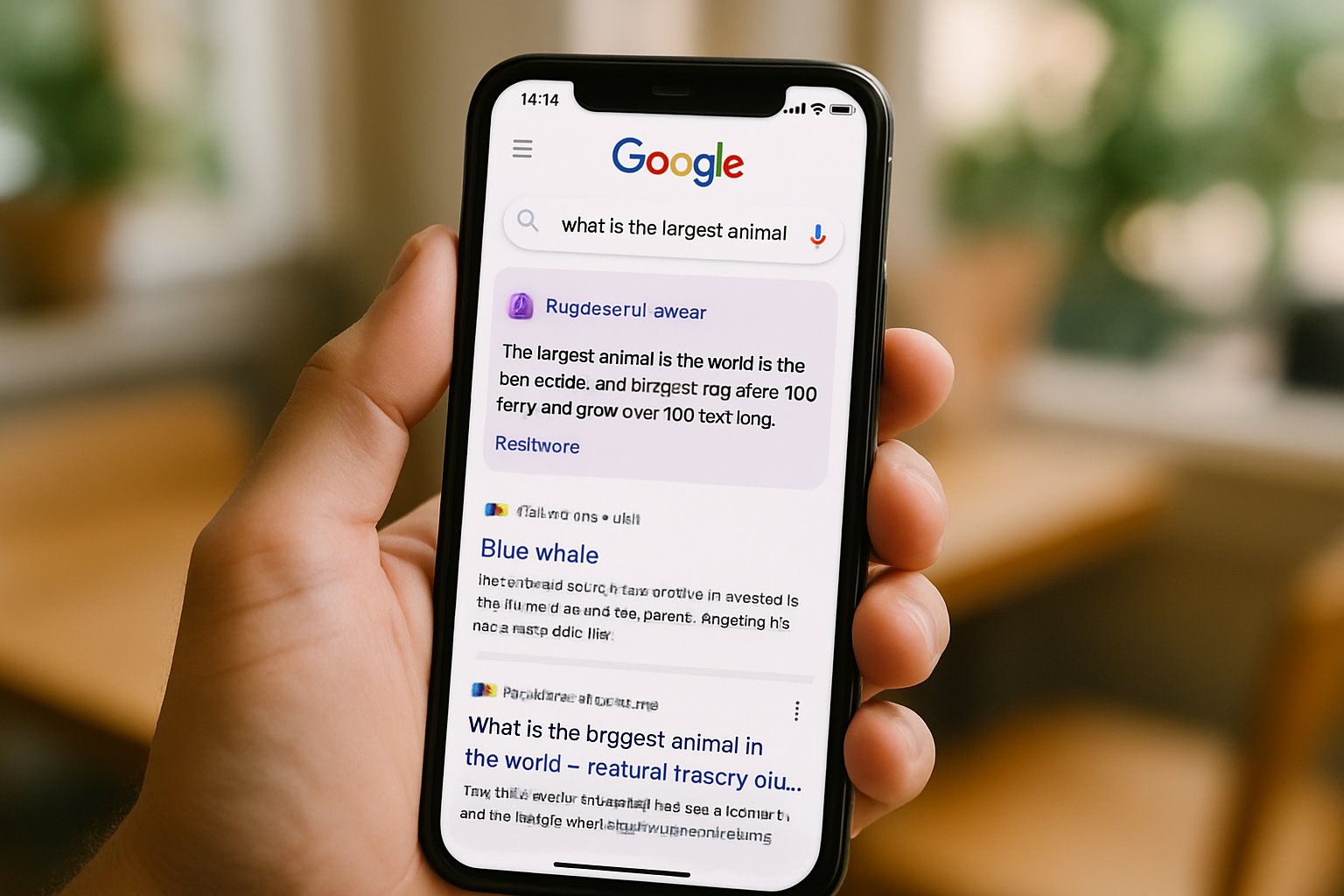
Google labels the staged release an AI-first journey. It starts in Labs, graduates to AI Mode, and eventually merges with default results. However, the company stresses continuity by preserving outbound Links to sources beneath every generated summary. Consequently, Google leadership argues the redesign will expand engagement rather than erode the open web. The promise blends concise answers with maintained attribution. Subsequently, understanding the rollout timeline clarifies when each feature reaches production.
Gemini Rollout Timeline Milestones
Gemini debuted in December 2023, establishing version 1.0 as Google’s first multimodal model family. By December 2024, Gemini 2.0 extended context limits and introduced agentic planning. Furthermore, Gemini 3 arrived in November 2025 and, for the first time, shipped into Search AI on day one. Google framed that delivery as evidence of its AI-first deployment culture.
- May 2024: AI Overviews expanded from experiment to broad U.S. availability.
- March 2025: AI Mode opened to early access subscribers.
- November 2025: Gemini 3 integrated directly into default queries for paying users.
These milestones illustrate rapid iteration and increasing model influence over discovery results. Consequently, technical changes underpin each milestone, which we detail next. Previously, traditional Search shipped updates weekly, yet perception shifted abruptly during Overviews tests. Product leads highlighted unprecedented collaboration between DeepMind and core ranking teams. Such coordination shortened model deployment cycles that previously required quarter-long validation phases.
Technical Shifts Underneath Engine
The heart of the revamp is Gemini’s query fan-out method. Historically, classic Search scaled through PageRank but struggled with multi-step reasoning. Consequently, latency stays manageable while broader context enhances answer depth. In contrast, legacy ranking pipelines processed one canonical request before scoring Links.
Query Fan-Out Method Explained
Fan-out yields higher recall by querying diverse indices simultaneously. Moreover, the model then reasons across snippets, images, and structured data to craft the final Search AI narrative.
Multimodal Capabilities In Practice
Users can upload photos or diagrams and receive annotated responses within the same Search AI pane. Additionally, audio inputs are planned, reflecting Google’s rhetoric around truly multimodal pipelines. Nevertheless, critics note hallucination risks escalate when the system interprets images without strong grounding.
Google also pilots optional personalization, allowing Search AI to reference private history after consent. Therefore, results may feel bespoke, though privacy safeguards remain under scrutiny. Engineers rely on retrieval-augmented generation techniques to ground statements in verifiable documents. They also employ layered safety filters that block disallowed content categories. However, empirical assessments show occasional policy misses, motivating continued guardrail investment. Technical advances enable richer, faster answers. Meanwhile, market impact now dominates discussion.
Market Impact And Risks
Publisher and advertiser economics sit in the crosshairs of AI-first discovery. Raptive warns that generative answers could cut industry ad revenue by two billion dollars annually. Gartner likewise projects a 25% referral decline by 2026 as zero-click interactions grow. Furthermore, Adobe analytics data reveal traffic volatility that varies by vertical. Current data points include:
- More than one billion users have seen AI Overviews, according to Google.
- Some health sites recorded 60% click reductions on generic symptom queries.
- Conversely, certain recipe portals noted stable traffic after clear citations surfaced prominently.
The mixed signals show opportunity alongside threat. Subsequently, publisher viewpoints merit closer inspection. Investor calls increasingly include questions about potential revenue compression. Equity analysts recommend contingency plans spanning diversified acquisition channels.
Publisher Perspectives And Data
Interviews reveal heterogenous outcomes across content sectors. Dotdash Meredith reports negligible losses, whereas niche finance blogs suffered sharp drops. Additionally, Ziff Davis analysts found that clear citation Links preserved loyalty for technical audiences. Nevertheless, many small creators fear that Search AI frontloads answers, reducing incentive to click.
Google counters that outbound Links remain visible and that evolving ad formats will drive new value. Consequently, ongoing measurement will decide which narrative wins. Publishers diverge in experience yet agree transparency is crucial. Therefore, competitive dynamics bring further context. Content strategists are experimenting with interactive widgets to entice audience participation. Such engagement hooks aim to offset fewer homepage visits.
Competitive Landscape And Response
OpenAI, Perplexity, and emerging startups pursue similar answer-first paradigms. In contrast, Microsoft’s Copilot integration blurs lines between chat and classic results. Moreover, the pressure accelerates Google’s AI-first roadmap and incentivizes rapid feature shipping. Advertisers welcome experimentation yet demand metrics before shifting budgets.
Users meanwhile enjoy convenience but express concern about accuracy and source diversity. Consequently, professional upskilling becomes essential for teams tasked with optimizing visibility within Search AI surfaces. Competitive heat will sustain quick iteration. Subsequently, organizations should prepare their talent pipelines. Vendor ecosystems are forming around analytics, prompt optimization, and compliance reporting. Meanwhile, standards groups debate markup extensions for generative answer attribution.
Preparing For Future Changes
Brands must monitor impression share inside the new interface and test structured data that boosts eligibility. Additionally, schema markup should highlight authoritative sources to secure prominent placement. Teams should collaborate with engineering to ensure fast-loading pages, given performance remains a ranking factor.
Professionals can deepen skills through the AI Educator™ certification, which covers prompt design and generative governance. Moreover, the program aligns with Google’s documented best practices for trustworthy Search AI deployment. Structured experimentation plus training mitigates disruption. Consequently, leaders gain resilience as the interface keeps evolving. Data teams should establish dashboards that isolate traffic shifts by query intent. Regular audits ensure prompts remain aligned with corporate tone and factual policies.
Google’s first transformation underscores how quickly discovery paradigms shift. Search AI now blends cutting-edge reasoning, multimodal inputs, and personalization to answer complex questions instantly. Publishers face uncertainty, yet outbound citations and evolving ad formats may preserve value if visibility persists.
Meanwhile, advertisers and regulators will scrutinize performance, accuracy, and transparency. Furthermore, professionals who embrace continuous learning, such as pursuing the AI Educator™ credential, position their firms for success. Act now: audit your content, refine technical foundations, and empower teams to thrive in this evolving landscape. Nevertheless, vigilance and adaptability remain the pillars of sustainable digital growth.


