

AI CERTS
2 hours ago
Samsung Integrates Perplexity for Enhanced On-Device Search
Consequently, analysts now expect a deeper integration debuting alongside the Galaxy S26 family. However, Samsung has not issued a formal press release for phone deployment. Meanwhile, executives reiterate a strategy of using multiple AI vendors within OneUI. This article examines the timeline, technical hurdles, and business stakes behind the proposed integration. Moreover, it highlights potential benefits for professionals designing search-centric mobile experiences.
Readers will learn how On-Device Search could shift competitive dynamics across the broader Android ecosystem. Additionally, we outline remaining uncertainties and provide actionable next steps before Samsung's early 2026 launch event. In contrast, earlier partnerships focused on cloud routing rather than phone-level functionality. Finally, we connect the story to certification paths that help practitioners stay ahead of rapid AI shifts.
Samsung Strategy Diversification Path
Samsung traditionally leaned on Google Gemini for premium mobile AI. Nevertheless, shifting regulatory pressures encourage OEMs to diversify assistant sources. Therefore, Samsung began evaluating providers that could power reliable On-Device Search with verifiable answers and flexible licensing.
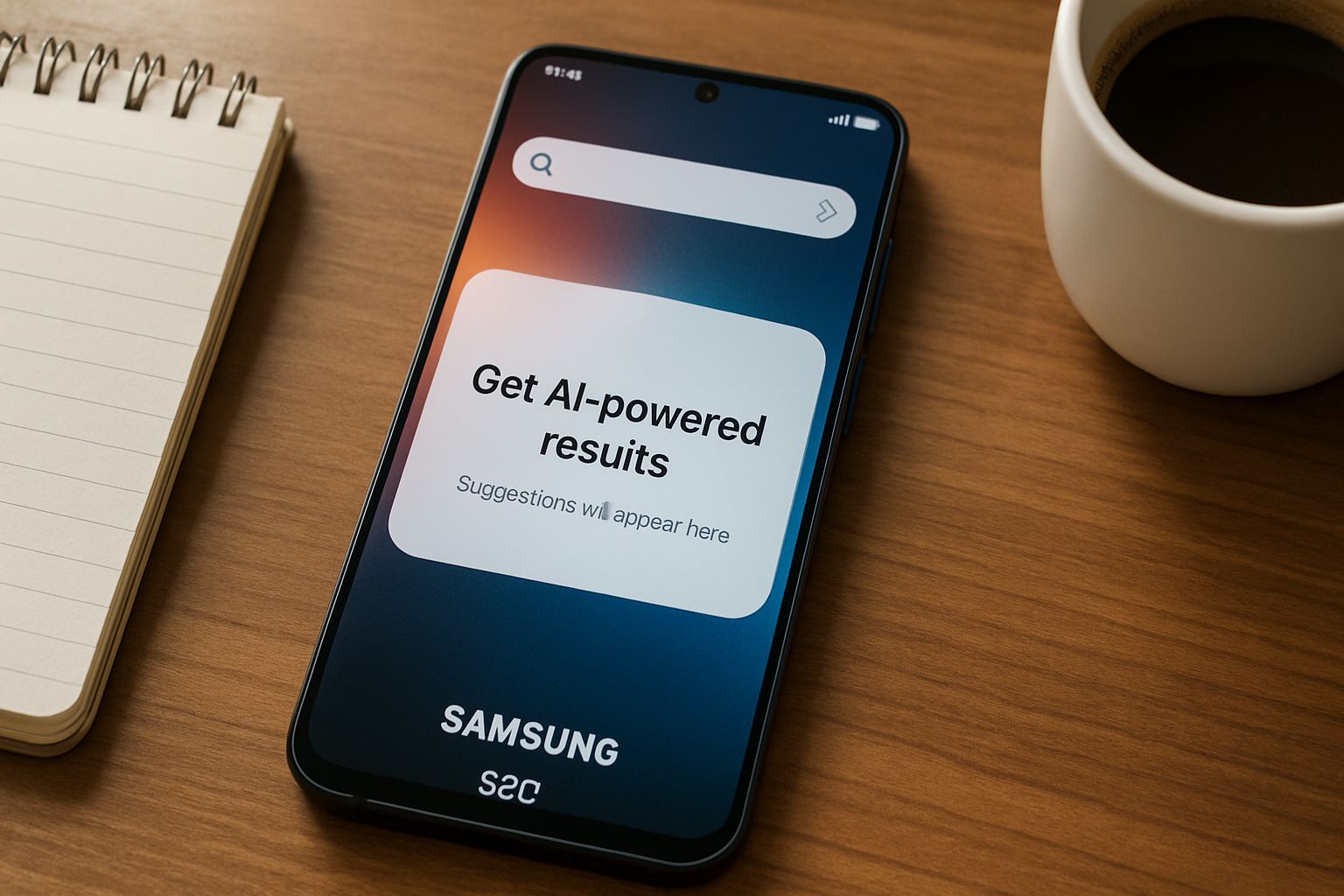
Perplexity fit that brief because its citation feature supports transparent responses. Furthermore, the startup's usage exceeded 650 million monthly queries during mid-2025. Such volume demonstrated real demand and justified Samsung's investment discussions.
In summary, Samsung sought resilient supply and negotiated with multiple partners. Consequently, the diversification path set the stage for phone-level collaboration discussed next.
Partnership Origins And Timetable
Bloomberg first reported the negotiations on 1 June 2025. Subsequently, Forbes detailed a 12-month Perplexity Pro giveaway for Galaxy users. Moreover, Samsung launched a Vision AI Companion television app in October 2025.
Consequently, expectations grew that On-Device Search powered by the startup would follow on phones. Those milestones confirmed operational collaboration outside mere investment rumors. In contrast, no official statement has promised default phone placement yet.
Analysts now align the likely reveal with the Galaxy S26 Unpacked event during early 2026. These dates outline momentum without sealing the deal. However, deeper integration details require examining expected implementation choices.
Expected Phone Integration Details
Reporters envision several technical scenarios for phone delivery. Firstly, Samsung may preload the assistant alongside Bixby within OneUI. Secondly, Samsung Internet could route complex queries to the assistant while preserving local tasks for Bixby. Thirdly, the company might bundle a year of premium access, echoing the 2025 promotion.
- Preloaded app with 12-month Pro trial
- Browser sidebar delivering citation-backed answers
- Bixby handoff for intricate research queries
Moreover, Samsung could implement dynamic agent routing that selects Gemini, the startup, or Bixby per query. Such routing would position On-Device Search as a seamless layer rather than a separate app. Nevertheless, fundamental privacy and latency issues remain unresolved publicly. Engineers must decide whether inference happens locally, in a secure enclave, or in regional data centers.
To summarise, early concepts emphasise versatility and user choice. Therefore, technical feasibility becomes the next focal point.
Perplexity Usage Volume Surge
During 2025, monthly queries soared past 650 million, according to Wired. Consequently, Samsung gains scale assurance because user demand already exists. Additionally, private valuations climbed toward $18 billion by mid-year. These metrics strengthen the commercial rationale behind any preload agreement.
Competitive Current Market Context
The move unsettles Google's long-standing default status on Samsung devices. However, contractual search revenue agreements complicate any drastic shift. Meanwhile, Apple pursues similar multi-agent strategies, validating Samsung's direction.
Furthermore, Motorola already preinstalled the same assistant, showing OEM interest beyond Korea. In contrast, smaller vendors lack distribution heft, keeping competition limited. Therefore, Samsung's scale could rapidly reshape user expectations around mobile On-Device Search. Consequently, rival handset makers may accelerate their own deals or double down on Gemini.
Overall, the competitive context highlights a battle for default assistant real estate. Next, we assess engineering risks that could stall momentum.
Technical Hurdles And Risks
Integrating multiple models into OneUI demands strict latency budgets. Moreover, hosting inference locally strains battery and thermals. Alternatively, cloud routing raises privacy compliance questions under European regulation.
Nevertheless, Samsung's existing Neural Processing Units can accelerate distilled models for partial On-Device Search workloads. Engineers must also coordinate wake-word detection, context sharing, and permissions across agents. Consequently, development timelines could slip beyond the Galaxy S26 shipping window.
In summary, technical friction may delay or limit functionality at launch. However, sustained investment suggests Samsung will persist until risk is mitigated.
Projected Business Impact Forecast
Financial analysts model three upside levers. First, subscription conversion from the free trial could lift the startup's annual revenue meaningfully. Second, Samsung could capture strategic bargaining power against Google by reducing traffic dependence. Third, differentiated On-Device Search may raise hardware retention rates among premium buyers.
Additionally, an optional upgrade tier might generate direct device revenue via activation fees. In contrast, misalignment could waste preload slots and annoy users who prefer Gemini. Therefore, measuring engagement early will be critical for roadmap decisions.
To conclude, upside exists yet hinges on execution quality and user trust. Subsequently, professionals must monitor deployment metrics closely.
Action Items For Professionals
Product leads should review current query routing architectures before Unpacked. Furthermore, designers can prototype interfaces that expose assistant choice without cognitive overload. Meanwhile, data teams must prepare anonymized telemetry pipelines respecting regional privacy laws.
- Audit latency budgets for hybrid inference
- Draft consent flows for multi-agent data sharing
- Define KPIs for On-Device Search engagement
Professionals can enhance their expertise with the AI Prompt Engineer™ certification. Moreover, the curriculum covers prompt optimization, agent orchestration, and evaluation techniques relevant to upcoming Galaxy S26 deployments. Finally, staying certified provides credibility when advising stakeholders on evolving OneUI strategies. Overall, proactive skill building positions teams for the forthcoming shifts.
Samsung's partnership journey remains unfinished yet unmistakably forward leaning. However, confirmed promotions and television experiences indicate tangible progress. Moreover, engineering roadmaps suggest hybrid agents will soon inhabit consumer pockets. When Galaxy S26 ships, users may finally experience citation-rich On-Device Search supported by the startup. Nevertheless, commercial success will rely on privacy safeguards and latency wins.
Therefore, professionals should track Unpacked announcements and beta builds closely. Additionally, refining prompt design now ensures readiness for multi-agent ecosystems. Consider pursuing the linked certification to demonstrate leadership during this pivotal transition.


