

AI CERTS
2 months ago
Salesforce Agent Report Exposes Agentic Silos
Meanwhile, independent studies warn that many deployments remain stranded in functional silos. Consequently, executives must weigh dazzling productivity against lurking governance and data risks. Moreover, rising connectivity demands pressure existing architectures. This article unpacks the evidence, contrasts vendor claims, and outlines practical next steps.
Agent Adoption Accelerates Fast
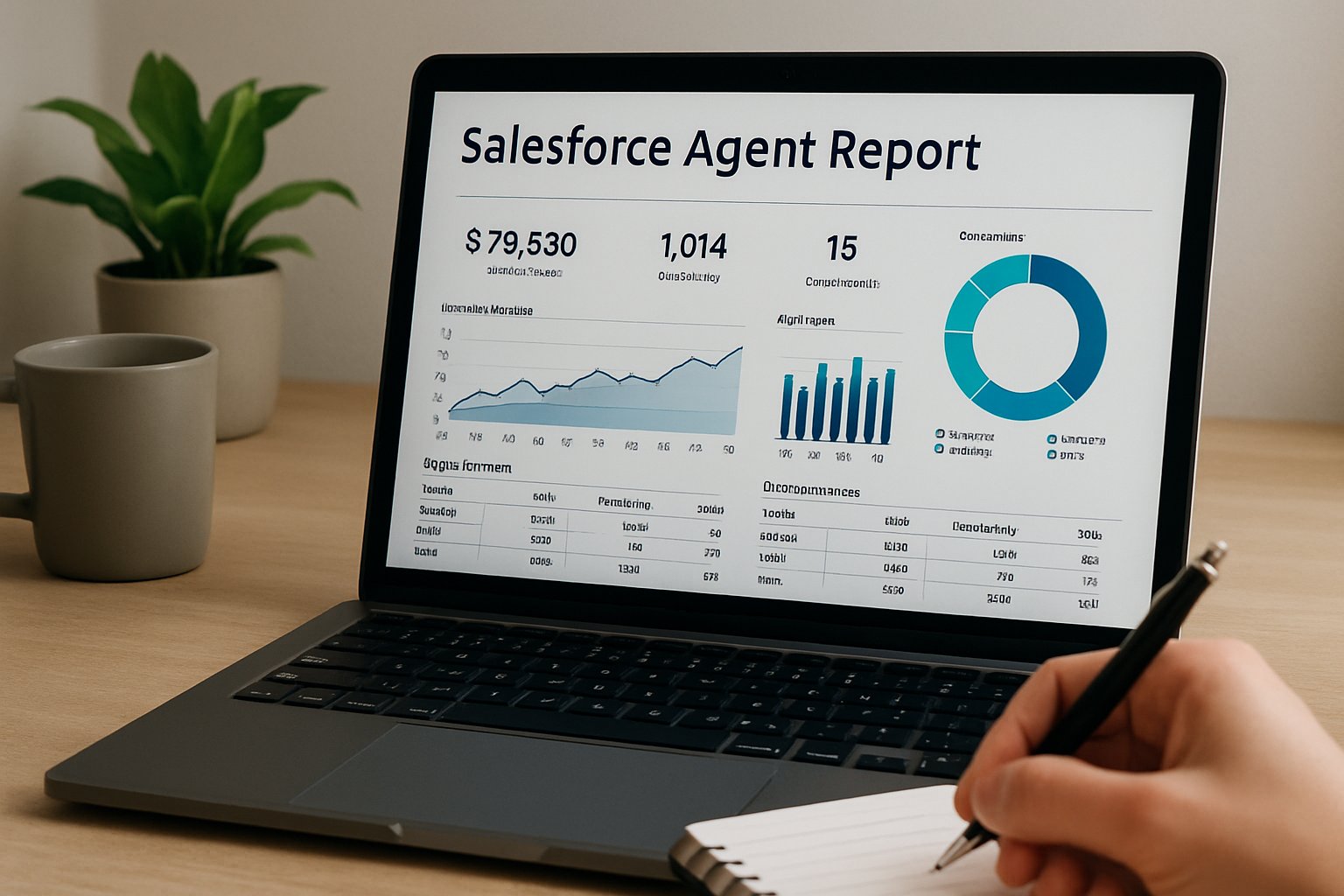
Salesforce data shows momentum few platforms match. Between January and June 2025, agent creation rose 119%. Furthermore, agent-led service conversations jumped twenty-two-fold in that same window. Customers also reported a 65% average monthly rise in employee interactions with agents. In contrast, human escalation rates climbed from 22% to 32%, highlighting unresolved complexity.
Camunda’s 2026 survey corroborates broad interest. Seventy-one percent of respondents already deploy agents somewhere. Nevertheless, only 11% of identified use cases reached production during 2025. Therefore, early enthusiasm has not yet translated into scaled value.
- 94% of consumers opted for AI agents when offered (Salesforce).
- 79% of organizations plan higher automation investments (Camunda).
- 73% admit a gap between vision and reality (Camunda).
These statistics validate accelerating adoption. However, they also signal growing operational tension. The Salesforce Agent Report illustrates extraordinary speed, yet real-world maturity lags. This contrast sets the stage for our next section.
Silo Challenges Quickly Emerge
Growth without governance often breeds fragmentation. Camunda found 48% of surveyed companies run agents in isolated silos. Additionally, analysts link siloing to inconsistent data quality and duplicated effort. Consequently, operational complexity rises while expected ROI slips.
Williams-Sonoma’s service pilot offers a cautionary tale. The retailer deployed autonomous case triage agents. However, disconnected inventory systems forced manual reconciliation, slowing resolution times. In contrast, Accenture’s consulting arm embedded agents inside an orchestrated workflow and avoided similar pitfalls.
Data fragmentation amplifies risk. Moreover, regulators increasingly scrutinize opaque autonomous decisions. Therefore, teams must pair experimentation with disciplined oversight. The Salesforce Agent Report warns that escalating human escalations reflect trust gaps, not just technical issues.
Silos impede enterprise agility and fuel duplicated support costs. Nevertheless, solutions are emerging, as the following section explains.
Data Connectivity Solutions Rise
Salesforce pitches Zero Copy to counter fragmented data. The approach lets agents query authoritative stores in place, improving connectivity. Moreover, partnerships with Snowflake, Databricks, and BigQuery broaden reach. Consequently, integration projects should shorten as migrations fade.
Camunda advocates agentic orchestration engines that overlay existing systems. Meanwhile, platform vendors tout unified monitoring to surface agent decisions. Kurt Petersen, Camunda SVP, calls governance “the missing middle layer” between chat interfaces and backend processes.
Improved data integration also reduces governance headaches. Nevertheless, federated access alone cannot solve rising process complexity. Teams still need structured handoffs, as subsequent sections detail. The Salesforce Agent Report references Zero Copy fourteen times, underscoring strategic importance.
Robust connectivity forms the foundation for orchestrated automation. However, architecture must align with workflow realities, leading us to modern design demands.
Integration Demands Modern Architecture
Legacy APIs rarely deliver the resilience agents require. Therefore, architects shift toward event-driven patterns and open table formats. Additionally, Data Cloud promises harmonized customer graphs, streamlining cross-channel decision loops.
IT leaders emphasise layered governance. In contrast to monolithic deployments, microservices allow targeted upgrades without halting operations. Moreover, observability tooling ensures agents act within policy bounds.
Reliable integration minimizes duplication and accelerates feedback. Consequently, user teams receive consistent context, bolstering trust. The Salesforce Agent Report notes that agent actions grew 80% month-over-month once reliable feeds stabilized.
Solid architecture reduces risk yet cannot tame every scaling hurdle. Complexity escalates as agent populations swell, which our next section explores.
Orchestration Governs Growing Complexity
Agent count growth compounds decision paths. Moreover, branching automations introduce race conditions and compliance exposures. Camunda’s research shows 79% of leaders fear runaway process complexity.
Consequently, orchestration frameworks become essential. These systems coordinate agents, humans, and deterministic workflows under shared policies. Furthermore, dashboards surface metrics such as escalation ratio, latency, and cost per action.
Joe Inzerillo, Salesforce CDO, argues that orchestrated agents act as “force multipliers.” Nevertheless, he concedes that guardrails remain a joint priority with customer IT teams. The Salesforce Agent Report similarly calls out governance fourteen times.
Structured orchestration mitigates systemic risk. However, enterprises must cultivate skilled managers to design, govern, and iterate agent fleets, as the next subsection highlights.
Enterprise Leaders Chart Path
Skill shortages threaten adoption timelines. Additionally, cross-functional alignment often lags technical rollout. Professionals can enhance their expertise with the AI Project Manager™ certification.
Graduates learn change management, risk frameworks, and advanced integration patterns. Consequently, certified leaders bridge IT and business objectives, accelerating enterprise scale.
Furthermore, executives increasingly tie bonuses to agentic outcomes. In contrast, earlier initiatives lacked clear accountability. Therefore, structured governance and skilled leadership now drive sustainable results. The Salesforce Agent Report highlights FedEx’s governance council as a best-practice template.
Experienced talent reduces failure odds. Nevertheless, ongoing iteration remains vital, looping us toward our concluding insights.
Conclusion And Next Steps
Adoption metrics dazzle, yet silo warnings persist. However, improved connectivity, modern architecture, and orchestration frameworks show promise. Additionally, the Salesforce Agent Report and Camunda findings agree on the need for disciplined governance.
Organizations should federate data, standardize agent oversight, and invest in skilled leaders. Consequently, agentic ROI will outpace today’s pilots. Professionals seeking an edge should pursue relevant certifications and benchmark their progress against peer leaders.
Visit the certification link above to deepen expertise and help your enterprise convert experimentation into measurable value.


