

AI CERTS
3 months ago
SAFE Chips Act Intensifies Geopolitical Risk in AI Chip Exports
Furthermore, China, Russia, Iran, and North Korea all appear in the bill's denied destinations list. Senators Pete Ricketts and Chris Coons claim the effort protects critical technology edges. Meanwhile, Nvidia and peers warn that losing the vast Chinese market could erode American leadership. In contrast, several think-tank analysts argue that locking current controls gives enforcement teams breathing room. The coming debate will test how Washington balances security assurances and commercial ambitions. Readers should track each amendment carefully, because semiconductor policy shapes the wider strategic chessboard.
SAFE Chips Act Explained
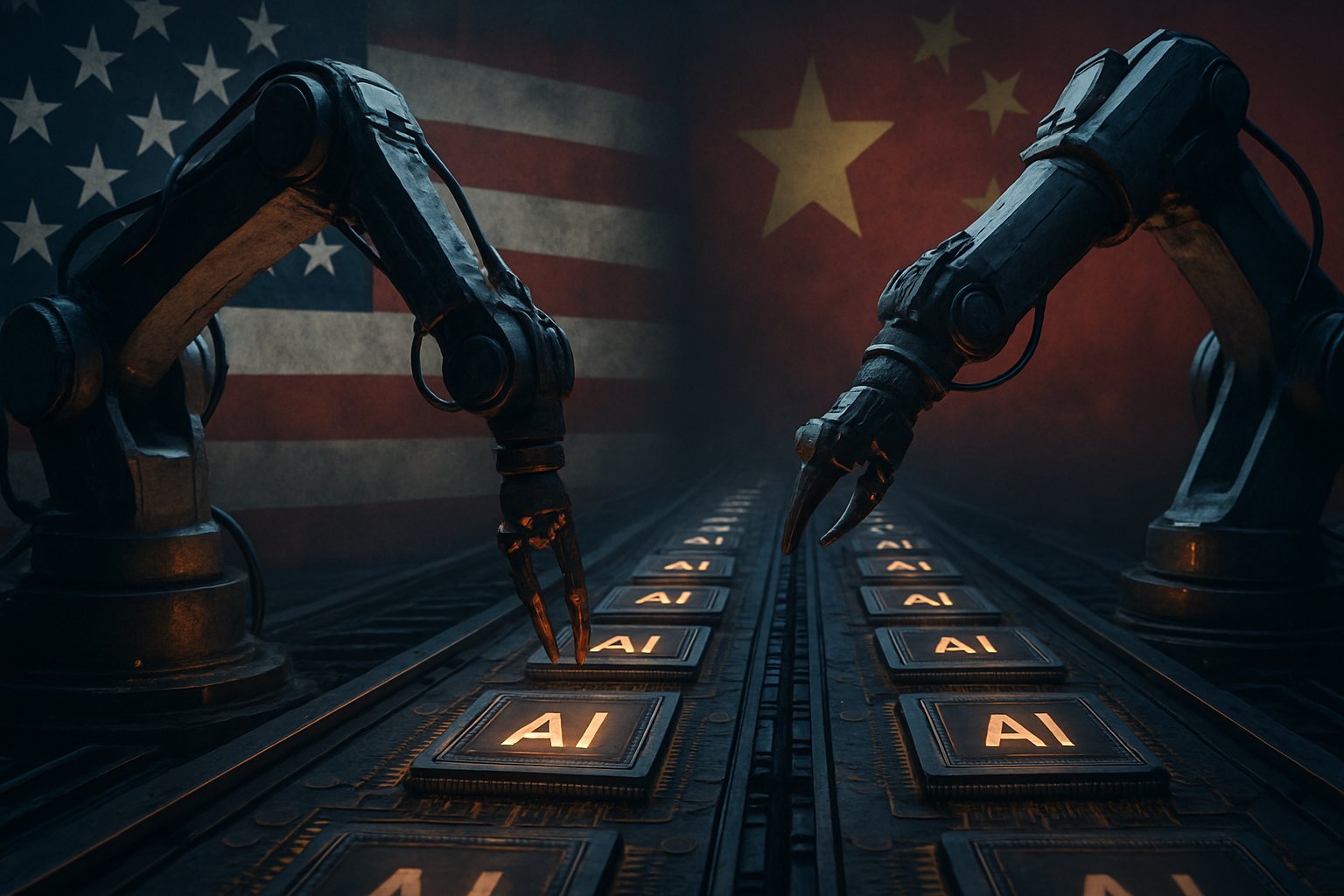
The SAFE Chips Act arrived on 4 December 2025 with bipartisan support. Moreover, the text codifies current Commerce Department thresholds covering advanced integrated circuits. Sponsors define Foreign Adversary Countries as China, Russia, Iran, and North Korea. Therefore, any license request for chips exceeding existing limits must receive an automatic denial. Geopolitical Risk calculations guided the drafters, according to both press statements and floor interviews.
After the initial 30-month freeze, Commerce may revise the technical ceiling. However, officials must publish proposed adjustments in the Federal Register and brief Congress 30 days before enforcement. This procedural guardrail reflects lawmakers’ desire for transparent Legislation. Consequently, executive flexibility shrinks, while oversight expands.
These provisions lock today’s control baseline into federal code. However, subsequent sections will reveal how supporters justify that rigidity.
Core Export Control Details
Export licensing currently relies on interagency review within the End-User Review Committee. Consequently, agencies evaluate performance metrics like TOPS, memory bandwidth, and interconnect speeds. The SAFE bill freezes those benchmarks, stopping potential sales of Nvidia’s H200 and Blackwell processors to China. Russia, Iran, and North Korea face the same ceiling.
Furthermore, the bill lists a precise 30-month denial window. That clock begins once legislation passes, not upon signature. In contrast, past executive orders allowed immediate policy drift. This statutory anchor raises Geopolitical Risk for firms banking on near-term Chinese revenue.
The technical annex holds teeth because it references existing licensing tables. Consequently, companies must either design downgraded variants or abandon those markets. The following section explores the security case driving this stance.
Supporters Cite Security Necessity
Security advocates argue that advanced AI accelerators shorten weapons development cycles. Moreover, China’s military-civil fusion strategy intensifies concerns. Senator Ricketts declared, “Denying Beijing access is essential to our national security.” His colleague Senator Coons linked chip exports and Geopolitical Risk during the press roll-out.
Supporters highlight three main threats:
- Autonomous weapons algorithms benefit from high memory bandwidth GPUs.
- Surveillance systems leverage dense compute for real-time facial recognition.
- Cryptographic codebreaking thrives on parallel processing power.
Consequently, backers insist the United States cannot supply adversaries with such accelerators. They add that Israel, South Korea, and allied partners can adopt harmonized rules later. Nevertheless, critics counter that unilateral moves create loopholes. The next section examines those commercial objections.
Industry Warns Market Losses
Corporate leaders paint a stark financial picture. Nvidia estimates several billion dollars of annual revenue come from high-end accelerator demand in China. Meanwhile, AMD and memory suppliers echo those numbers during earnings calls. Therefore, executives classify the SAFE bill as disruptive Legislation.
Additionally, firms warn that Moscow’s military suppliers might pivot to domestic chips if U.S. exports vanish. Iran and North Korea already pursue clandestine sourcing channels. Consequently, the bill could heighten Geopolitical Risk by handing market share to local competitors while failing to halt proliferation.
Key commercial stakes include:
- China represented roughly 20% of Nvidia data-center sales in 2024.
- Russia purchased specialized inference GPUs worth hundreds of millions that year.
- Iran sourced modest volumes through third-party hubs, according to court records.
- North Korea attempted multiple smuggling operations seized by U.S. customs.
These figures underscore potential revenue erosion. However, geopolitical calculators argue security overrides balance sheets. The following analysis moves from dollars to diplomatic coordinates.
Global Diplomatic Coordination Challenges
Export controls rarely succeed without allied alignment. Consequently, Washington must convince Tokyo, Seoul, and Brussels to mirror restrictions. European officials prefer flexible regimes over rigid Legislation. Nevertheless, the SAFE proposal sets a public benchmark for negotiation.
Furthermore, Chinese diplomats signal retaliation if chip rules harden. Russia has already deepened semiconductor cooperation with partners in Eurasia. Meanwhile, Iran and North Korea seek additional technology through illicit fronts. This dynamic elevates Geopolitical Risk for global supply chains.
Coordinated action will shape enforcement strength and commercial fallout. Therefore, scrutiny shifts next to practical compliance and smuggling problems.
Enforcement And Leakage Risks
Enforcement agencies already struggle with illicit re-export networks. Moreover, customs officers have intercepted shipments routed through Southeast Asian shell firms. Geopolitical Risk rises when adversaries exploit legal grey zones.
The SAFE Act allocates no new funding for investigative staffing. Consequently, observers question whether the statutory mandate matches resources. Nevertheless, policymakers may revisit appropriations during budget negotiations.
Effective policing requires intelligence sharing and advanced audit tools. In contrast, weak funding could hollow the policy. The outlook section assesses possible scenarios.
Outlook And Next Steps
Market analysts project three potential paths. Firstly, Congress may attach the bill to must-pass defense Legislation, ensuring quick enactment. Secondly, intense industry lobbying could dilute the technical thresholds. Thirdly, the White House might threaten a veto if diplomatic talks progress with Beijing.
Furthermore, bipartisan momentum suggests at least partial passage. Companies therefore prepare contingency plans, including derivative chip designs. Professionals can enhance their expertise with the AI+ Quantum™ certification.
These forecasts capture commercial uncertainty and strategic tension. However, continuous monitoring of committee hearings remains vital.
Conclusion
The SAFE Chips Act represents a decisive response to escalating Geopolitical Risk. Moreover, it illustrates how advanced hardware has become a frontline variable in statecraft. Companies, investors, and allied governments must weigh Geopolitical Risk against revenue potential and technology diffusion.
Consequently, strategic planners should watch markup sessions, appropriations debates, and allied consultations. The final text will signal whether Washington can manage Geopolitical Risk while safeguarding innovation. Act now: analyze your supply chains, brief leadership, and pursue relevant upskilling opportunities.


