

AI CERTs
2 hours ago
Robotics AI Showcases in China Ignite Global Security Concerns
Dazzling humanoid dancers twirled across Beijing’s arena last August, but industry veterans felt uneasy. The spectacle, part of the World Humanoid Robot Games, symbolised China’s accelerating ambition. However, the same routines also exposed immature control software and fragile actuators. Consequently, experts now warn that Robotics AI showcases may mask deeper technical and geopolitical hazards. This article unpacks recent Chinese displays, assesses Global Security implications, and traces mounting Military concerns. Moreover, we explore policy moves guiding the Humanoid sector and outline steps professionals can take. Along the way, Robotics AI market data and expert quotes ground the discussion in verifiable evidence. Finally, actionable certification advice empowers readers to navigate this volatile arena with confidence.
Escalating Market Hype Concerns
Chinese policymakers count more than 150 Humanoid start-ups crowding the domestic field. In contrast, the National Development and Reform Commission signalled worry about repetitive models and overheating. Consequently, it urged consolidation, standard tests, and stricter entry rules last November.
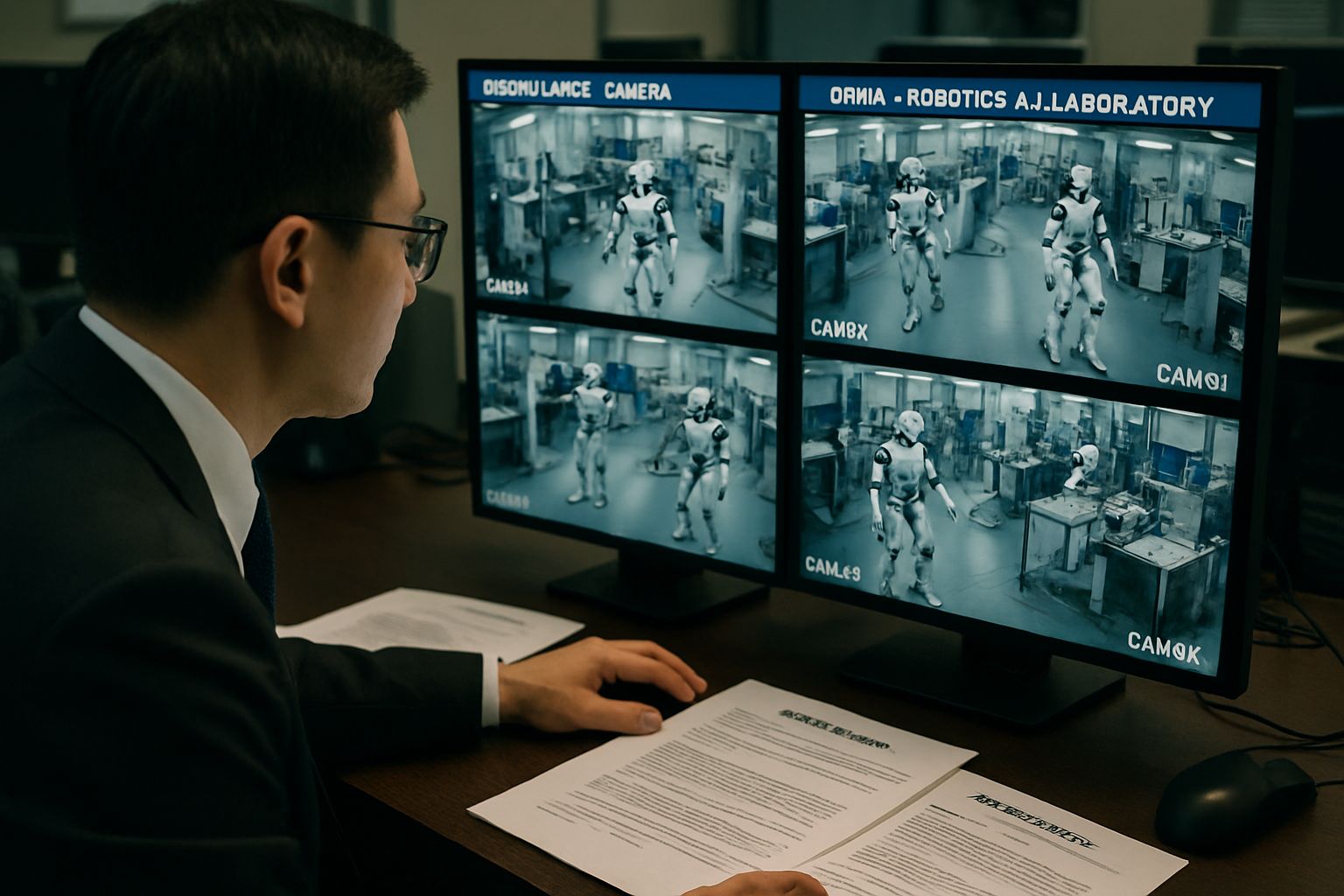
Investors still pour capital into dazzling show demos. However, analysts caution that many Robotics AI prototypes remain remote controlled during exhibitions. Therefore, revenue forecasts reaching one trillion yuan by 2035 could prove inflated without reliability gains.
- Patent filings: 5,688 Chinese Humanoid references vs. 1,483 U.S.
- Analyst projections: one million annual units by 2030
- Market growth: NDRC cites over 50% yearly expansion
These indicators excite shareholders yet may hide fragile fundamentals. Robust standards will be needed to convert promise into profits. Consequently, security gaps demand equal attention, which the next section addresses.
Critical Security Gaps Spotlighted
White-hat teams hijacked retail robots over Bluetooth during a Shanghai demonstration. Moreover, viral factory footage showed a malfunctioning unit striking a worker. Such incidents intensified Global Security debates around networked automation.
Attack vectors span firmware tampering, cloud command spoofing, and sensor manipulation. Nevertheless, many vendors still ship devices with default credentials and unsigned updates. Researchers consequently call for encrypted channels and supply-chain audits.
Professionals can enhance their expertise with the AI Security Compliance™ certification. Furthermore, that program maps defensive controls to common Robotics AI architectures. Graduates gain tools for evaluating Humanoid platforms before deployment.
Technical flaws therefore pose immediate safety risks in civilian settings. However, national implications stretch even further, as the geopolitical stakes reveal.
Geopolitical Stakes Intensify Globally
Robots able to sense, move, and transmit data intersect directly with Global Security priorities. Consequently, the U.S. Commerce Department opened a Section-232 probe into imported machinery. Lawmakers link potential espionage channels to rising Military unease.
Meanwhile, China frames embodied intelligence as a strategic pillar for economic resilience. Moreover, large public performances project technological confidence on the world stage. Foreign capitals interpret those shows as soft-power messaging and dual-use signalling.
Robotics AI therefore sits at the intersection of trade, defence, and standards diplomacy.
The competitive narrative fuels export controls and friend-shoring discussions among allied economies. Subsequently, regulators focus on shaping rigorous standards, the topic of our next section.
Standards And Policy Responses
The NDRC proposes unified test beds and tiered certification schemes for Humanoid performance and safety. Additionally, it plans financial carrots for firms meeting quality thresholds.
Across the Pacific, Washington contemplates tariffs, licensing, and import disclosures. In contrast, some industry groups lobby for risk-based rules that avoid blanket bans.
International organisations now weigh shared protocols covering data retention, remote updates, and physical fail-safes. Moreover, several Military alliances study battlefield logistics robots, further complicating civilian rules.
Effective governance could tame hype while guarding Global Security interests. Yet technical truth must inform any policy, prompting a closer look at real capabilities.
Technical Reality Versus Demos
Public routines often blend scripted choreography with human teleoperation behind the curtain. Therefore, performance videos seldom mirror unpredictable factory or warehouse environments.
Independent labs measure walking speed, payload, and battery endurance under controlled conditions. However, consistent peer-reviewed benchmarks across Chinese and Western units remain scarce.
Robotics AI progress does appear rapid in joint perception-language models and low-cost actuators. Nevertheless, generalised autonomy for cluttered spaces still challenges even elite research teams.
Investors and policymakers should interpret glossy events as marketing, not validation. Consequently, financial exposure deserves balanced scrutiny, which the following section addresses.
Investment Outlook And Risks
Bank notes tout trillion-yuan opportunities by 2035. Meanwhile, the NDRC fears duplicated designs draining capital without revenue. In China, provincial funds still subsidise component purchases.
Consider these contrasting signals:
- Over 50% yearly growth yet uncertain profits
- One million units forecast yet fragile supply chains
- Patent dominance yet limited global adoption
Moreover, Military procurement cycles demand years of ruggedisation, slowing immediate volume buys. Global Security reviews may also curb exports, affecting valuation models.
Robotics AI investors should therefore weigh standards maturity, component origin, and policy headwinds together.
The risk-reward profile remains high for pioneers. Nevertheless, strategic due diligence can mitigate surprises, as our conclusion outlines.
Conclusion And Next Steps
China’s vivid Humanoid showcases spotlight both astonishing innovation and unresolved dangers. Global Security dialogue, Military scrutiny, and investor enthusiasm intersect around Robotics AI developments.
However, technical maturity, secure supply chains, and enforceable standards will decide long-term winners.
Professionals should track policy hearings, demand transparent benchmarks, and pursue specialised credentials. Consequently, professionals can enrol in the AI Security Compliance™ program. That curriculum delivers audit techniques for autonomous systems across Robotics AI deployments.
Adopt proactive learning, scrutinise vendor claims, and engage with emerging standards bodies today. Therefore, you can shape a safer, more profitable Robotics AI future for intelligent machines.


