

AI CERTS
5 days ago
Robotic Dog Scandal rocks Indian AI summit
Observers noticed the four-legged machine, branded “Orion,” looked identical to a Unitree Go2 sold abroad. Moreover, social platforms quickly linked the model to China, fuelling questions about originality. Within hours, a backlash forced the university to abandon its Expo booth and issue a public apology.
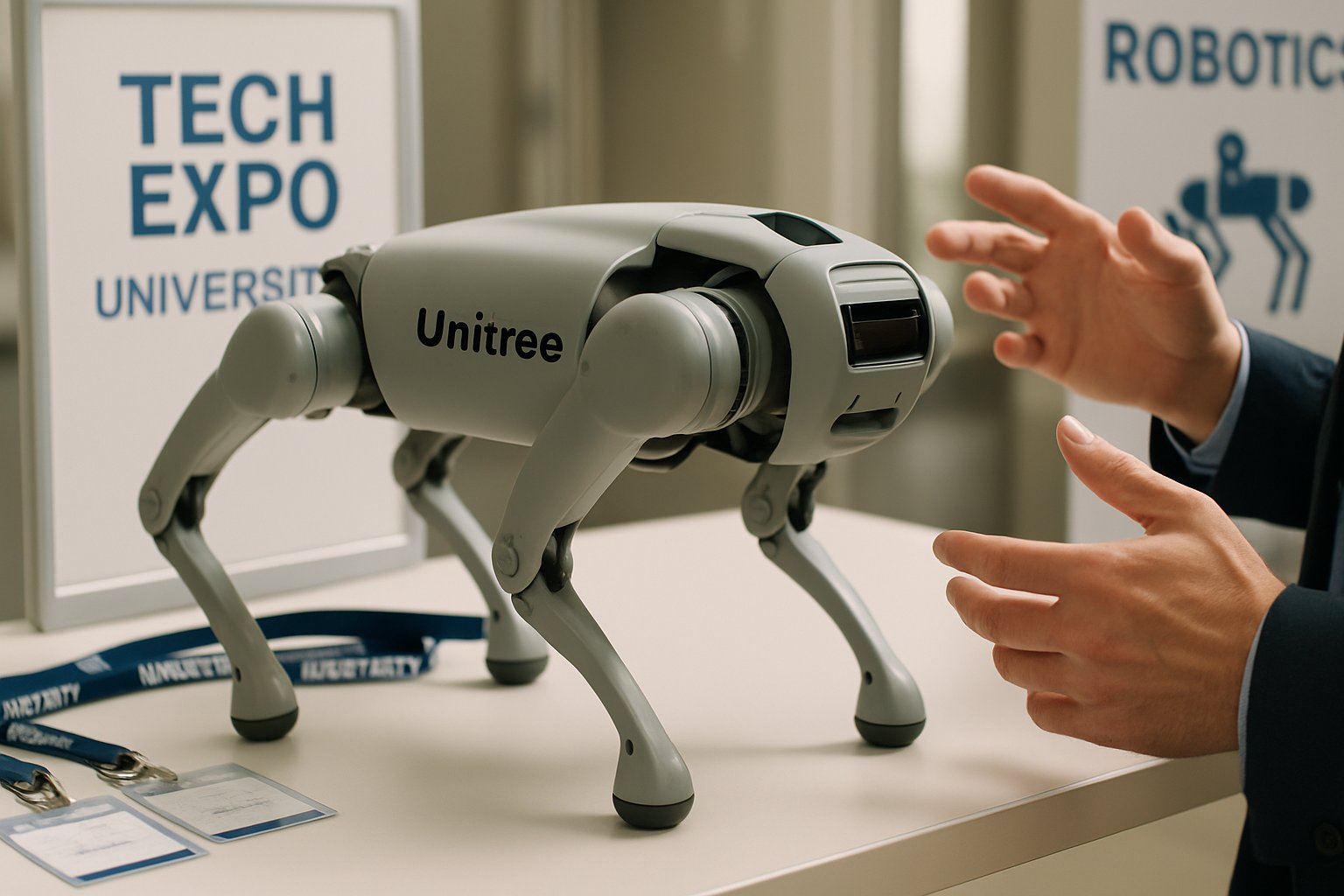
Trust in summit showcases relies on transparent claims. Therefore, this incident offers a cautionary tale for future exhibitors.
Summit Showcase Quickly Unravels
Events spiralled on 17 February 2026 when DD News aired an interview with Prof. Neha Singh. She presented Orion as work from Galgotias’ Centre of Excellence. However, viewers spotted the familiar Unitree Go2 form factor and sounded alarms.
Subsequently, government officials checked the stall. Organisers reportedly cut power and escorted staff away. Meanwhile, critics lambasted the perceived Misrepresentation at a marquee Expo devoted to indigenous innovation. The primary keyword appears here again: Robotic Dog Scandal.
These dramatic scenes ended with an empty pavilion and a tarnished reputation. Consequently, attention shifted toward accountability.
Timeline Of Rapid Fallout
The crisis unfolded over two frantic days. Key moments include:
- 17 Feb: Video surfaces; social media identifies Chinese hardware.
- 18 Feb: Organisers demand exit; Galgotias vacates Expo space.
- 18 Feb: University apologises, blaming an “ill-informed” presenter.
- 19 Feb: IT Secretary S. Krishnan warns against future Misrepresentation.
Furthermore, reporters confirmed the robot’s retail price between USD 1,600 and USD 2,800, underscoring its off-the-shelf status. Therefore, the Robotic Dog Scandal gained momentum far beyond campus walls.
These dates clarify the swift escalation. Nevertheless, several facts still require official documentation.
Why It Escalated
Perception mattered more than hardware. Many attendees believed Orion exemplified local engineering. Consequently, learning that the machine originated in China damaged institutional credibility.
Additionally, the term “developed” suggested proprietary design, not classroom adaptation. In contrast, universities routinely buy commercial robots for training. Stakeholders now argue over phrasing, intent, and public messaging.
Meanwhile, the Expo’s stature amplified scrutiny. Global CEOs and diplomats toured the venue, so any Misrepresentation risked diplomatic embarrassment. Hence, ministers acted swiftly to contain reputational fallout.
These pressures turned a routine demo into the Robotic Dog Scandal’s headline moment. However, deeper systemic issues persist.
Educational Use Debate
Supporters note that affordable quadrupeds let students experiment with AI locomotion, perception, and autonomy. Moreover, Unitree Go2 offers an SDK and sensor package ideal for classroom projects.
Galgotias claims it acquired the robot to teach coding, control theory, and embedded vision. Educators worldwide follow similar strategies, buying platforms rather than reinventing chassis.
Consequently, the dispute centres on communication, not pedagogy. Universities may highlight enhancements, but they must credit original manufacturers. Therefore, professionals can deepen their governance skills through the AI Foundation certification, which stresses transparent project reporting.
This debate reveals how simple wording can spark a Robotic Dog Scandal. Subsequently, attention turns to policy safeguards.
Governance And Vetting Gaps
Organisers lacked clear, public exhibitor guidelines detailing sourced versus self-built technology. Consequently, staff relied on ad-hoc judgments once social media erupted.
Furthermore, the Expo featured hundreds of prototypes. Without documented vetting, officials could not verify claims promptly. Therefore, ministers now promise stricter disclosure rules and random audits.
Meanwhile, universities review internal approval chains for press interactions. Many plan media-training workshops to prevent another Misrepresentation episode.
These governance gaps intensified the Robotic Dog Scandal. However, market factors also influenced perceptions.
Market Context And Costs
Unitree Go2 retails in India for roughly ₹2-3 lakh, placing advanced robotics within reach of mid-tier colleges. Moreover, global hobbyists import the device directly from China for as low as USD 1,600.
Consequently, owning such hardware no longer signals elite research capability. Stakeholders must demonstrate unique software, payloads, or field deployments to justify Expo floor space.
Additionally, falling prices increase plagiarism risks. Competitors can buy identical units and claim novelty unless verification improves. Therefore, industry observers link the Robotic Dog Scandal to broader market democratization.
These financial realities shape future showcase strategies. Nevertheless, lessons extend beyond budgets.
Conclusion And Next Steps
The Robotic Dog Scandal offers stark lessons for academia, industry, and government. Universities must label acquired platforms accurately. Organisers should publish vetting protocols and enforce them consistently. Meanwhile, students benefit when transparent demonstrations focus on novel algorithms, not rebadged hardware.
Furthermore, affordable robots from China and elsewhere will keep flooding campuses. Consequently, authenticity checks must evolve in parallel. Professionals willing to lead these reforms can solidify their credentials with the linked AI Foundation certification.
Transparent innovation builds trust. Therefore, the next Expo must showcase verifiable breakthroughs, not another headline-grabbing controversy.


