

AI CERTS
3 months ago
Robot safety engines reshape industrial cobots
At CES 2026, Algorized and KUKA unveiled a breakthrough dubbed the first Predictive Safety Engine. This launch introduces a new class of Robot safety engines capable of forecasting human intent in real time.
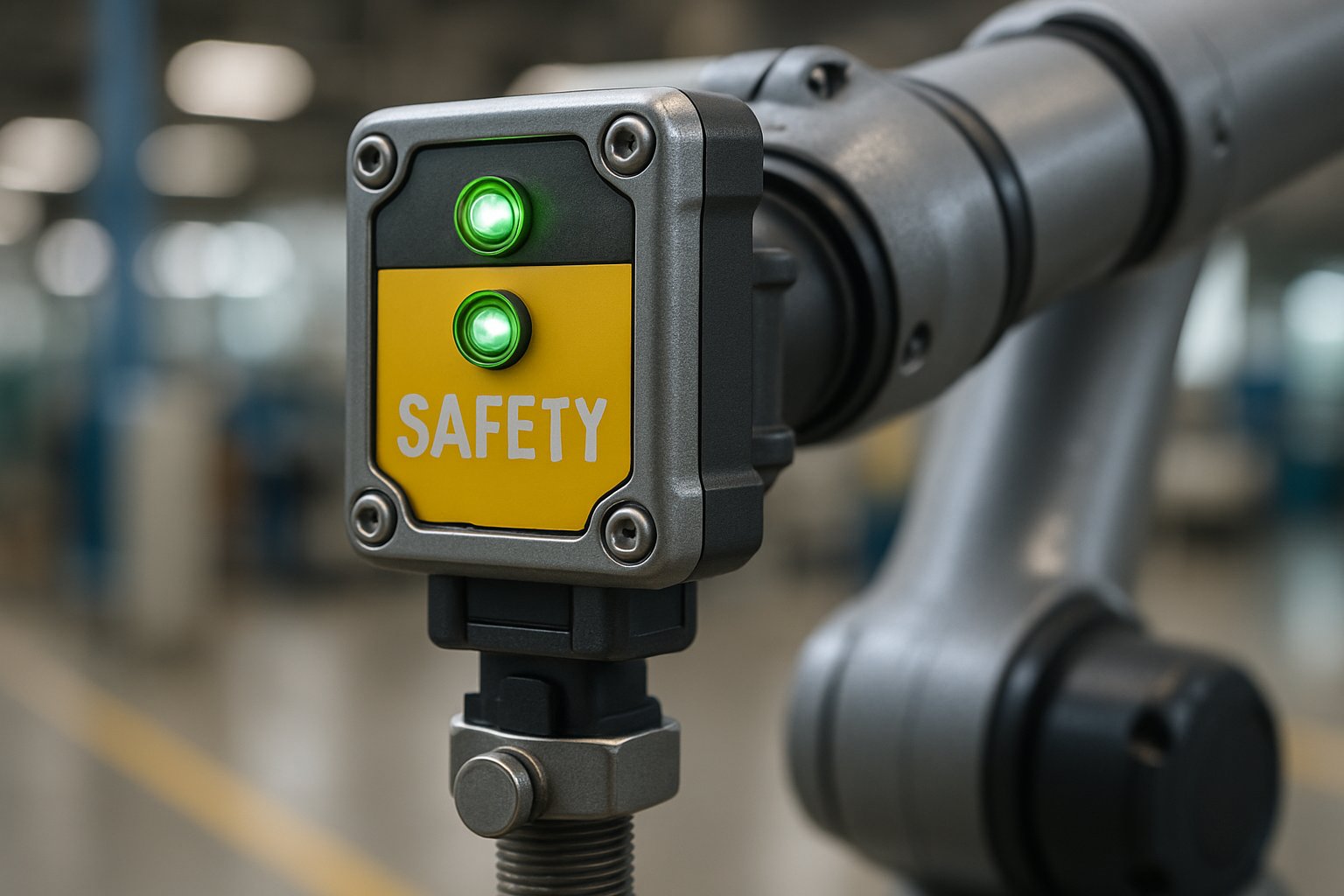
The system fuses edge AI with mmWave radar to identify breathing patterns, classify entities, and adjust robot speed instead of triggering hard stops. Moreover, it signals a strategic shift from reactive barriers toward predictive, scalable Human robot collaboration.
Market Needs Rapid Growth
Global demand for collaborative robots, or cobots, is surging. MarketsandMarkets estimates a jump from $1.42 billion in 2025 to $3.38 billion by 2030.
Such growth intensifies pressure to run mixed workcells at higher speeds. However, ISO/TS 15066 still requires strict speed-and-separation monitoring.
Traditional light curtains and vision fences enforce binary stop zones that waste motion energy. Therefore, manufacturers welcome Robot safety engines that promise nuanced speed control instead of full stops.
These market signals justify heavy investment in predictive technologies. Consequently, vendors positioning early may capture a sizable share of the expanding cobot spend.
These numbers confirm the commercial urgency for adaptable protection. Predictive controls promise to balance speed and risk. However, understanding the technology stack remains essential.
Technology Inside Predictive Engine
The joint Algorized–KUKA platform embeds an edge AI model directly on the robot controller. Consequently, safety logic runs without cloud latency.
Core sensing relies on Texas Instruments’ SIL-2 certified IWR6843AOP mmWave radar module. The sensor delivers 60–64 GHz imaging through dust, darkness, and smoke.
- Entity classification: human, robot, or static asset
- Micro-motion and vital-sign detection for respiration and heart rate
- Trajectory and posture based intent prediction
- Occlusion immunity in cluttered environments
- Sovereign edge processing with no cloud handoff
This capability package forms the advertised Predictive Safety core. Moreover, the software estimates intent up to 500 milliseconds ahead, allowing smooth deceleration rather than abrupt emergency stops.
Prototype demos at CES showed the arm slowing as a hand approached. Speed resumed quickly once the path cleared.
Edge processing, mmWave radar, and intent models collectively deliver Predictive Safety in real time. Nevertheless, any Robot safety engines must still align with global standards, which we address next.
Safety Standards And Compliance
ISO 10218 and ISO/TS 15066 govern Human robot collaboration in industrial settings. Both standards mandate documented risk assessments and validated protective functions.
The Predictive Safety Engine introduces a novel protective function category: dynamic speed modulation based on predicted intent. However, certifiers will demand evidence equating its reliability with traditional light curtains.
Such Robot safety engines challenge auditors to rethink performance levels defined a decade ago.
Functional safety hinges on quantitative proof. Algorized leverages the sensor’s SIL-2 pedigree, yet system-level validation remains pending.
Therefore, KUKA plans phased pilots with automotive clients while engaging TÜV consultants for certification. Additionally, professionals can validate skills through the AI+ UX Designer™ certification.
Compliance journey will decide deployment timelines. Consequently, weighing benefits against certification effort is vital. Next, we examine those benefits and limits.
Operational Benefits And Limits
Replacing hard stops with proportional slowdown, Robot safety engines yield measurable throughput gains. KUKA simulations show 25 percent cycle-time recovery in shared palletizing cells.
Moreover, adaptive motion can reduce colateral wear, since motors avoid repeated full braking. Energy savings compound over multi-shift operations.
Nevertheless, limitations persist. mmWave radar accuracy drops beyond five meters, and multiple operators introduce classification ambiguities.
- False positives may trigger unnecessary slowdowns
- Vital-sign tracking raises data privacy concerns
- Certification adds time and cost
Independent labs have yet to publish false-alarm rates for the new platform. Therefore, early adopters should budget for on-site validation.
Operational gains appear promising, while technical risks remain manageable with testing. However, ethical factors warrant equal attention; those factors follow.
Worker Privacy And Ethics
Vital-sign detection supports Predictive Safety yet touches sensitive biometric data. In contrast, vision cameras rarely expose heart-rate signals.
European GDPR treats physiological metrics as special-category data, requiring explicit purpose limitation. Meanwhile, U.S. rules lean on patchwork state laws.
Algorized states that signals remain on the edge processor and are never stored. Nevertheless, worker councils may still seek transparent policies.
Clear consent, retention limits, and security audits will foster trust. Consequently, privacy frameworks must accompany every Robot safety engines deployment. Our next section reviews competitive pressures shaping those deployments.
Competitive Landscape Watchlist Signals
Radar perception is crowded. Vayyar, Zadar Labs, and Uhnder market people-sensing chips to robot makers.
However, Algorized differentiates by shipping a full stack tuned for Robot safety engines use cases, not generic tracking.
Universal Robots and ABB rely mainly on vision today, yet both explore radar partnerships. Consequently, standards compliance results may drive vendor choices.
Competitive intensity will push swift innovation and pricing pressure. Therefore, buyers must watch proof data closely. Finally, we assess what to expect in 2026.
Adoption Outlook And Next
Pilot projects will dominate 2026 as integrators test Predictive Safety in automotive and electronics plants. Expect phased rollouts tied to certification milestones.
Analysts forecast revenue from Robot safety engines hitting $120 million by 2027, climbing once standards approval stabilizes.
Meanwhile, edge AI silicon costs continue falling, making Robot safety engines affordable for mid-tier manufacturers.
Momentum appears irreversible, yet diligence will separate hype from value. Consequently, the conclusion distills practical steps for stakeholders.
Conclusion And Action
Intent-aware safety platforms are moving from concept to pilot reality. Predictive Safety paired with mmWave radar and edge AI promises faster, safer Human robot collaboration. However, standards compliance, privacy protection, and objective performance data are still decisive. Nevertheless, competitive pressure and falling silicon costs point to mainstream adoption by 2027. Professionals should monitor certification milestones, demand transparent metrics, and prepare their teams for intent-aware workcells. Therefore, consider deepening domain knowledge through the AI+ UX Designer™ certification. Doing so keeps teams ready to integrate the next generation of Robot safety engines.


