

AI CERTS
1 hour ago
Robinhood’s Beta Feed Marks New Era in Fintech Social Interaction
This article unpacks the beta launch details, key features, and strategic stakes behind the ambitious rollout. Furthermore, we examine compliance hurdles and business opportunities shaping the next phase of connected digital finance.
Retail Trading Evolves
Retail brokerage adoption soared during pandemic lockdowns. Moreover, McKinsey data show younger investors open accounts faster than previous cohorts. Consequently, platforms expand toolkits to retain attention and drive share-of-wallet. Social trading already influences these newcomers through Reddit threads and Stocktwits rooms. In contrast, many services lack transaction verification, exposing followers to hype and misinformation.
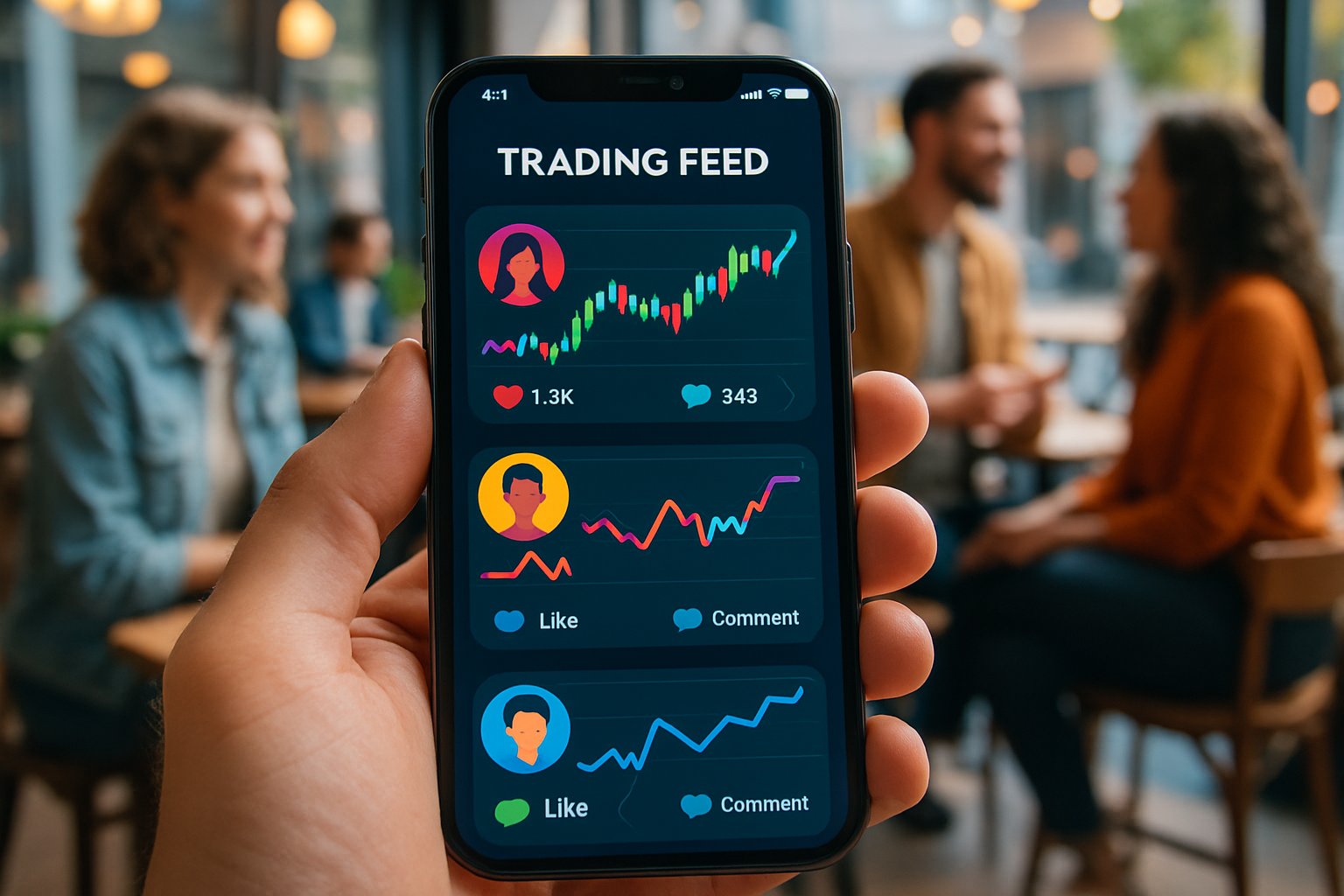
The HOOD Summit illustrated an inflection point. Speakers argued that merging execution data with social graphs will define the next era. Therefore, any firm enabling reliable Fintech Social Interaction could capture jealousy from less transparent rivals. Robinhood’s announcement demonstrates that battle cry.
Verified data reshape trust while community keeps people engaged. However, understanding the feed itself requires a closer look at design choices.
Inside Robinhood Social Feed
The beta feed arrives early next year for roughly 10,000 invited accounts. Subsequently, broader access will follow after performance and moderation metrics meet internal targets. Company executives describe the experience as a chronologically ordered stream of verified trade cards. Each card shows instrument, price, timestamp, and year-to-date return for the posting profile.
Users may follow peers, comment on rationale, and manually replicate positions. However, automatic copy execution remains disabled in the United States due to regulatory caution. Robinhood Social also surfaces avatar accounts that pull public disclosures from politicians, CEOs, and so-called whales. Consequently, retail traders can mirror notable moves without scraping filings themselves.
Key mechanics stand out:
- Verified trades only
- Follow and comment
- Avatar whale monitoring
- Manual copy requirement
Ultimately, the beta demonstrates Fintech Social Interaction in a controlled, data-rich environment. These elements aim to boost trust and sustain daily engagement. Next, we unpack individual features and why they matter.
Key Features Explained Clearly
Verified trade posting tackles the pervasive fake-profit screenshot problem. Moreover, identity badges confirm account ownership, limiting sock-puppet schemes. This dual verification anchors discussions in objective data, not bravado. Therefore, Fintech Social Interaction gains credibility when numbers cannot be doctored.
Follow-and-comment tools replicate familiar social designs, encouraging viral sharing of market theses. Additionally, threaded conversations allow context building around risk management or macro catalysts. Such depth remains rare on meme-centric forums.
Avatar feeds extend transparency to influential insiders. In contrast, existing portals often aggregate Form 4 filings days after trades occur. Pulling real-time disclosures could shorten reaction cycles for opportunistic retail portfolios.
Manual replication may frustrate some users who expected hands-free copy trading. Nevertheless, the design sidesteps adviser registration triggers highlighted by the SEC. Consequently, the company preserves flexibility while gauging appetite for fuller automation later.
Feature alignment balances transparency, engagement, and compliance. However, outside forces also shape success, especially competing platforms.
Competitive Landscape Shifts Fast
eToro pioneered automated copy trading overseas. Meanwhile, Stocktwits and Public already host vibrant discussion streams without transaction proof. Reddit groups like r/WallStreetBets marshal millions during speculative frenzies. Therefore, the beta feed will battle entrenched communities for mindshare.
The Menlo Park brokerage’s scale—26.8 million funded customers and $333 billion assets—offers an unfair distribution edge. Consequently, even partial adoption could dwarf smaller social trading upstarts overnight.
Analysts predict that creator monetization and integrated content commerce will intensify competition. Moreover, advertisers eye high-intent financial audiences for targeted product placements.
Fintech Social Interaction already thrives across these venues, yet few integrate real-time execution proof. Competitive forces will push innovation but also raise regulatory scrutiny levels. Next, we examine those regulatory landmines.
Risks And Compliance Hurdles
Copy trading in the United States can trigger fiduciary responsibilities. Therefore, the platform chose manual replication to avoid automatic execution pitfalls. FINRA and SEC officials already monitor finfluencer promotions on TikTok and X. Subsequently, any misleading performance claims inside the beta feed could invite enforcement.
Meme-stock volatility presents another concern. Verified volume spikes may accelerate herd behavior, increasing price swings and potential losses. Nevertheless, the firm argues transparency offers a self-correcting mechanism against pump-and-dump tactics.
Governance processes remain a mystery. Reporters will question how moderators adjudicate disputed trade evidence or harassment. Consequently, early policy missteps could damage trust before mass rollout.
Unchecked Fintech Social Interaction could magnify herd risk if safeguards lag. Clear compliance architecture, not flashy features, will decide sustainable advantage. With risks outlined, we turn to business upside.
Strategic Business Impacts Ahead
Higher engagement typically boosts net deposits and cross-selling conversion. Moreover, verified social trading could lengthen average session time, increasing advertisement and subscription revenue. The public earnings call already hinted at futures and AI tools marketed through the same rail.
Creator economy features, such as tipping or paid channels, may follow once legal groundwork solidifies. Therefore, Fintech Social Interaction becomes both a retention loop and a monetization funnel. Professionals can enhance their expertise with the AI Security Level 2™ certification.
Additionally, data from the beta feed may power new analytic products for institutional partners. Consequently, the brokerage could generate incremental revenue streams without increasing headline trading fees.
Monetization vectors appear plentiful if execution matches ambition. Finally, we assess future outlook and actions for stakeholders.
Conclusion And Future Outlook
Verified trade feeds represent a pivotal advancement for retail investors. Moreover, the pilot merges transparency with social engagement inside one mobile screen. Fintech Social Interaction will likely influence user expectations across the brokerage landscape. Compliance guardrails, however, must tighten as participation scales. Platforms that balance excitement with protection may command loyalty and revenue. Meanwhile, regulators watch carefully, ready to intervene if hype overrides disclosure. Industry leaders should monitor beta metrics, refine governance, and plan integrations now. For deeper technical mastery, explore the linked AI Security Level 2™ certification and future proof your career.


