

AI CERTS
3 months ago
Retail Ad Tech Drives UK Black Friday Spend
Moreover, Adobe tracked a sharp rise in traffic from AI referrals, revealing a market in rapid transition.
IAB UK predicts digital ad investment will hit £45 billion by 2026. Meanwhile, programmatic now powers 78 percent of display buys. These trends illustrate a highly Fragmented Landscape where automation dictates performance. This article unpacks the forces behind the surge, the risks buyers face, and the tactics retailers can adopt to capture share in an increasingly AI-shaped E-commerce battlefield.
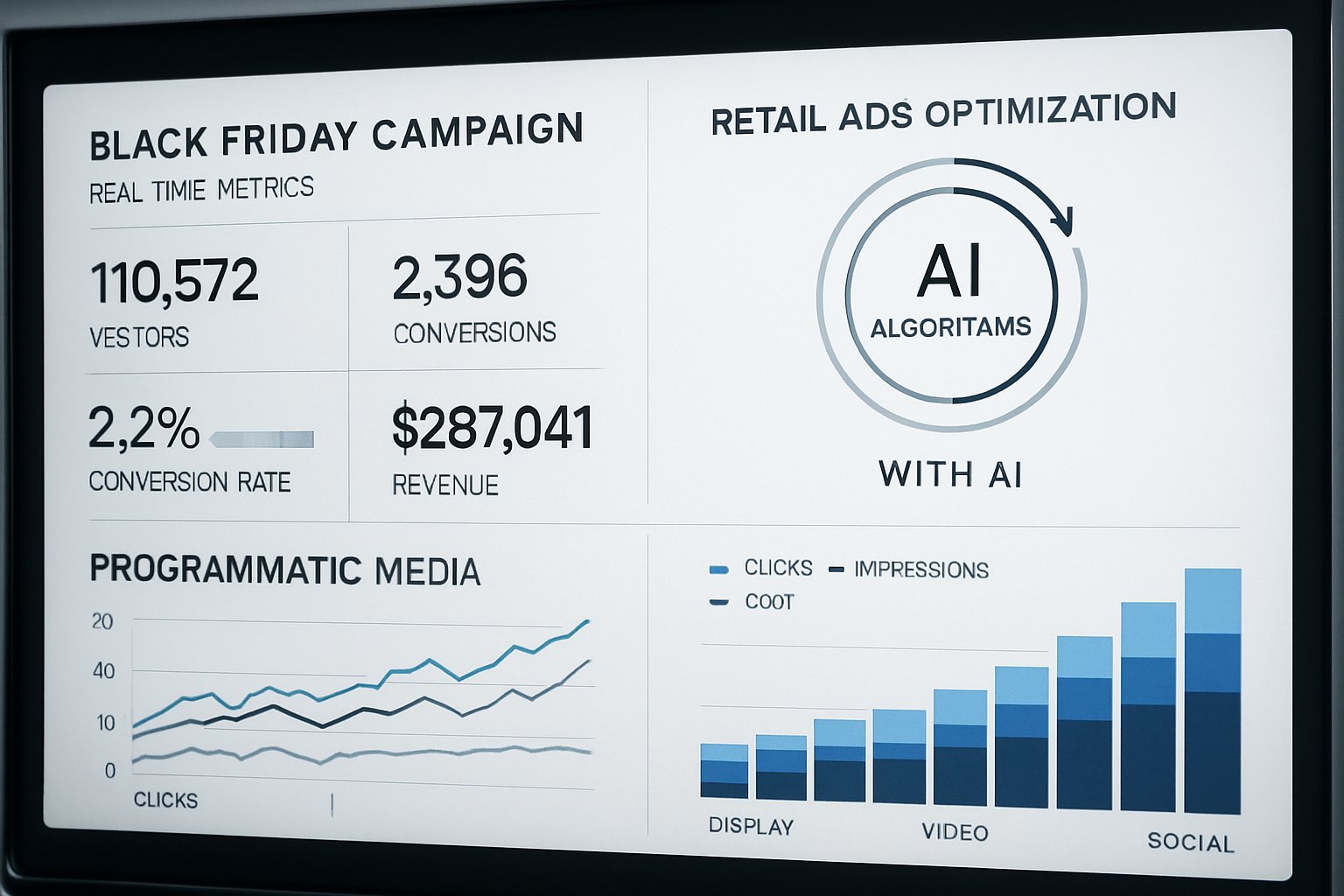
AI Fuels Deal Discovery
Generative models now write, design, and even place ads. Google’s Gemini adds conversational campaign building and AI Overviews placements. Meta’s Llama tools craft fresh images and text variants inside Advantage+. Consequently, discovery moments multiply, especially among Gen Z, where Barclays notes 8 percent already use AI to hunt deals.
TikTok expands catalogue ads and GMV Max optimisation, blurring video entertainment and checkout. Furthermore, Adobe saw GenAI referrals surge ahead of Black Friday, compressing the path to purchase. Therefore, brands that embrace Retail Ad Tech harness these new surfaces early.
These innovations shorten research stages. Yet, they also flood feeds with similar offers. Nevertheless, early adopters enjoy higher visibility and conversion.
Rapid discovery alters campaign timing. Retailers now launch promotions in October, warming audiences before the peak day. Consequently, UK Spending spreads across a longer window, creating fresh optimisation opportunities.
These shifts emphasise agility. However, agility demands precise targeting, which leads to our next section.
Programmatic Spend Rapidly Surges
Programmatic buying matches ads to audiences in milliseconds. IAB data shows 78 percent of display is now traded this way. Moreover, video and “TV+” formats lead growth, reflecting changing viewer habits.
Retail Ad Tech integrates programmatic pipes with retailer data, enabling first-party targeting at scale. Consequently, performance improves, and wasted impressions fall. Salesforce reports a 9 percent lift in conversion for merchants using AI-driven optimisation during the 2024 peak.
- Digital ad spend H1 2025: £18.7 billion
- Retail media share H1 2025: £1.5 billion
- Programmatic share of display: 78 percent
- Online Black Friday spend 2024: £1.12 billion
These figures underscore momentum. Additionally, automated bidding reaches audiences earlier, filling the funnel before rivals react. In contrast, manual buying struggles to keep pace.
Programmatic success flows naturally into retail networks, where shopper data magnifies relevance. We explore that next.
Retail Media Momentum Grows
Retail media places ads near digital shelves. Amazon, Tesco, and supermarket consortia now sell sponsored listings that convert directly. Consequently, UK Spending shifts toward retailers hosting both inventory and media.
First-party purchase data drives superior segmentation. Moreover, shoppable formats reduce clicks required for checkout. Therefore, advertisers observe a stronger return on ad spend than in broader display pools.
Jon Mew, CEO of IAB UK, states, “Innovation is driving growth from AI to retail media.” His view echoes agency sentiment that Retail Ad Tech will dominate holiday planning.
However, this success intensifies the already Fragmented Landscape. Buyers juggle isolated dashboards, creating attribution headaches. We address creative complexity next.
Creative Automation Transforms Campaigns
Generating banners once took days. Today, Meta, Google, and specialised vendors deliver dozens of variants in minutes. Additionally, Dynamic Creative Optimisation serves the best version based on live signals.
Consequently, SMEs without large studios now test messaging like global brands. Furthermore, platforms claim that faster asset delivery boosts click-through rates. Yet, homogeneity risks brand dilution if every competitor uses similar prompts.
Security also matters. Advertisers handling sensitive data can deepen expertise with the AI Security Level 2 certification. Such programmes ensure teams govern AI use responsibly inside Retail Ad Tech stacks.
Creative abundance increases media efficiency. Nevertheless, measurement must keep pace, which leads to the next challenge.
Measurement Faces New Challenges
Attribution now spans social commerce, AI search, and retail networks. Consequently, duplicated reach and inconsistent metrics plague analysts. Agencies report growing demand for unified reporting tools.
Moreover, platforms guard performance data, citing privacy. Therefore, marketers struggle to verify incremental lift, especially across a Fragmented Landscape.
Industry bodies propose open standards, yet adoption remains slow. Nevertheless, emerging clean room technologies show promise for privacy-safe aggregation. Meanwhile, buyers test mixed-model approaches to estimate cross-channel impact.
Measurement pain fuels concerns about regulation, explored in the next section.
Regulation And Trust Concerns
Consumers worry about synthetic ads. Additionally, the EU AI Act imposes transparency duties on businesses deploying generative creatives. Consequently, legal teams review disclosures before campaigns launch.
Platforms add guardrails, but advertisers hold final responsibility. Therefore, risk management skills become vital within Retail Ad Tech teams. Professionals bolster compliance knowledge through certifications like the earlier linked course.
Ad-fraud threats also evolve. Google claims Gemini reduces invalid traffic by 40 percent. Nevertheless, fraudsters adapt quickly, keeping security teams vigilant.
Trust remains a currency. Brands that navigate rules successfully gain shopper confidence, boosting E-commerce sales. Our checklist summarises winning tactics.
Winning Holiday Strategy Checklist
Marketers preparing for Black Friday 2025 should:
- Adopt AI campaign builders early to secure new inventory.
- Allocate budget to retail media for basket-close influence.
- Deploy Dynamic Creative Optimisation for personalised messaging.
- Use clean rooms and incrementality tests for accurate measurement.
- Train staff with security certifications to meet regulatory demands.
Following these steps positions brands to maximise UK Spending gains. Additionally, they protect against compliance pitfalls.
Effective planning sets the stage for higher conversion when peak traffic hits. Consequently, businesses can outpace competitors in a crowded marketplace.
These tactics complete our exploration. However, a brief recap will cement the main ideas.
Conclusion And Next Steps
Retail Ad Tech now underpins the UK’s largest discount event. Generative AI accelerates creative, programmatic pipes deliver precision, and retail media closes sales. Moreover, analysts record escalating UK Spending each season as innovation drives convenience. Nevertheless, a Fragmented Landscape complicates measurement and compliance, while consumers scrutinise authenticity. Therefore, brands must balance speed with responsibility.
Teams that embrace AI securely, measure rigorously, and learn continuously will convert rising holiday traffic into lasting growth. Consequently, readers should explore advanced programmes like the linked AI Security Level 2 certification to strengthen skills and safeguard results.


