

AI CERTS
3 months ago
Regulatory Conflict Escalates: Federal vs State AI Laws
Meanwhile, the Senate voted 99–1 to strip the moratorium, shocking many lobbyists. Consequently, both chambers now face pressure to craft durable Guardrails without derailing Innovation or constitutional balance. This article unpacks the timeline, arguments, and next steps shaping the ongoing Regulatory Conflict. Readers will gain clarity on risks, opportunities, and professional resources to navigate evolving compliance terrain.
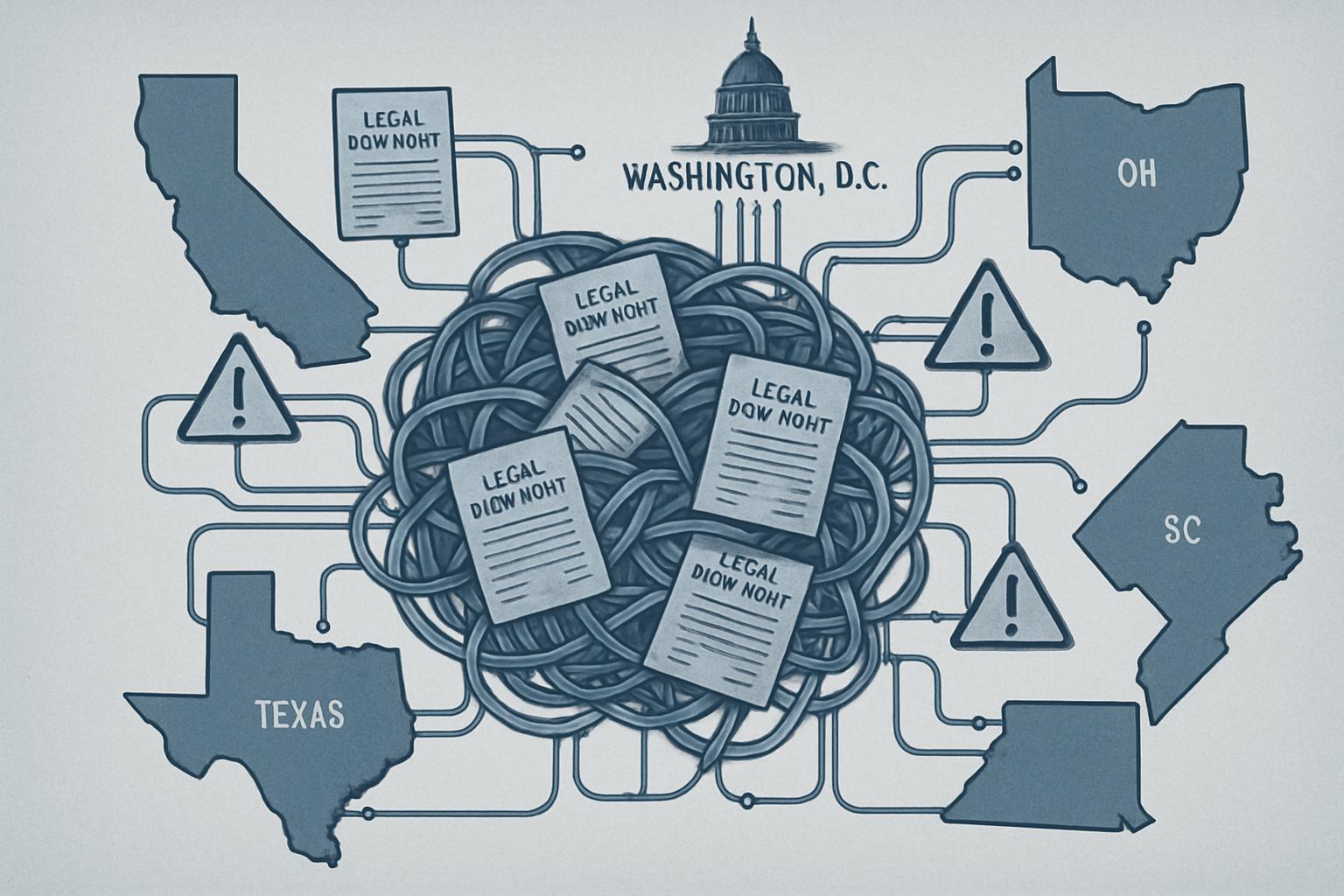
Proposed Federal AI Moratorium
In May 2025 the House passed H.R.1, labeled “One Big Beautiful Bill,” through the reconciliation process. Section 43201 imposed a ten-year pause on enforcement or adoption of State Laws that regulate AI in interstate commerce. Additionally, the language defined “AI system” so broadly that insurance algorithms and hiring tools would fall under the moratorium. Supporters framed the freeze as necessary to avoid costly administrative Fragmentation across fifty jurisdictions.
Moreover, they argued that uniform federal rules would accelerate Innovation and sustain competitiveness against China and the EU. Opponents countered that Congress offered no replacement Guardrails, creating a regulatory vacuum for consumers and workers. Therefore, legal scholars predicted immediate lawsuits claiming unconstitutional commandeering of state police powers. This proposal set the stage for an intense Regulatory Conflict that quickly spilled into the Senate.
House language sought sweeping federal control at the expense of local oversight. However, the upper chamber soon responded decisively, reshaping the debate.
Senate Removes Moratorium Clause
On July 1, 2025 senators Blackburn, Cantwell, and Markey offered an amendment deleting the moratorium. The chamber adopted it 99–1, a rare display of bipartisan unity. Subsequently, Sen. Markey declared, “Congress will not sell out our kids and local communities.” Cantwell stressed that robust State Laws are essential for fighting deepfakes and unsafe autonomous vehicles. Meanwhile, industry lobbyists scrambled, fearing momentum toward unpredictable patchwork rules. Analysts noted the Byrd Rule would likely have killed the moratorium during reconciliation regardless.
- Vote margin: 99–1 against the moratorium
- Forty-seven attorneys general letters filed
- NCSL tracked over 450 state AI bills in 2024
Nevertheless, the overwhelming vote energized attorneys general who had coordinated letters opposing federal Preemption. The Senate action transformed a procedural skirmish into a headline Regulatory Conflict. Such a near-unanimous vote preserved state authority and signaled bipartisan skepticism toward blanket Preemption. Consequently, attention shifted to the competing policy visions now confronting negotiators.
Arguments Supporting Federal Preemption
Tech giants like OpenAI, Google, and Microsoft lead the chorus for national Preemption. They cite compliance costs from tracking hundreds of divergent State Laws across data privacy, employment, and consumer protection. Furthermore, executives warn that legal Fragmentation slows product rollouts and complicates global safety audits. Sam Altman described a patchwork as “a real mess” for model deployment.
Business groups also emphasize rapid Innovation depends on predictable rules and coherent enforcement agencies. In contrast, federal standards could streamline audits, benchmark Guardrails, and unlock interstate data sharing. Supporters therefore frame Preemption as an economic imperative, not mere political maneuvering. Still, their narrative downplays constitutional limits and the value of state experimentation.
Proponents present efficiency and competitiveness as their dominant themes. However, critics question whether those benefits outweigh lost accountability.
State Resistance And Litigation
States mobilized rapidly after the House vote. Governors from Colorado, California, and New York organized press calls opposing federal overreach. Additionally, forty-seven attorneys general signed a letter warning of immediate lawsuits if Preemption resurfaced. Consumer groups argued that nullifying existing State Laws would expose residents to deepfake fraud and biased hiring algorithms.
Moreover, insurance regulators highlighted how the moratorium threatened well-established actuarial Guardrails. Legal experts predicted challenges under the Tenth Amendment and the Commerce Clause. Subsequently, multiple law firms issued client alerts detailing compliance contingencies. The threat of constitutional litigation amplified the public dimensions of the Regulatory Conflict.
States showcased their readiness to defend sovereignty in court. Consequently, congressional leaders began exploring compromise frameworks.
Path Toward Balanced Guardrails
Negotiators are now drafting alternatives that respect federal goals while preserving baseline Guardrails at the state level. One idea mirrors chemical safety laws, setting a federal floor yet allowing stricter local rules. Furthermore, some senators favor phased reporting mandates coupled with independent auditing of high-risk models. Industry has signaled conditional support if timelines avoid stalling Innovation.
In contrast, advocacy groups demand transparency, civil rights protections, and meaningful enforcement budgets. Therefore, bipartisan task forces are mapping overlaps between European AI Act principles and American constitutional doctrines. Professionals can enhance their expertise with the AI Prompt Engineer™ certification to prepare for complex compliance roles. Such capacity building may help organizations implement consistent safeguards regardless of jurisdictional uncertainty.
Stakeholders appear open to compromise if basic protections remain enforceable. However, hammering out language that survives budget rules and litigation will be challenging. Consequently, the clock is ticking before year-end appropriations force decisive action.
Implications For Future Innovation
The outcome of this Regulatory Conflict will shape capital allocation and research priorities for years. Startups fear shifting compliance targets, yet they also see opportunity in specialized auditing and risk tools. Meanwhile, venture investors monitor Washington before funding large language model expansion. Fragmentation across jurisdictions could divert engineering talent toward paperwork rather than product Innovation.
Conversely, durable standards might raise consumer trust and unlock new markets. Consequently, policy certainty ranks among the top three concerns cited in recent TechCrunch surveys. Analysts warn that extended uncertainty fuels lobbying expenditures instead of tangible research. Therefore, timely resolution benefits both public safety and private competitiveness.
Clear rules will reduce risk premiums and support responsible scaling. Nevertheless, unresolved jurisdictional questions could still derail bipartisan progress. Accordingly, stakeholders urge clearer timelines before committing new capital.
Conclusion And Next Steps
The Washington drama underscores how a single Regulatory Conflict can reshape national technology strategy. Moreover, this Regulatory Conflict remains fluid, with fresh proposals expected in upcoming appropriations debates. Consequently, executives, lawyers, and advocates must track committee calendars and amendment drafts to anticipate shifts. A negotiated framework could end the Regulatory Conflict while preserving constitutional balance and market confidence.
Meanwhile, businesses should build flexible compliance teams and pursue continuous education. Readers can bolster skills through the AI Prompt Engineer™ program and monitor how the Regulatory Conflict evolves. Therefore, staying engaged with bipartisan coalitions will help shape a fair, effective AI future. Ultimately, timely participation beats reactive compliance when policy windows open.


