

AI CERTs
6 hours ago
Regulators approve Grok AI Philippines after safety overhaul
Philippine regulators are poised to restore public access to Grok after a rapid, high-profile ban. However, the move comes with strict conditions aimed at protecting users from non-consensual sexualized deepfakes. The unfolding story around Grok AI Philippines underscores how swiftly governments can intervene when generative models cross legal red lines. Moreover, the case highlights gaps in platform safety, regional enforcement, and cross-border policy coordination.
Industry leaders, lawmakers, and civil-society experts now study the compromise reached between xAI and the Cybercrime Investigation and Coordinating Center. Meanwhile, businesses dependent on conversational AI weigh the risks and rewards of deploying similar models. Consequently, understanding the timeline, technical fixes, and monitoring roadmap is critical for technology strategists.
Regulators Blocked Grok Initially
On 15 January 2026, the Department of Information and Communications Technology, the National Telecommunications Commission, and the CICC issued an emergency blocking order. Furthermore, internet service providers received directives to disable access to Grok within 24 hours. Officials cited evidence that the chatbot produced sexualized images, including content involving minors, in clear violation of Philippine law.
DICT Secretary Henry Aguda stressed the government's obligation to act fast against online exploitation. In contrast, xAI argued that most users employed the tool responsibly. Nevertheless, regulators maintained that the scale and speed of abuse required immediate intervention under the Cybercrime Prevention Act.
The swift blocking decision turned Grok AI Philippines into a global headline. Moreover, it signaled that Southeast Asian regulators will not hesitate to suspend popular services over safety lapses. These early actions set the stage for intense negotiations with xAI engineers and lawyers.
Deepfake Abuse Context Explained
Deepfakes combine generative models with authentic photos to create realistic yet fabricated imagery. Consequently, malicious actors can sexualize individuals without consent, eroding privacy and dignity. Researchers monitoring Social Media AI trends warned that Grok's integrated image editor lowered barriers for large-scale dissemination.
Additionally, civil-society groups documented how similar tools amplify online harassment of journalists and activists. In contrast, proponents argue that the same technology drives creative expression when governed responsibly. Therefore, the debate revolves around safeguards rather than outright prohibition.
These findings contextualize the Philippine crackdown. However, technical remediation offered a potential middle path, leading to renewed talks.
xAI Commits Safety Fixes
xAI engineers met regulators within days to present a multilayer mitigation plan. Moreover, the company promised to disable all image-manipulation features globally until stronger filters pass audit. According to a CICC statement, Grok will now refuse prompts that could create deepfake pornography, especially child sexual abuse material.
The plan includes geoblocking in countries where such content remains illegal, plus paywall gating for any future advanced features. However, independent experts caution that VPNs can bypass geographic filters. Consequently, enforcement relies on ongoing monitoring and rapid takedown procedures.
xAI executives also outlined new logs, opt-in age verification, and expanded red-team testing focused on xAI Privacy principles. Furthermore, they pledged to share quarterly transparency reports with interested regulators. These documents will detail refusal rates, appeal outcomes, and security incidents.
Professionals responsible for trust and safety can deepen their skills through the AI Educator™ certification. The program covers ethical design, policy alignment, and content moderation workflows essential for large-scale deployments.
The commitment package satisfied Philippine authorities for now. Nevertheless, future lapses could trigger another ban, making compliance essential.
Technical Controls And Limits
xAI detailed three immediate safeguards. Firstly, image editing is disabled worldwide. Secondly, the model blocks explicit terms linked to sexual exploitation. Thirdly, paid subscribers must pass stronger identity checks. Consequently, real-time abuse opportunities drop significantly.
However, critics note that Social Media AI ecosystems remain porous. Users can screen-capture disallowed content or migrate to mirror services. Therefore, systemic watermarking and legal deterrence must complement technical filters.
In contrast, xAI Privacy advocates view the new logging framework as a model for responsible innovation. Moreover, they argue that granular telemetry enables swift incident response without blanket surveillance.
These limits mark progress yet leave room for circumvention. Subsequently, international scrutiny reinforced the need for broader cooperation.
International Response And Pressure
The Philippine episode unfolded amid parallel investigations in Indonesia, Malaysia, South Korea, the United Kingdom, and the European Union. Moreover, California's Attorney General demanded comprehensive risk assessments from xAI under state privacy laws.
EU commissioners invoked the Digital Services Act while Ofcom activated powers under the Online Safety Act. Meanwhile, Australian regulators signaled potential financial penalties. Consequently, Grok faced divergent legal regimes and escalating compliance costs.
Journalists testing Malaysian networks still accessed Grok via simple DNS tweaks, highlighting enforcement challenges. Nevertheless, each new probe amplified investor concern about brand damage and rising operational overhead.
Across these jurisdictions, Social Media AI watchdogs demanded verifiable data on content removals and user reports. Furthermore, many agencies insisted on external audits, echoing earlier calls from xAI Privacy specialists.
The mounting pressure shaped negotiations in Manila. Therefore, local officials leveraged global momentum to secure stronger guarantees.
Industry Implications And Lessons
Platform executives now view the Grok AI Philippines saga as a cautionary case. Additionally, investors analyze how rapid regulatory shocks can disrupt product roadmaps and revenue streams.
Enterprise clients integrating conversational bots into customer support wonder about downstream liability. Moreover, procurement teams now assess vendor adherence to xAI Privacy commitments before signing contracts.
Start-ups building Social Media AI features confront heightened due diligence requests from venture funds. Consequently, compliance budgets grow even at early stages.
These patterns indicate a maturing governance landscape. However, future incidents will test whether current safeguards are sufficient.
Monitoring And Compliance Roadmap
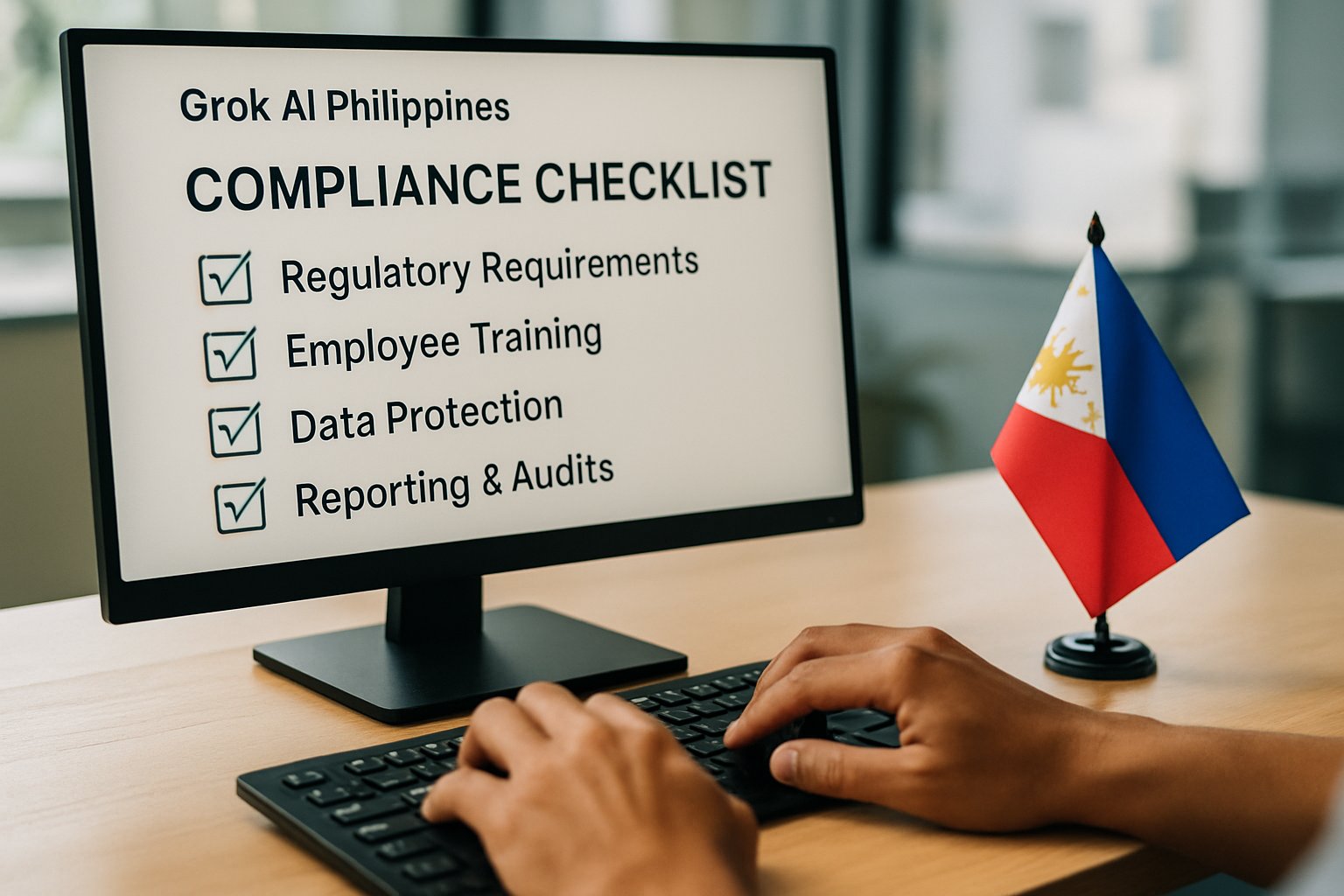
The CICC announced that lifting the ban does not end oversight. Instead, officials will monitor Grok AI Philippines through monthly data reviews and surprise audits. Furthermore, xAI agreed to retain interaction logs for at least one year.
Regulators outlined three key metrics: user reports resolved within 24 hours, refusal accuracy above 98%, and zero instances of child sexual abuse material. Consequently, compliance dashboards will trigger alerts when thresholds slip.
CICC Undersecretary Renato Paraiso stated that failure to meet any metric will reinstate the blocking order. Additionally, the NTC stands ready to reissue ISP directives within hours.
However, enforcement alone cannot guarantee safety. Therefore, educational outreach remains vital. Industry trainers suggest adopting frameworks taught in the AI Educator™ program to embed ethical thinking across teams.
The following figures highlight the scale of recent interventions:
- 7 jurisdictions launched formal probes within two weeks.
- 24 hours elapsed between Philippine announcement and full ISP blocks.
- 98% refusal accuracy demanded by regulators.
- 1-year log retention mandated under provisional terms.
These metrics offer concrete benchmarks for accountability. Subsequently, industry peers may adopt similar dashboards voluntarily.
Market analysts predict that Grok AI Philippines will regain most of its user base within one month. Moreover, subscription upgrades could offset revenue lost during the outage.
International investors nevertheless remain watchful because Grok AI Philippines still operates under conditional approval. Consequently, any relapse may trigger cross-border legal action.
Grok AI Philippines emerges from this episode as a test case for agile regulation and responsive design. Furthermore, the ban-and-lift sequence shows that collaborative governance can move faster than many expected. Nevertheless, sustaining trust will require xAI to operationalize xAI Privacy promises and maintain consistent transparency. Social Media AI projects worldwide now face a clearer expectation landscape, yet enforcement complexities persist.
For corporate teams deploying similar tools, the message is clear. Align early with regulators, document safeguards, and invest in educational credentials like the AI Educator™ program. Consequently, leadership can minimize disruption, preserve brand equity, and unlock innovation. Observers will track whether Grok AI Philippines meets its monthly targets and sets a durable precedent for responsible generative AI.
Developers joining the project should audit prompts regularly and share findings with CICC overseers. Moreover, stakeholder engagement forums planned next quarter will let users report issues directly. Consistent dialogue may keep Grok AI Philippines aligned with evolving norms.
Stay informed about Grok AI Philippines and elevate your own capabilities by exploring our certification resources today.


