

AI CERTS
2 hours ago
Regional Infrastructure Scaling: Saskatchewan 300MW Data Center
Federal incentives, cheap prairie power, and sovereign AI policy are tightening the countdown. However, community questions about water, emissions, and grid strain remain loud. Industry veterans therefore watch Saskatchewan as a bellwether for domestic compute policy. This article unpacks the players, numbers, and risks behind the province’s fast track. It also highlights certifications that can prepare professionals for new cloud roles.
Meanwhile, competitors in Ontario monitor prairie incentives warily. Consequently, Regional Infrastructure Scaling may soon spread beyond Saskatchewan’s borders.
Policy Tailwinds Move Market
Canada’s 2024 Budget earmarked CA$2 billion for sovereign AI infrastructure. Consequently, developers chase the AI Compute Access Fund administered by ISED. Prairie2Cloud’s February submission leans heavily on that stimulus for initial 10 MW financing. Meanwhile, Bell’s national AI Fabric program aligns squarely with Ottawa’s sovereignty narrative. Regional Infrastructure Scaling therefore receives top-table political support, speeding federal environmental review. Policy money is real and immediate.
However, approvals still hinge on provincial grid studies. That backdrop sets the stage for Prairie2Cloud’s ambitious campus. Consequently, provincial ministries coordinate with ISED to streamline permitting workflows. Such inter-governmental alignment was rare in earlier Canadian digital builds.
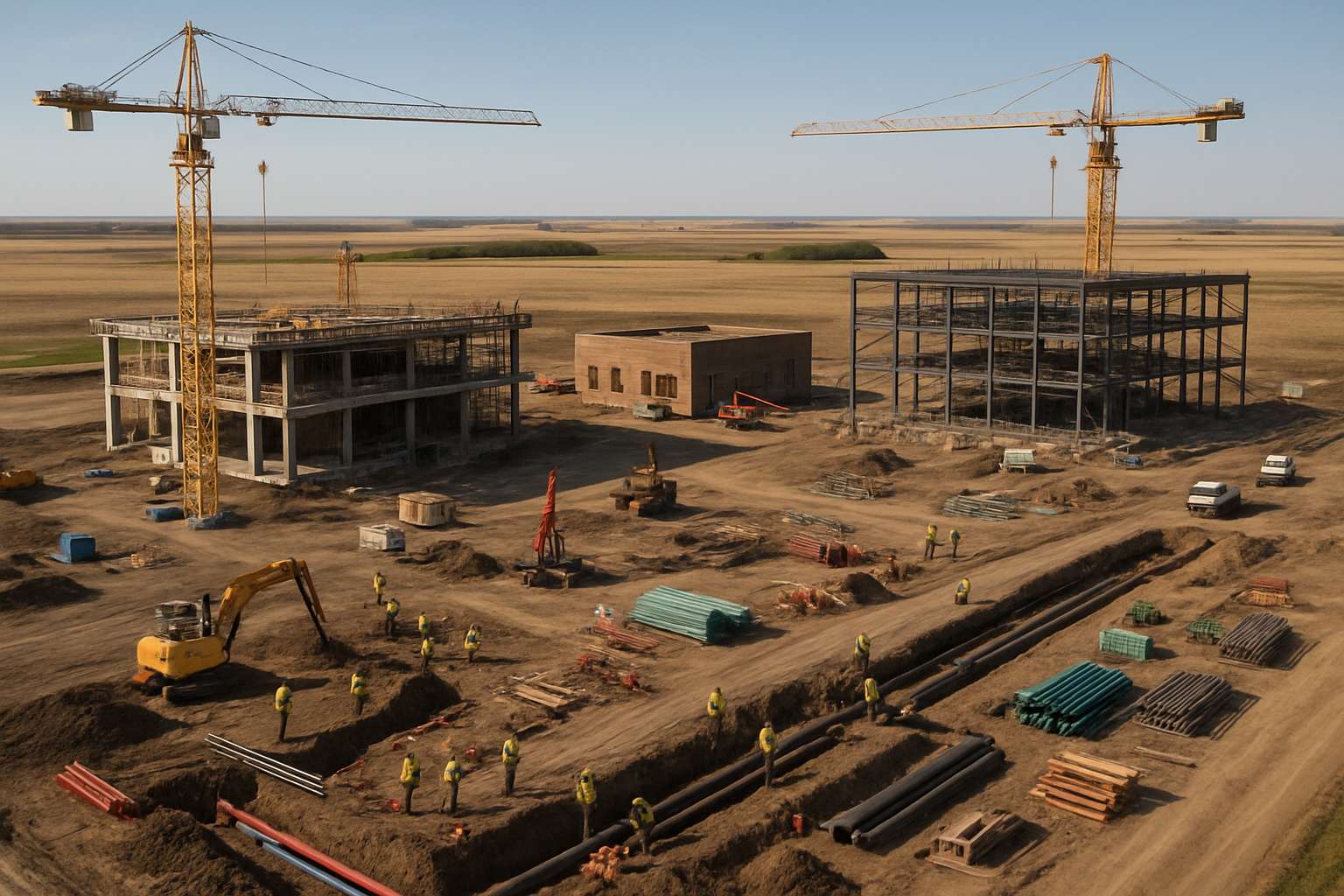
Sovereign Compute Opportunity Rise
Banks, hospitals, and public agencies require compute isolated from U.S. legal reach. In contrast, Saskatchewan sites promise full Canadian jurisdiction. Regional Infrastructure Scaling here meets concrete compliance budgets waiting to deploy. Therefore, anchor tenants can justify long leases at competitive rates. Domestic jurisdiction converts policy into purchase orders. Next, examine the leading greenfield proposal.
Prairie2Cloud Campus Vision
Prairie2Cloud plans a Belle Plaine campus engineered for immersion-cooled AI clusters. Phase 1 targets 10 MW IT load, costing roughly CA$300 million. Subsequently, Phase 3 scales toward the headline 300MW mark between 2030 and 2034. Design PUE aims for 1.05, aggressively low by global standards. Moreover, the developer cites marginal generation costs of 2.8¢ per kilowatt-hour. Regional Infrastructure Scaling rhetoric features prominently throughout the company’s investor deck. The Saskatchewan location offers abundant land and access to TransGas pipelines. Each building functions as a high-density data center optimized for GPU racks.
- Site size: 1,000+ acres near Trans-Canada Highway
- Planned corridor: up to 1 GW over decade
- Target cooling: dielectric immersion baths
- Proposed substation: 300 MVA link with SaskPower
These specifications outline a technically credible roadmap. Prairie2Cloud bets on speed and efficiency. Consequently, rivals must match its performance promises. Engineers plan to route fiber along existing pipeline corridors, reducing land disturbance. In contrast, rival sites may need greenfield trenching, raising costs. Bell’s telco muscle brings different strengths.
Bell AI Fabric Footprint
BCE filed rezoning documents for a Sherwood campus covering 160 acres. First phase features an 8,500 m² data center delivering roughly 50 MW. Bell envisions multiple 50 MW halls, consequently pushing eventual capacity toward 300MW territory. Furthermore, an on-site SaskPower substation would tighten latency and lower interconnection delays. Regional Infrastructure Scaling at BCE relies on leveraging its national fibre backbone. Saskatchewan stands to gain skilled jobs and research partnerships through Bell’s program.
Moreover, BCE can underwrite early capacity using its own network analytics workloads. Bell’s proposal blends capital strength with carrier networks. Nevertheless, utility alignment remains its critical dependency. Understanding grid constraints is therefore essential. That internal demand derisks the first facility phase.
Utility And Grid Challenges
Delivering continuous 300MW asks SaskPower for unprecedented transmission upgrades. Consequently, developers discuss behind-the-meter gas turbines and battery systems. However, such generation raises emissions, water, and carbon capture questions. In contrast, Saskatchewan targets net-zero electricity by 2050, complicating approvals. Regional Infrastructure Scaling therefore intersects with environmental regulation and community scrutiny. Power cost advantages vanish without timely permits. Hence, technical due diligence will steer investor confidence.
Economics further illustrate the stakes involved. SaskPower’s latest integrated resource plan already flags flexibility concerns during peak winters. Therefore, battery storage sizing becomes pivotal for grid stability. Experts suggest modular gas turbines that can later convert to hydrogen blends. Nevertheless, securing long-term fuel contracts remains unresolved.
Economic And Environmental Stakes
Construction crews could generate thousands of person-years in contracts and trades. Moreover, provincial taxation would benefit from long-term property assessments. A recent data center dynamics report estimated CA$485 million for the Moose Jaw proposal. Bell and Prairie2Cloud similarly forecast nine-figure capital spends per phase. Regional Infrastructure Scaling thus links directly to rural economic diversification agendas. Nevertheless, water usage for cooling stirs local concern, as CBC coverage shows. Stakeholders propose heat reuse in greenhouses to soften objections. Benefits appear significant yet conditional.
Effective risk management will shape public perception. Carbon pricing trajectories will further shape operating expenditures over 20-year horizons. In contrast, Alberta locations offer lower levy exposure but less sovereignty appeal. Local colleges are drafting micro-credential programs for technicians and electricians. Consequently, workforce readiness emerges as a secondary competitive factor. Stakeholders now look toward concrete next steps.
Next Steps For Stakeholders
Developers must secure anchor tenants and finalize power-purchase agreements. Consequently, transparent timelines and engineering studies will reassure investors. BCE intends to publish environmental impact statements during the Sherwood municipal hearings. Prairie2Cloud plans a front-end engineering design award within months. Professionals can validate skills through the AI Cloud Architect™ certification. Regional Infrastructure Scaling knowledge will differentiate candidates during upcoming hiring waves.
Clear milestones, certifications, and community engagement will decide success. Therefore, monitoring 2026 permitting events is crucial. Investors also expect transparent ESG dashboards updated quarterly. Such reporting builds credibility with institutional funds eyeing prairie projects.
Saskatchewan’s sudden rise illustrates Canada’s maturing digital ambitions. Prairie2Cloud and BCE show how Regional Infrastructure Scaling moves from slides to survey stakes. However, grid capacity, water stewardship, and community trust will govern execution. Continuously updated skills remain vital for professionals steering these mammoth data center builds.
Explore the above certification and stay informed as policy and engineering milestones unfold. Moreover, constant dialogue among utilities, municipalities, and developers will decide the final blueprint. Stay tuned as prairie megawatts transition from proposal to productive silicon.


