

AI CERTS
1 hour ago
Recruitment Integrity Tech Battles Deepfake Interview Fraud
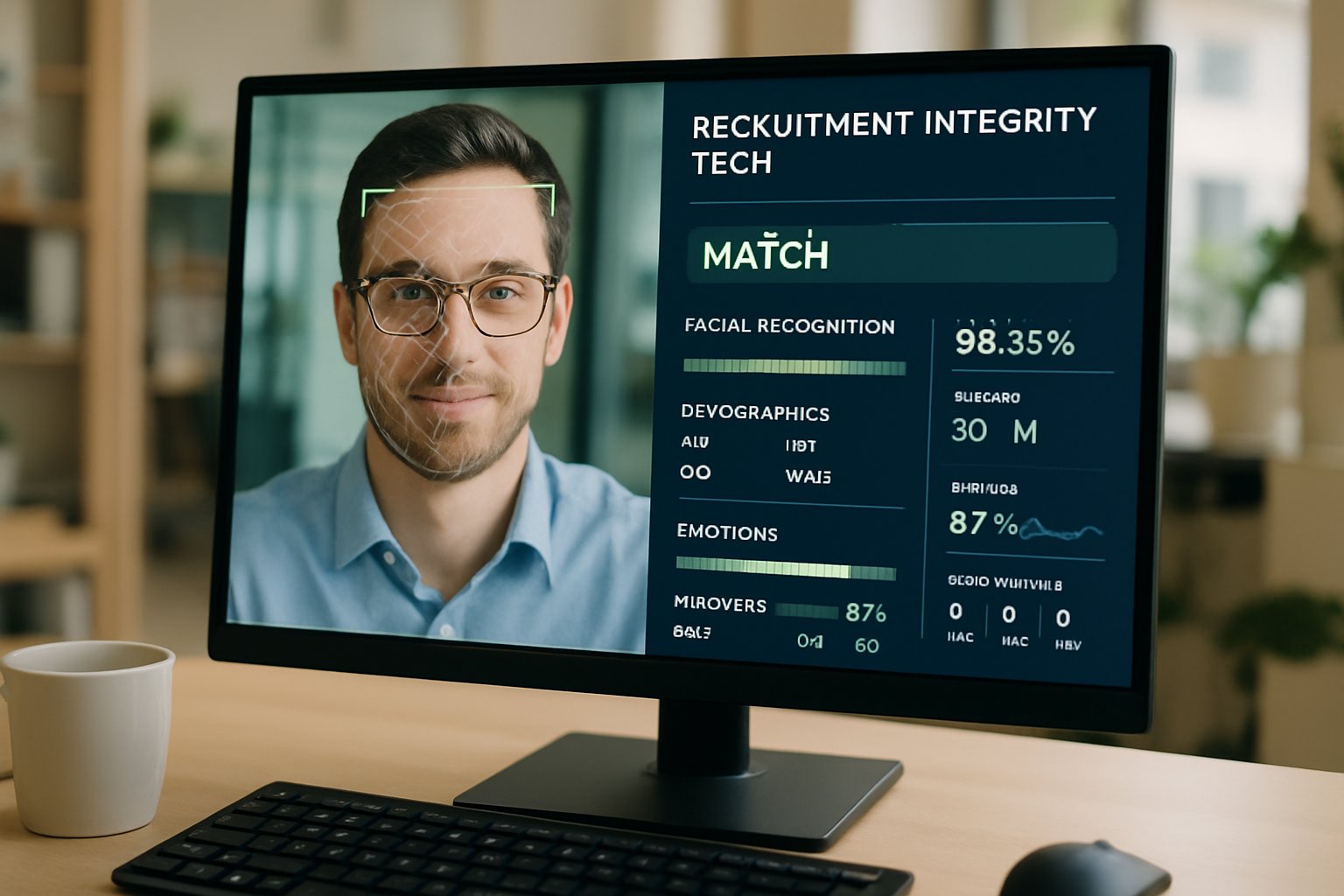
However, the technology introduces fresh governance dilemmas and performance questions.
The following analysis maps market developments, measurable risks, and practical safeguards.
Moreover, it details how agentic platforms detect deepfakes, proxy candidates, and hidden prompts.
Practitioners will gain actionable guidance, supported by current statistics and vendor insights.
Therefore, executives can decide when their teams are Agentic HR Ready for the next fraud wave.
Fraud Trends Accelerate Fast
Survey evidence paints a stark picture of abuse in remote recruitment.
Greenhouse reported that 41% of applicants admitted gaming applicant tracking systems with prompt hacks.
In contrast, 18% of hiring managers already saw deepfakes during interviews.
Furthermore, Pindrop logged a 680% rise in voice deepfakes across 1.2 billion calls.
Consequently, employers fear Planning Fraud that evades traditional background checks and onboarding gates.
Gartner even projects that one quarter of candidate profiles could be fake by 2028.
Moreover, academic researchers measured marketplace bounties where fraud services cost only $25 per worker.
These numbers highlight a widening attack surface.
Therefore, Recruitment Integrity Tech adoption is gathering speed across industry sectors.
Fraud growth demonstrates urgent need for active defenses.
Meanwhile, agentic solutions emerge to fill that gap.
Agentic Systems Explained Clearly
Agentic systems combine perception, reasoning, and action within autonomous microservices.
Phenom, Glider, and InterviewGuard embed these agents directly into scheduling, assessment, and validation workflows.
Additionally, liveness checks, linguistic analysis, and network telemetry run continuously behind the scenes.
Consequently, recruiters delegate high-volume vigilance to software while retaining final authority.
That hybrid model keeps teams Agentic HR Ready without overwhelming staff capacity.
Core Agentic Functions List
- Identity verification through face, voice, and credential cross-matching
- AI Monitoring of browser tabs, remote desktop tools, and hidden windows
- Linguistic drift analysis to flag real-time LLM assistance
- Automated escalation workflows feeding human reviewers
Moreover, vendors fuse these signals to reduce false positives.
Current Adoption Drivers Now
Accelerated digital hiring, compliance mandates, and executive pressure drive rapid implementation.
Therefore, Recruitment Integrity Tech often integrates before large growth campaigns begin.
Planning Fraud scenarios feature prominently in board risk registers, further motivating investment.
Agentic capabilities now sit at the heart of modern hiring architectures.
Subsequently, detection tooling landscapes deserve closer review.
Detection Tool Landscape Today
Vendors compete fiercely to claim best fraud catch rates.
Phenom advertises a Fraud Detection Agent inside its Interview Intelligence suite.
InCruiter reports deepfake flags in 25% of suspect sessions.
InterviewGuard lists detection of more than 100 AI tools and remote desktop anomalies.
Meanwhile, Pindrop specializes in spectral voice forensics for meetings and contact centers.
Glider positions Agentic AI Interviews as a skills validation funnel with built-in proctoring.
Market Numbers Snapshot
- 680% year-over-year spike in deepfake calls, according to Pindrop
- 54% of job seekers faced AI-led interviews, Greenhouse survey
- 32.7% of fraud bounties originate from programmatic channels, academic study
- $44.5 billion forecast contact-center fraud exposure during 2025
Consequently, AI Monitoring has shifted from optional add-on to baseline purchasing criterion.
Recruitment Integrity Tech vendors frequently bundle dashboards for compliance teams.
Nevertheless, independent benchmarking remains scarce.
Scholars warn that vendor claims often lack transparent test protocols.
The tool market offers impressive breadth but uneven validation.
Therefore, decision makers must weigh evidence carefully before rollout.
Key Statistics And Risks
Numbers alone cannot capture human impact.
False positives may wrongly disqualify genuine candidates, harming diversity goals.
Moreover, aggressive surveillance can breach privacy legislation if consent processes fail.
Ethics in Hiring therefore demands balanced policies alongside technical controls.
Additionally, algorithmic bias must be audited across demographic groups.
Planning Fraud countermeasures sometimes push attackers toward more sophisticated evasion techniques.
Consequently, an arms race emerges between detectors and adversaries.
Recruitment Integrity Tech needs continuous re-training to stay effective against evolving deepfake generators.
AI Monitoring telemetry should feed post-incident reviews for ongoing improvement.
Risk management requires data, transparency, and active governance.
Hence, ethical guardrails gain priority within implementation playbooks.
Governance And Ethical Guardrails
Sound governance begins with clear purpose limitation and minimal data capture.
Furthermore, legal counsel should map jurisdictional consent rules before deployment.
Ethics in Hiring frameworks propose human review checkpoints and documented escalation paths.
Moreover, stakeholders must test systems for disparate impact using representative datasets.
Being Agentic HR Ready also means documenting fallback procedures when automated checks fail.
Consequently, manual verification remains essential for contested cases.
Without disciplined governance, Recruitment Integrity Tech may face regulatory backlash and reputational damage.
Professionals can enhance expertise with the AI Learning Development™ certification.
The program covers algorithmic accountability, bias mitigation, and practical oversight techniques.
Robust governance transforms technology from risky experiment into trusted infrastructure.
Subsequently, teams can focus on integration mechanics.
Implementation Best Practices Guide
Pilots should start with narrow roles and clear success metrics.
Meanwhile, cross-functional squads can monitor precision, recall, and candidate satisfaction.
Recruitment Integrity Tech rollouts benefit from phased gating strategies.
Additionally, progressive disclosure of security measures reduces candidate anxiety.
Planning Fraud simulations using synthetic adversaries help tune thresholds before full launch.
AI Monitoring dashboards must visualize false positive sources for rapid adjustment.
Teams declared Agentic HR Ready typically document staff training, data retention periods, and vendor service-level expectations.
Ethics in Hiring reviews should occur quarterly to catch drift and regulatory shifts.
Structured pilots de-risk complex integrations.
Consequently, organizations scale confidently after evidence-based tuning.
Future Outlook And Actions
Adversaries will continue improving real-time generative models, raising detection complexity.
Nevertheless, multimodal fusion and continual learning promise stronger defenses for recruiters.
Gartner expects synthetic candidate prevalence to keep rising, fueling demand for Recruitment Integrity Tech solutions.
Moreover, standard benchmarks and independent labs will likely appear to validate vendor claims.
AI Monitoring standards may align with emerging ISO workforce security guidelines.
Planning Fraud threat intelligence feeds should integrate with security operations centers for faster response.
Organizations that stay Agentic HR Ready will adapt quickly to policy and threat changes.
Ethics in Hiring considerations will expand to include biometric rights and transparency mandates.
The arms race will intensify across technical and policy fronts.
Therefore, proactive planning positions companies for resilient growth.
Conclusion Summary
Interview deepfakes, proxies, and prompt hacks now threaten every digital talent pipeline.
However, Recruitment Integrity Tech combines agentic detection, continuous AI Monitoring, and strong governance to counter these attacks.
Consequently, firms that plan early, test rigorously, and embed Ethics in Hiring principles will outpace adversaries.
Moreover, achieving an Agentic HR Ready state positions teams to adapt as threat vectors evolve.
Professionals should review vendor evidence, pilot carefully, and pursue industry certifications to sharpen skills.
Therefore, consider enrolling in the AI Learning Development™ program to lead secure hiring transformations.
Independent benchmarks will further mature the Recruitment Integrity Tech ecosystem over the next two years.


