

AI CERTs
2 hours ago
Real-Time Clinical Documentation AI Slashes Physician Burden
Clinicians still spend excessive hours typing rather than treating patients. However, new Real-Time Clinical Documentation AI promises to reverse that imbalance. The technology captures exam conversations, generates structured notes, and pushes drafts directly into the record. Consequently, physicians reclaim precious minutes and avoid late night “pajama time.” Industry adoption accelerated from pilots to enterprise rollouts during 2023 and 2025. Moreover, peer-reviewed studies now quantify measurable time savings and burnout reductions. Market analysts forecast multibillion revenue for vendors supplying these intelligent assistants. Nevertheless, accuracy, compliance, and privacy risks require robust governance. This article examines evidence, vendors, benefits, pitfalls, and practical steps for successful deployment. Readers will gain actionable insight into selecting, implementing, and governing the systems. Additionally, professionals can strengthen competencies through the AI+ Data Robotics™ certification. Let's explore how ambient intelligence reshapes daily documentation.
Market Momentum Surges Fast
Global demand for ambient scribes exploded in twelve months. Grand View Research valued the United States market at $397 million in 2024. Furthermore, analysts predict compound annual growth exceeding 25 percent through 2033. ResearchAndMarkets projects global spending of $3.11 billion this year.
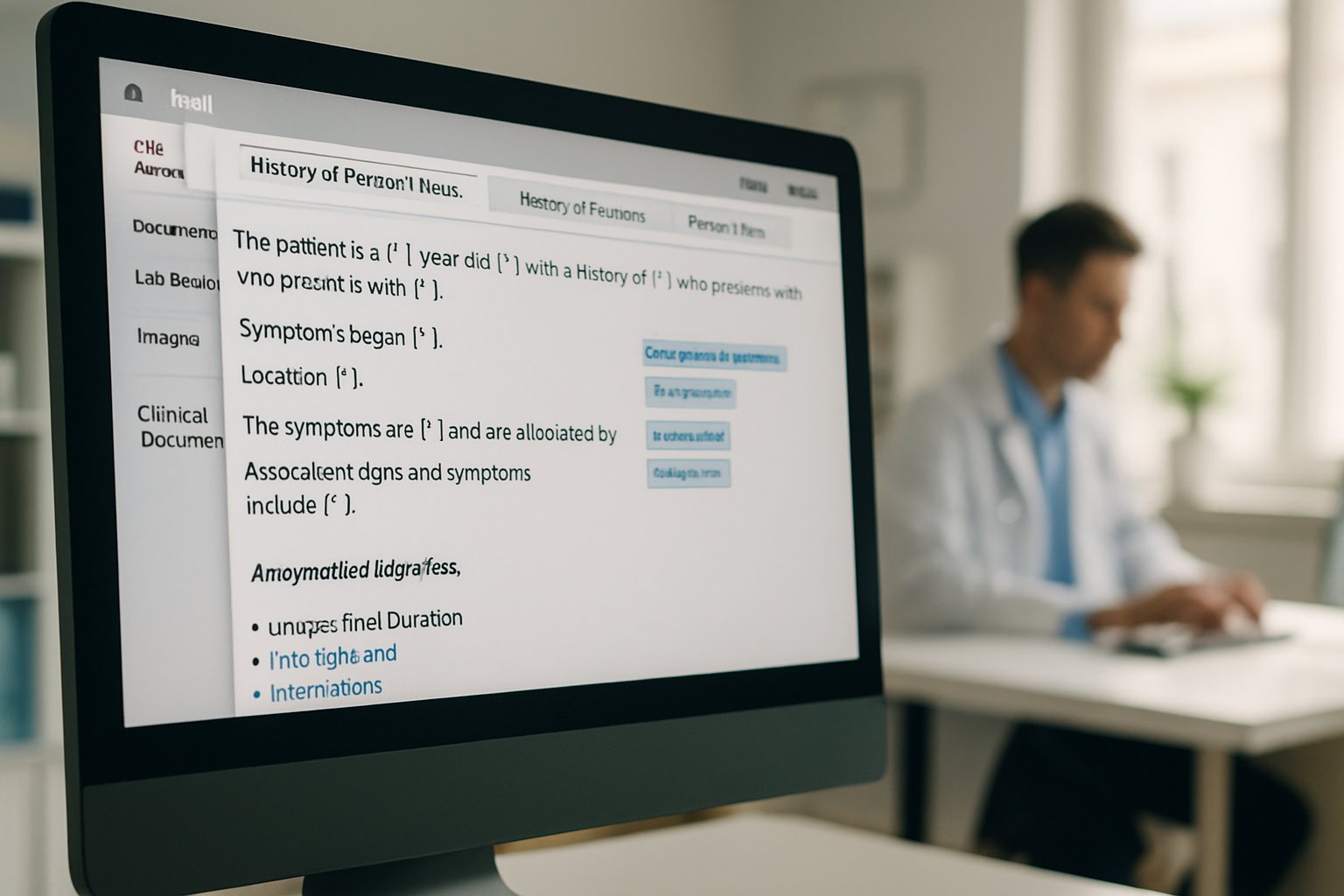
Several forces fuel that surge. Microsoft introduced Dragon Copilot in March 2025, unifying speech, ambient scribes, and generative summarization. Abridge closed a large Series D round and claims 100 health-system clients. Consequently, competition among incumbents and startups intensified. Investors view Real-Time Clinical Documentation AI as a high-value wedge into broader EHR workflow automation.
- Dragon Copilot users save about 5 minutes per encounter.
- Suki pilots cut median note time by 72 percent.
- Multicenter quality studies report 1.8-7 minute savings per visit.
- Some organizations saw 20 extra wRVUs monthly per physician.
Overall, capital flows and proven savings make the category hard to ignore. Next, we review published evidence supporting those claims.
Evidence From Clinical Practice
Peer-reviewed literature has grown rapidly, though still early. JMIR’s January 2025 rapid review synthesized six real-world studies. It found documentation time fell 22-29 percent in some specialties. However, reductions as small as 1.8 minutes appeared in others. JAMA Network Open published a multicenter quality study across six health systems. Participants reported less cognitive load and decreased after-hours editing. Nevertheless, authors urged longer follow-ups and randomized designs.
Historical context underscores the value. In 2016, Christine Sinsky showed clinicians spend nearly half of clinic time on EHR tasks. Therefore, even modest per-visit savings translate into hours weekly. Real-Time Clinical Documentation AI appears capable of delivering that margin. Researchers therefore treat Real-Time Clinical Documentation AI as a pivotal intervention for workload reform.
Evidence shows promise yet highlights heterogeneity across users and specialties. Consequently, benefits cannot be assumed without measurement. The next section examines those benefits in detail.
Benefits Clinicians Clearly Observe
Early adopters emphasize reclaimed time. Microsoft cites five minutes saved per encounter with Dragon Copilot. UNC Health cardiologists reported one hour saved each day after adoption. Furthermore, many physicians describe improved eye contact and communication during visits. Ambient scribes reduce keyboard distraction, enhancing patient satisfaction.
- Less after-hours “pajama time” and burnout
- More capacity for extra visits or research
- Standardized, complete notes boosting reimbursement accuracy
- Potentially higher RVUs with identical clinic hours
EHR workflow automation also gains downstream efficiency when structured data feed billing, orders, and population analytics. Moreover, Real-Time Clinical Documentation AI improves note completeness, supporting revenue cycle teams.
These advantages tempt organizations to scale quickly. However, significant risks demand equal attention.
Risks Demand Strong Governance
No algorithm writes flawless medical notes. Occasional hallucinations insert examinations never performed. Consequently, clinicians must review every draft before signing. Audit trails and attestation policies help preserve accountability.
Billing integrity also faces scrutiny. CMS auditors treat cloned or exaggerated notes as potential fraud. In contrast, excessive detail from Real-Time Clinical Documentation AI can trigger upcoding alarms. Therefore, revenue-cycle teams should sample notes and adjust templates.
Privacy remains another hurdle. Ambient scribes capture entire conversations, raising consent expectations. Health systems now post visible notices and provide opt-outs. Moreover, vendors must maintain SOC2 and HITRUST certifications.
Sound governance mitigates most issues yet requires disciplined processes. Implementation strategies appear in the next section.
Implementation And Best Practices
Successful rollouts start small. Pilot with 10-20 motivated clinicians and gather baseline EHR metadata. Subsequently, track time-in-notes, after-hours edits, and satisfaction surveys. Real-Time Clinical Documentation AI metrics should show clear positive deltas before scaling.
Governance committees include compliance, legal, informatics, and frontline champions. Additionally, define mandatory human review and signature. Systems should block finalization until a clinician edits or approves each note. EHR workflow automation must respect existing billing cues and specialty templates. Real-Time Clinical Documentation AI deployment must align with specialty nuances and local regulations.
Consent workflows matter. Teams craft brief explanations and train staff to handle patient questions. Moreover, documentation of opt-outs keeps regulators satisfied.
Practical discipline transforms pilots into sustainable enterprise tools. Next, we look toward future trajectories.
Strategic Outlook Years Ahead
Vendors now race to integrate multimodal inputs, decision support, and revenue analytics. Therefore, platforms could evolve into full digital assistants handling orders and prior authorizations. Real-Time Clinical Documentation AI will likely merge with broader EHR workflow automation ecosystems. Meanwhile, regulators may issue guidance on audit trails, bias, and labeling.
Academic researchers plan cluster-randomized trials comparing specialties and long-term safety. Furthermore, patient advocates push for transparent data retention policies. Ambient scribes adoption will hinge on balancing innovation with trust. Consequently, professional education remains vital.
The field sits at an inflection point. Wise leaders will invest yet continue rigorous evaluation.
Real-Time Clinical Documentation AI has progressed from novelty to operational cornerstone. Hospitals already report measurable gains in efficiency and morale. However, sustained success depends on robust governance, training, and measurement. Leaders should pilot, audit, and scale only when metrics justify investment. Consequently, organizations that act now will shape future documentation standards. Explore implementation guides and deepen expertise through the AI+ Data Robotics™ certification. Adopt thoughtfully and let technology return precious time to patient care.


