

AI CERTS
4 hours ago
Quantum Security Shake-Up: Google Cuts RSA Qubit Cost
Meanwhile, cryptographers warn that algorithmic progress, not just hardware growth, is compressing timelines. Therefore, enterprises can no longer treat quantum risk as distant. This article unpacks the findings, industry reactions, and practical migration steps.
Estimate Drops Qubit Need
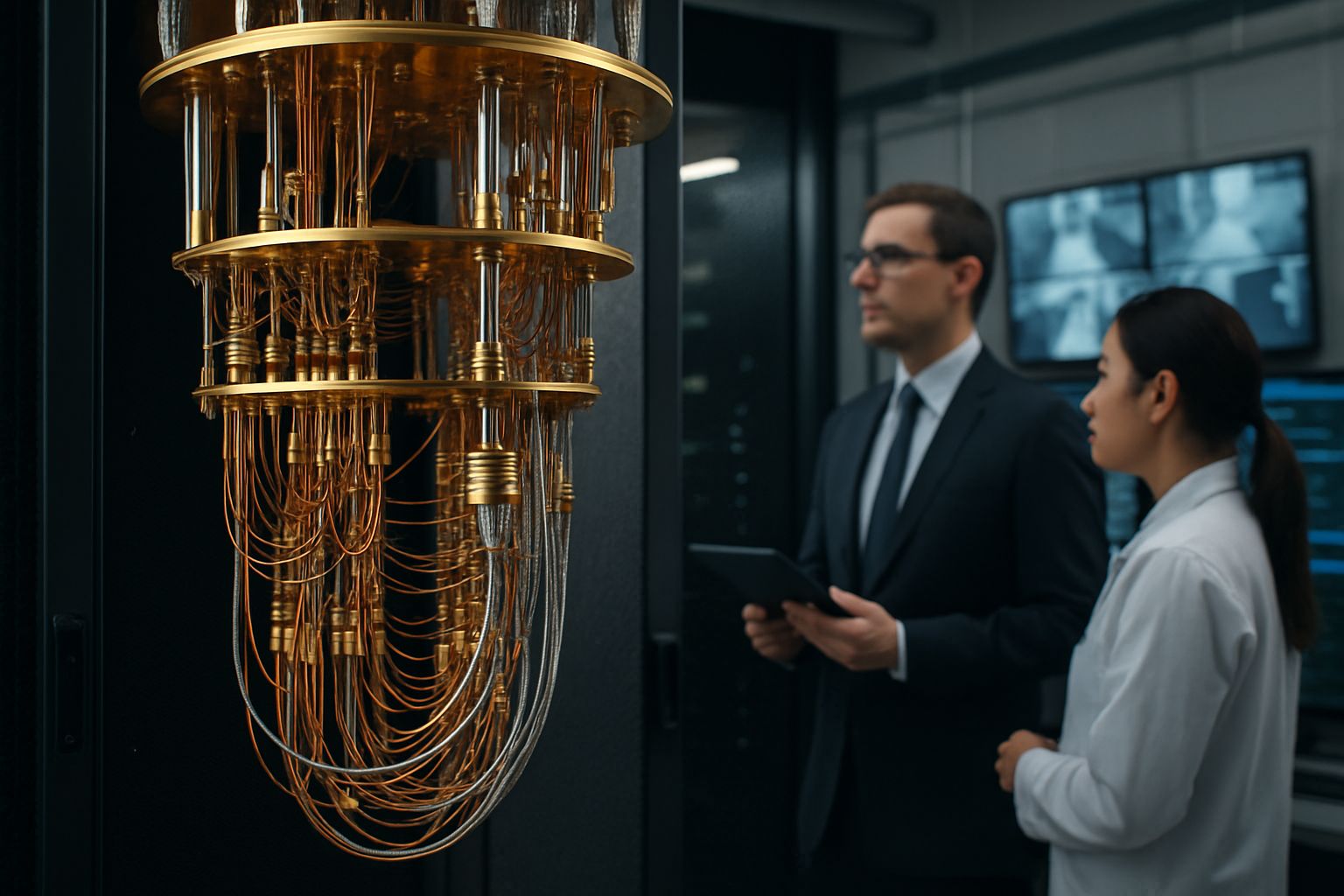
The new estimate thrills researchers by cutting required Qubits nearly twentyfold. Gidney achieved the reduction through clever trade-offs that lengthen runtime but shrink hardware. However, today’s largest public processors remain far below the million-qubit scale.
- Required qubits: <1 million versus 20 million in 2019
- Projected runtime: under seven days
- Assumed gate error: 0.1 percent
- Surface-code cycle: 1 microsecond
These numbers highlight remarkable efficiency gains. Nevertheless, hardware still lags by orders of magnitude. These realities set the stage for deeper technical insights.
Consequently, Quantum Security conversations now center on bridging the gap between theory and silicon.
Algorithmic Advances Reduce Overhead
Several innovations power the qubit cut. Approximate residue arithmetic slices modular exponentiation into smaller chunks. Meanwhile, yoked surface codes pack logical qubits more densely. Moreover, magic state cultivation trims the costly preparation of non-Clifford gates.
Magic State Cultivation Impact
This technique lowers factory counts while maintaining gate fidelity. Furthermore, it slashes Toffoli gate overhead compared with 2024 baselines. Cryptography researchers praise the elegance of these optimizations.
Surface Code Efficiency Gains
Yoked layouts keep idle qubits close, consequently reducing routing time. In contrast, older layouts wasted valuable lattice real estate.
Collectively, these software-driven advances outpace raw hardware scaling. Therefore, Quantum Security now depends equally on mathematic ingenuity.
These gains reveal how creative algorithms rewrite cost projections. However, physical engineering hurdles remain daunting.
Hardware Gap Still Persists
IBM’s Condor hosts 1,121 qubits. Google’s Willow sports about 105 qubits. Consequently, the million-qubit threshold looks distant. Additionally, required error rates challenge every current architecture.
Manufacturers must deliver:
- Massive qubit counts with stable coherence
- Reliable nearest-neighbor connectivity
- Gate errors below 0.1 percent
- Control systems reacting within microseconds
Nevertheless, roadmap optimism persists. IonQ and PsiQuantum forecast million-qubit platforms late next decade. Therefore, stakeholders monitor progress closely.
These hardware hurdles delay immediate attacks. However, Quantum Security planning cannot ignore accelerating research breakthroughs.
Industry Response And Standards
Regulators cite the study as fresh motivation to adopt NIST’s post-quantum Standard suite. Moreover, the Google Security Blog urges early migration to lattice-based algorithms.
Institutions now balance two tasks. First, they must protect present communications from harvest-and-decrypt Threat actors. Second, they should future-proof systems through crypto-agility.
Professionals can enhance their expertise with the AI + Quantum Specialist™ certification. Consequently, teams gain structured guidance for PQC adoption.
Widespread training aligns processes with upcoming standards. Therefore, Quantum Security moves from theory toward operational readiness.
Momentum behind standards accelerates deployment roadmaps. However, budget constraints still slow many enterprises.
Practical Migration Steps Forward
Executives want actionable plans. Firstly, inventory all RSA keys longer than 1024 bits. Secondly, prioritize high-value data vulnerable to future decryption Threat scenarios. Subsequently, pilot hybrid Cryptography approaches combining classical and post-quantum algorithms.
Additionally, implement crypto-agile architectures that replace algorithms without major rewrites. Moreover, monitor vendor compliance with NIST drafts.
These measures reduce exposure while hardware evolves. Consequently, Quantum Security policies become proactive rather than reactive.
Effective migration shrinks the attack surface. Nevertheless, continuous monitoring remains essential.
Future Outlook And Threats
Experts foresee rapid interplay between algorithmic invention and hardware strides. Therefore, risk timelines may shorten unexpectedly. In contrast, skeptics argue engineering barriers will dominate for years.
Regardless, harvest-now Threat actors already archive encrypted traffic. Moreover, nation-state budgets could accelerate million-qubit prototypes.
Firms should watch three indicators:
- Annual improvements in physical qubit yields
- Verified reductions in gate error rates
- Standard ratification and vendor compliance
Consequently, Quantum Security strategy must adapt continually. These uncertainties demand vigilance. However, informed planning mitigates surprise.
These trends underscore an evolving risk landscape. Therefore, decisive action remains the best defense.
Google’s new factoring blueprint compresses qubit needs and renews urgency around Quantum Security. Algorithmic advances, not just larger processors, now threaten RSA resilience. Furthermore, standards bodies push enterprises toward post-quantum Cryptography. Hardware gaps persist, yet motivated adversaries will eventually close them. Consequently, leaders should inventory assets, deploy crypto-agility, and pursue specialized training. Explore the linked certification and strengthen defenses today.


