

AI CERTS
2 hours ago
Quantum Computing Synergy Drives C12-Classiq Integration
Consequently, developers can test spin-qubit algorithms against realistic noise today, not years from now. The announcement arrives amid rising market projections and accelerating investment in cross-modal toolchains. Analysts further view such collaborations as critical for unlocking commercial advantage before large fault-tolerant machines exist. The following analysis unpacks the deal, its technology, and its implications for practitioners.
Deal Overview And Impact
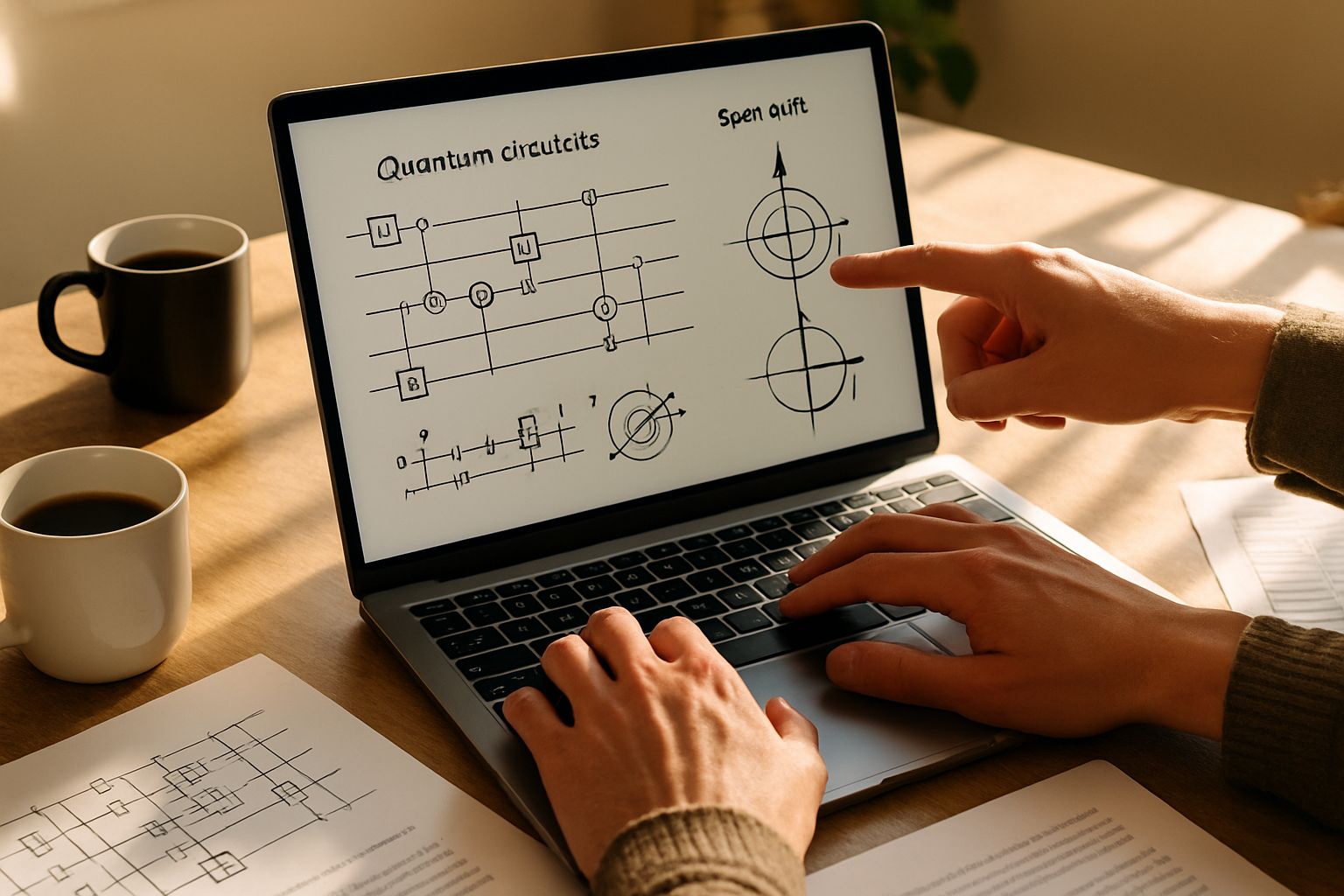
C12 is a Paris start-up fabricating carbon-nanotube spin qubits. Meanwhile, the vendor offers a hardware-aware synthesis engine and the Qmod modeling language. The integration went live for select customers on the announcement date. Moreover, Callisto Discovery, a 13-qubit digital twin, now appears as a target inside Classiq’s interface. Developers therefore design, synthesize, and simulate circuits with one workflow.
This Quantum Computing Synergy positions both companies as early movers in spin-qubit commercialization. Consequently, the partnership enlarges Classiq’s hardware portfolio and introduces C12 to a broader enterprise audience. Pierre Desjardins framed the move as bridging research hardware with usable software.
In short, the deal combines complementary strengths and shortens the idea-to-hardware cycle. Next, we examine the underlying stack powering this collaboration.
Quantum Stack Explained Clearly
At the heart lies Callisto, a physics-based emulator of C12’s carbon-nanotube architecture. It models charge noise, phonon interactions, relaxation, noisy initialization, and mid-circuit measurement. Additionally, the model supports up to 13 noisy qubits, enough for algorithm prototypes and error mitigation research. Classiq connects that twin to its automated synthesis engine. Consequently, users write high-level Qmod code and receive optimized circuits that respect native gates and connectivity. The workflow proceeds as follows:
- Describe algorithm in Qmod language.
- Synthesis engine maps logic to spin gates.
- Run circuit on Callisto digital twin.
- Analyze noise metrics and iterate designs.
Moreover, circuits built for Callisto can migrate to superconducting or trapped-ion backends with minimal rewriting. This portability reduces vendor lock-in risk while promoting experimentation across modalities. Quantum engineers therefore gain a consistent interface despite heterogeneous hardware. The stack embodies Quantum Computing Synergy by marrying realistic hardware data and automated compilation.
Overall, the joint stack converts abstract ideas into qubit-level instructions under real noise. However, market forces also shape why this matters, as the next section shows.
Market Context Signals Ahead
Boston Consulting Group estimates quantum value could reach $850 billion by 2040. Consequently, enterprises now demand actionable paths toward advantage, even with today’s limited qubit counts. Funding trends support that urgency. Classiq closed a $110 million Series C in 2025, lifting total funding to $173 million. Meanwhile, C12 secured €18 million in 2024 to expand its Paris fabrication hub.
Moreover, academic results show microsecond coherence for carbon-based qubits, validating C12’s material choice. Against this backdrop, Quantum Computing Synergy becomes a competitive differentiator, attracting developers before hardware fully matures. Industry events will host joint demos, further amplifying visibility.
Capital, credibility, and community now converge around the C12-Classiq integration. Next, we outline concrete benefits for developer teams.
Benefits For Developer Teams
Developers often struggle to match algorithms with noisy hardware constraints. The integration addresses that pain directly. Firstly, realistic noise modeling prevents wasted effort on impractical circuits. Secondly, automated synthesis accelerates iteration, conserving scarce quantum expertise. Thirdly, cross-modal portability future-proofs code as hardware roadmaps evolve.
These advantages illustrate tangible Quantum Computing Synergy for practitioners beyond press-release rhetoric. Furthermore, enterprises can skill-up staff through targeted learning pathways. Professionals can enhance their expertise with the AI+ Quantum Innovator™ certification. Consequently, teams gain both tooling and credentials aligned with emerging standards. Quantum Computing Synergy thus extends from code editors to career development.
Collectively, these benefits shorten experimentation cycles and reduce onboarding friction. Nevertheless, challenges and caveats remain, as discussed next.
Challenges And Remaining Caveats
A digital twin is still an approximation. Unmodeled cross-talk and calibration drift may degrade real performance. Moreover, Callisto Discovery supports only 13 qubits, limiting complex algorithm validation. Scaling spin devices to hundreds remains an engineering mountain. In contrast, superconducting competitors already offer 127 physical units, albeit with different noise profiles.
Therefore, expectations must balance excitement with realism. Regulatory and pricing details for broader access are also unresolved. Nevertheless, early adopters accept such uncertainty to shape roadmaps. Quantum Computing Synergy cannot erase physics but can optimize engagement with current limits.
Understanding these caveats avoids overpromising and builds stakeholder trust. The final section assesses future outlook and milestones.
Strategic Outlook And Forecast
Industry watchers expect additional cross-stack pairings as vendors chase developer mindshare. Subsequently, toolchains will integrate error-mitigation libraries, classical coprocessors, and scheduling intelligence. C12 plans to expand fabrication capacity and deliver multi-qubit prototypes within two years, according to internal roadmaps. Classiq meanwhile targets cloud marketplace listings that democratize access. If timelines hold, production pilots could appear by 2028.
Consequently, enterprises exploring today may capture first-mover benefits once fault-tolerant machines arrive. Academic collaboration will also intensify, feeding data back into the digital twins. That loop exemplifies enduring Quantum Computing Synergy across research, product, and adoption. Momentum depends on transparent milestones and continued Quantum Computing Synergy among stakeholders. We close with practical recommendations for readers.
Conclusion
The C12-Classiq partnership demonstrates tangible progress toward practical quantum advantage. Developers can already explore realistic noise, optimize circuits, and plan deployments with fewer unknowns. Moreover, the collaboration aligns market momentum, funding streams, and academic validation into one coherent narrative. Such alignment epitomizes Quantum Computing Synergy, where hardware insight and software abstraction reinforce each other.
Nevertheless, success will depend on scaling device counts and proving real-world fidelity. Consequently, forward-looking teams should pilot today and monitor milestones closely. Start by experimenting on the integrated stack, then elevate skills through the linked certification to stay competitive.


