

AI CERTS
2 hours ago
Qatar Helium Crisis Shows Supply Chain Fragility
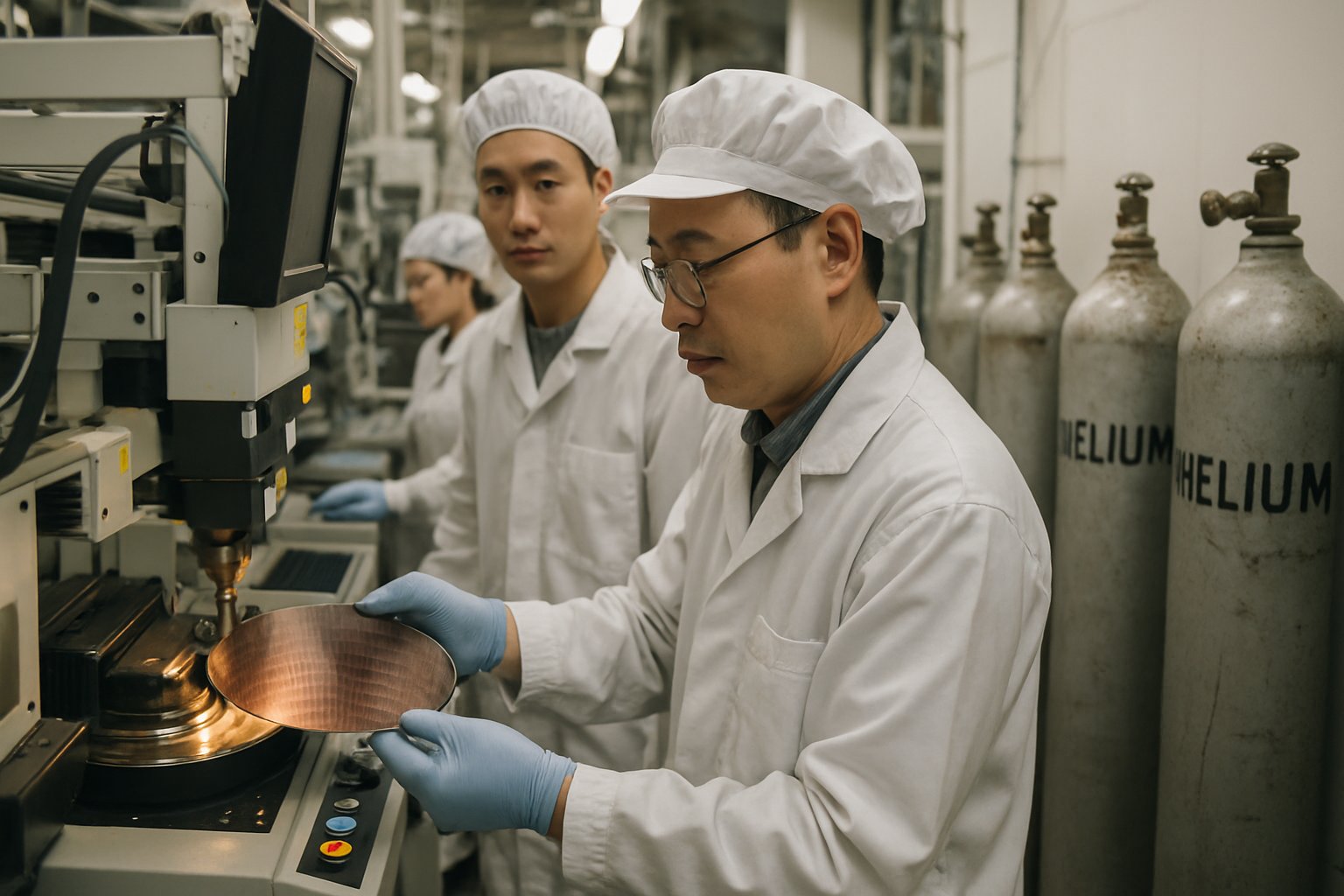
Moreover, spot prices for ultra-high-purity helium have already spiked, while distributors warn of tougher weeks ahead.
This feature unpacks the numbers, the exposure map, and the practical steps leaders can take.
Readers will gain actionable insights on maintaining production, hedging costs, and building deeper resilience.
Meanwhile, policy makers must decide whether strategic reserves or domestic extraction deserve accelerated funding.
The following analysis synthesizes public data, expert commentary, and early-stage mitigation moves.
Therefore, grasping the threat today will sharpen tomorrow’s decisions in an increasingly volatile component landscape.
Drone Strikes Trigger Shock
The first missiles hit Ras Laffan Industrial City before dawn, damaging compressors and pipe racks.
Subsequently, QatarEnergy paused LNG output and declared force majeure on 4 March.
Because helium is purified from LNG off-gas, the shutdown silenced two dedicated helium plants immediately.
USGS figures show Qatar provided roughly 36% of global Helium supply during 2024.
In contrast, no other single nation holds more than 15% market share.
Consequently, analysts branded the outage the most concentrated raw-material risk since the 2022 neon crunch.
Observers labeled the episode a masterclass in Supply Chain Fragility.
These events created an abrupt hole in industrial gas flows.
However, the bigger story involves how quickly that hole cascades through manufacturing tiers.
The data behind that cascade appears below.
Helium Numbers Expose Risk
Verified production statistics clarify the magnitude.
Such concentration showcases Supply Chain Fragility in numeric form.
- World production 2024: 178 million m3
- Qatar share: 65 million m3 (≈36%)
- South Korea import reliance: 64.7% from Qatar
- No substitute exists for cryogenic uses
- Spot surcharge reports: 35–50% early March premiums
Moreover, Phil Kornbluth warns distributors may relocate cryogenic trailers if outages exceed two weeks.
Relocation requires cleaning, certification, and customer validation, a process stretching months regardless of plant restart.
Therefore, timeline uncertainty multiplies market anxiety beyond the absolute loss of molecules.
The numbers confirm scarce spare capacity across Helium supply chains.
Consequently, attention turns to why semiconductors feel the pinch first.
Semiconductor Processes Need Helium
Fabs consume helium in several irreplaceable stages.
Backside chucks use controlled helium pressure to extract heat and hold uniform wafer temperature.
Additionally, inert helium stabilizes plasma chemistries during etch and deposition, preventing defect-forming contamination.
Leak detection tools rely on the gas’s tiny atoms to verify vacuum integrity around EUV scanners.
Consequently, advanced memory and logic lines become early casualties when helium runs short.
Major makers of chips like SK hynix, Samsung, and TSMC have issued cautious statements, citing inventories.
Nevertheless, inventories mask only temporary shortages, not prolonged deficits.
Each processing step inherits Supply Chain Fragility from upstream helium logistics.
Helium remains woven into process control, yield, and uptime parameters.
Therefore, geographic dependence must be assessed next.
Geographic Exposure Magnifies Danger
Exposure differs sharply across regional manufacturing bases.
South Korea shows the highest import concentration, with nearly two-thirds arriving from Qatar.
Meanwhile, Taiwan sources more diversely, yet still buys double-digit percentages from Middle Eastern cargoes.
In contrast, US fabs draw from domestic BLM pipelines, Colorado fields, and Algerian shipments.
However, cylinder freight still travels through chokepoints like the Strait of Hormuz, affected by the Qatar conflict.
Consequently, geopolitical risk attaches both at origin and along transit corridors.
These patterns spotlight Supply Chain Fragility on a map rather than a spreadsheet.
The market reacts immediately when maps shift.
Market Reactions And Prices
Spot helium offers in Asia jumped 40% within the first trading week after the strikes.
Furthermore, insurance premiums for ISO containers sailing the Gulf rose, compounding delivered costs.
Industrial gas majors such as Linde and Air Liquide began prioritizing long-term contract customers over spot buyers.
Bloomberg analysts now model DRAM chips rising 3-7% if tightness extends one month.
Moreover, equity markets shaved billions from memory maker valuations on perceived margin pressure.
Observers noted that shipping insurers price the Qatar conflict risk into every voyage quote.
Nevertheless, SK hynix reassured investors that diversified Helium supply buffers exist.
Volatile invoices convert Supply Chain Fragility into balance-sheet headaches for CFOs.
Price action underlines how quickly sentiment changes when molecules disappear.
Consequently, organizations explore mitigation strategies.
Mitigation Paths For Industry
Fabs have three immediate levers: inventory drawdown, contract diversion, and onsite recycling.
Additionally, some buyers are fast-tracking orders from US, Algerian, and Canadian projects carrying latent capacity.
However, shipping lead times and purification bottlenecks mean extra gas arrives weeks, not days, later.
Therefore, internal conservation moves attract attention.
Helium recovery skids can slash consumption by 40%, yet installation disrupts cleanroom workflow during commissioning.
Meanwhile, firms endorse the AI Supply Chain™ certification for analytics mastery.
Consequently, decision cycles shorten and contingency funds receive clearer allocation logic.
Nevertheless, these measures cannot erase every aspect of Supply Chain Fragility.
Investment committees weigh costs against ongoing Supply Chain Fragility signals.
Longer outlook scenarios deserve a strategic lens.
Strategic Lessons For Leaders
Scenario planning frames potential durations.
Consultants split exposure into three brackets: under two weeks, two-eight weeks, and beyond eight.
Under two weeks, inventory cushions protect most fabs.
Between two and eight, distributors may relocate equipment, adding validation delays and extra cost.
Beyond eight, force-majeure risks climb, and some DRAM chips could face production cuts.
Consequently, capital committees now debate accelerated investments in domestic extraction and onsite recycling loops.
Moreover, governments revisit policies on critical gas stockpiles, mirroring past neon interventions.
These debates, although technical, ultimately concern product pricing and geopolitical leverage.
Strategic foresight converts Supply Chain Fragility into quantified risk, guiding capital allocation.
Therefore, leaders must act before the next shock.
Conclusion
Qatar’s shutdown reveals how a single geographic node can unsettle global production within days.
Helium supply concentration, limited substitutes, and rising geopolitical tension combine into a textbook case of Supply Chain Fragility.
However, clear data, agile contracts, and targeted technology investments offer workable defenses.
Additionally, professional upskilling through the earlier-mentioned certification empowers teams to model scenarios with greater precision.
Consequently, executives should audit inventories, stress-test sourcing pipelines, and brief boards on financial exposure.
Robust Helium supply diversification should rank high on every sourcing scorecard.
Failing to adapt leaves operations hostage to the Qatar conflict and future regional flashpoints.
Act now to convert insight into resilience and safeguard future chips and revenues.
Strengthening networks today reduces tomorrow’s Supply Chain Fragility.


