

AI CERTS
2 hours ago
Public Private AI Drives Singapore’s Google Trailblazers
Moreover, the programme’s sandbox model feeds Singapore’s broader National AI Strategy. This article dissects milestones, metrics, and lessons from the Trailblazers journey. It also tracks follow-on schemes that expand funding, skilling, and regional reach. Readers will learn how partnerships accelerate Workforce Skills growth while mitigating governance risks. Along the way, secondary voices offer balanced views on vendor lock-in and data privacy. Prepare for an evidence-rich tour of collaborative innovation shaping the ASEAN digital economy today.
Trailblazers Launch And Context
July 24, 2023 marked the programme’s public debut at Google’s Singapore campus. Minister Josephine Teo underlined equitable access to compute and responsible guardrails during her opening speech. Meanwhile, Google Cloud offered free Innovation Sandboxes running Vertex AI and early Gemini checkpoints. Consequently, 84 organisations enrolled within months, representing finance, healthcare, design, and logistics clusters.
This early traction validated the Public Private AI template as a catalyst for rapid experimentation. Singapore agencies, notably DISG and SNG, coordinated onboarding and governance reviews to safeguard sensitive datasets. These foundations established trust, which later enabled expansion into larger industrial pilots.
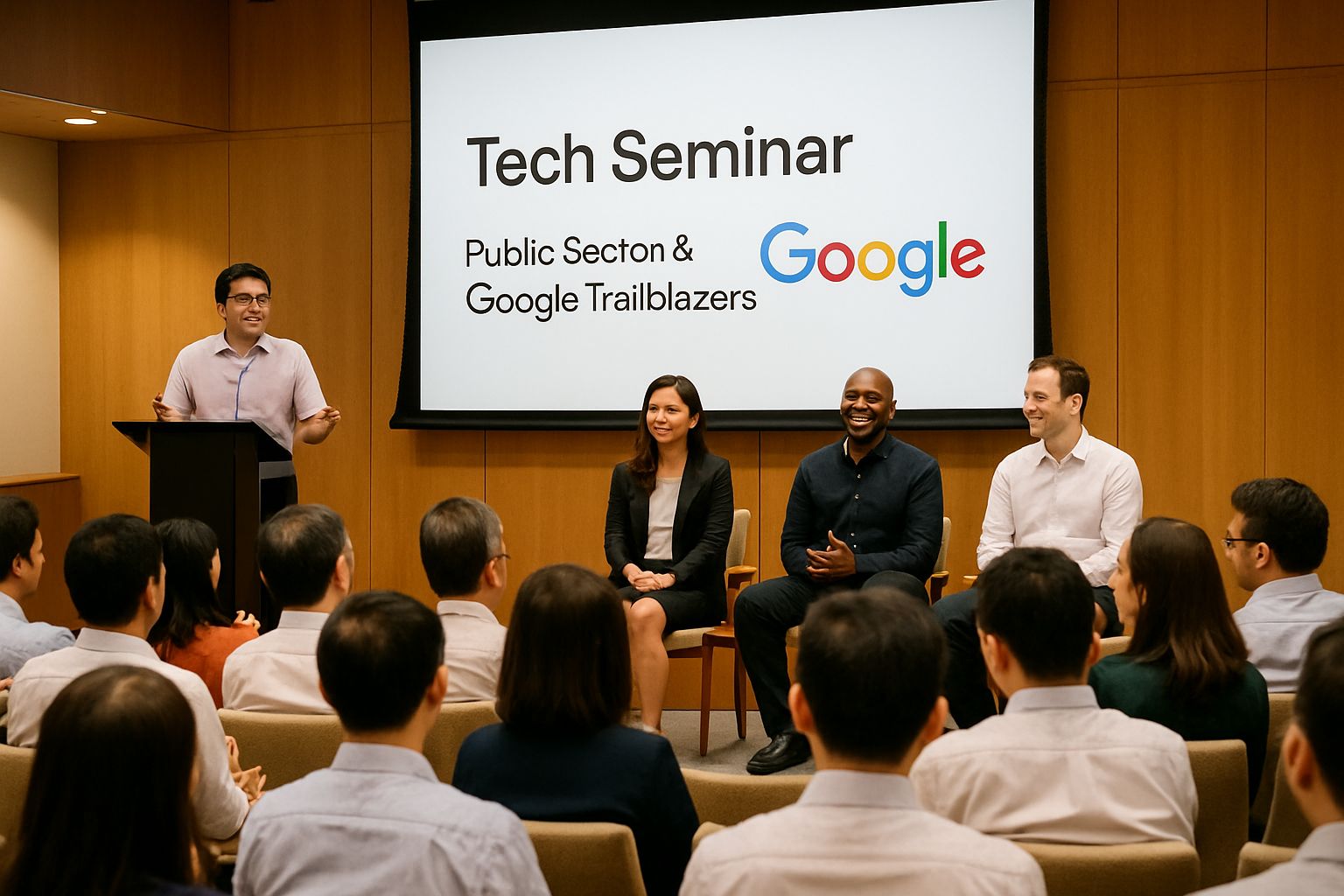
The launch combined policy vision with hands-on engineering resources. Consequently, attention soon shifted to measurable outcomes, examined next.
Programme Scale And Metrics
Numbers tell a nuanced story. EDB’s January 2024 release cited 84 participating organisations building 100 generative solutions. However, a later Straits Times article reported 213 Public Private AI firms had “graduated” by mid-2025. Officials explained the variance as counting cohort alumni versus initial sandbox entrants. Nevertheless, impact kept growing. Trailblazers 2.0 promised capacity for 150 additional entities, doubling reach in less than a year. Key performance snapshots include:
- 43 organisations built deployable pilots by January 2024
- 22 firms continued refining prototypes within the sandbox
- Projected S$10 million annual savings for Seaco’s container inspections
- Up to US$350 k Google Cloud credits for accelerator startups
Additionally, the new AI Cloud Takeoff scheme offers S$500,000 per enterprise for scale-up. These stacked incentives show Public Private AI momentum translating into tangible budgets.
Metric clarity still needs improvement, yet growth curves remain undeniable. Therefore, we next explore concrete business wins driving those curves.
Business Use Case Wins
Visa, DP Architects, and Ocean Network Express showcase cross-sector versatility. Visa fused spend data with Vertex AI to craft personalised itinerary planners for tourists. Consequently, customer engagement tests indicated double-digit click-through improvements, boosting productivity across marketing workflows. DP Architects shortened design ideation cycles by generating concept sketches and material lists automatically. Meanwhile, Ocean Network Express accelerated shipping quotes by surfacing real-time schedules through conversational interfaces. Seaco’s computer-vision model spots damaged containers, reducing manual inspections and trimming downtime.
Kwong Wai Shiu Hospital deployed an InterRAI training assistant that enhances elderly care simulations. These pilots underline Public Private AI’s capacity to couple domain knowledge with foundation models. Moreover, each pilot embeds governance layers such as data anonymisation and bias testing. Such precautions reassure regulators and enterprise risk committees.
Real pilots convert hype into efficiency, revenue, and service quality. However, scaling skills remains equally essential, as the next section details.
Skills And Talent Push
Technology adoption stalls without capable people. Therefore, Singapore aligned Trailblazers with parallel skilling programmes like Skills Ignition SG and Google’s Accelerator: AI First. The accelerator’s first cohort saw 25 startups receive mentoring plus cloud credits up to US$350,000. EnterpriseSG will expand the next Public Private AI batch to 35 startups in 2025. Additionally, Google’s February 2026 commitments include AI Living Labs and new security centres.
Each initiative reinforces Workforce Skills development by combining coursework, sandboxes, and shared datasets. Professionals can enhance their expertise with the AI Learning Development certification. Such credentials align graduates with employer demand for prompt engineering, model evaluation, and ethics oversight. Consequently, the talent pipeline keeps pace with platform evolution, preserving productivity advantages.
Skilling programmes transform curiosity into deployable competence. Subsequently, funding mechanisms ensure competent teams can scale solutions, examined in the following part.
Evolving Public Support Schemes
Trailblazers created momentum, yet policymakers refused complacency. In January 2024, agencies unveiled Trailblazers 2.0 to onboard 150 more organisations. Subsequently, June 2025 introduced AI Cloud Takeoff, offering up to S$500,000 per enterprise. The package mixes consultancy subsidies, Workforce Skills vouchers, and generous cloud credits.
Moreover, SMEs and startups benefit from simplified procurement and technical account management. These layers illustrate Public Private AI progressing from sandbox to production incentives. Nevertheless, some analysts warn of vendor lock-in as subsidies tie firms to one cloud.
Broader funding lowers entry barriers. However, governance queries now demand closer scrutiny.
Challenges And Debate Points
Any partnership at scale invites criticism. In contrast, proponents cite speed, critics flag transparency gaps in reported outcome numbers. Metric confusion around 84 versus 213 participating firms complicates external evaluation. Furthermore, exclusive access to proprietary Gemini models could entrench dependence and inflate long-term costs. Data privacy also remains under watch, especially for healthcare pilots using sensitive patient records.
Singapore addresses these issues through sandbox governance committees and mandatory impact assessments. Nevertheless, independent audits and open-model experimentation would strengthen trust. Balanced oversight will decide whether Public Private AI scales responsibly.
Debates reveal healthy tension pushing iterative improvement. Next, we assess regional implications shaped by those improvements.
Strategic Future ASEAN Outlook
Trailblazers’ playbook resonates beyond Singapore’s borders. Consequently, neighbouring governments monitor results while drafting similar sandboxes for transport and agriculture. Google executives hinted at regional Innovation Sandboxes linking datasets across ASEAN supply chains. Moreover, combined market scale attracts venture capital, reinforcing productivity spillovers.
Public Private AI could become a template for cross-border regulatory harmonisation and shared talent exchanges. Inclusive Workforce Skills frameworks may standardise professional badges recognised from Jakarta to Ho Chi Minh City. However, policymakers must align data-sovereignty laws to ensure ethical model deployment across jurisdictions.
Regional adoption hinges on interoperability and trust. The following conclusion distills actionable lessons for leaders.
Google and Singapore have demonstrated that ambitious synergies can move fast and responsibly. Concrete pilots show productivity boosts, cost savings, and better citizen services. Meanwhile, layered skilling initiatives strengthen Workforce Skills, ensuring talent keeps pace with technology. Funding schemes like AI Cloud Takeoff expand runway from concept to deployment.
Nevertheless, metric transparency and vendor diversification require continued vigilance. Leaders across ASEAN can adapt the model while embedding open-standard safeguards. Professionals eager to lead should pursue certifications such as the linked programme above. Ultimately, sustained Public Private AI collaboration will shape competitive advantage for the next decade.


