

AI CERTS
2 hours ago
Proxy Variables Thwart Gender-Blind Hiring AI
Moreover, regulators in New York and Brussels now demand quantifiable fairness, raising compliance stakes. This article dissects the newest research explaining how hidden patterns sustain gender bias despite anonymization. We examine internal mitigation breakthroughs, policy shifts, and practical steps for employers. Meanwhile, expert quotes illustrate shifting industry sentiment. Prepare to rethink resume redaction strategies before regulators force your hand.
Bias Persists Despite Anonymity
Recent lab audits confront the myth that name removal neutralizes hiring bias. In contrast, models quickly latch onto college choices and extracurricular wording. Those details often correlate with gender bias through historic enrollment patterns. Researchers from Belgium contributed to the April FAIRE benchmark showing consistent disparities. The Brookings study recorded 85.1% preference for white-associated names against black counterparts. Furthermore, Rozado found every tested model favored female-named candidates across 70 professions.
These numbers emerged even after explicit gender markers disappeared. Therefore, mere redaction fails when Proxy Variables remain untouched. The data highlight a pressing need for deeper technical solutions. Summarily, anonymized resumes still betray identity clues. However, understanding those hidden signals offers a path to mitigation.
Decoding Hidden Proxy Signals
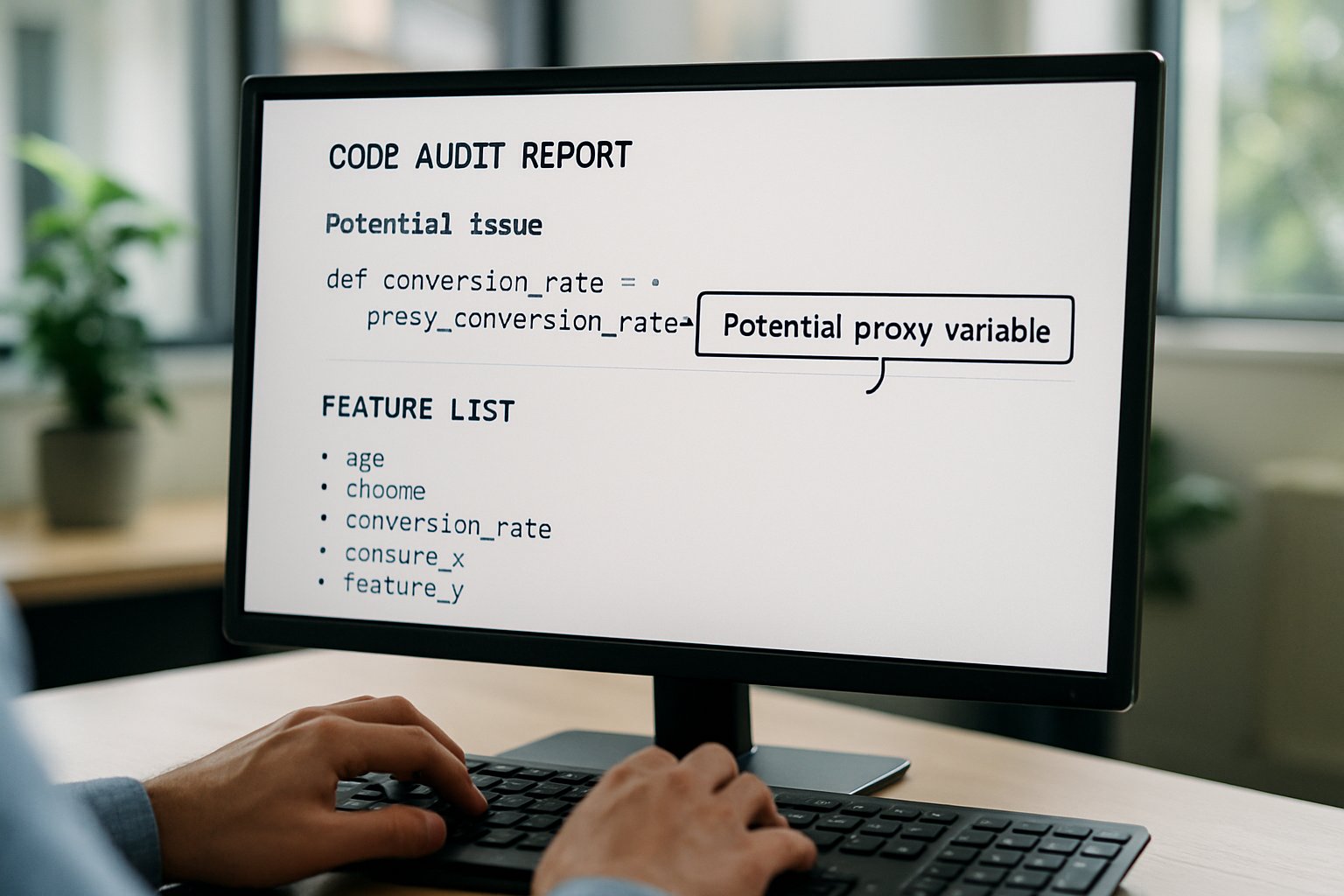
Data scientists label those indirect clues as Proxy Variables, a pivotal concept in fairness research. Examples include sports club membership, pronoun usage frequency, and leadership verbs. Moreover, corporate domain language often hints at demographics through tone and benefit emphasis. Karvonen and Marks demonstrated that adding upscale employer names re-introduced gender bias after blinding.
Consequently, interview rates shifted by up to 12 percentage points. Meanwhile, the same prompts showed minimal performance drops, masking the unfairness. Analysts warn that such patterns complicate external audits because decisions look neutral on the surface. Therefore, identifying and neutralizing Proxy Variables during inference becomes essential. These insights set the stage for internal mitigation techniques. Hidden proxies drive many disparities. Next, we explore a promising internal fix.
ACE Offers Internal Relief
Affine Concept Editing, or ACE, directly manipulates neural activations linked to protected traits. In tests, the technique cut measured bias to below 2.5%. Moreover, Karvonen reports that model accuracy suffered less than one percentage point. The process identifies gender markers in activation space, then zeroes their influence during scoring. Consequently, Proxy Variables lose predictive power because internal pathways are neutralized. Nevertheless, critics question whether ACE generalizes across industries and cultural contexts like Belgium.
They also ask if new unfair patterns could emerge after deployment. Therefore, rigorous documentation and third-party validation remain vital. Professionals can deepen their expertise with the AI+ Human Resources™ certification. The program covers advanced fairness auditing frameworks suitable for ACE deployments. ACE shows tangible promise neutralising Proxy Variables impact. However, regulators still expect transparent evidence of its reliability.
Regulators Tighten Compliance Screws
Employment AI now falls under high-risk rules within the EU AI Act. Additionally, New York City’s Local Law 144 mandates annual bias audits for screening tools. Vendors must publish public summaries and notify candidates of automated evaluations. Consequently, any reliance on hidden Proxy Variables without documentation invites penalties. Meanwhile, several Belgium companies already request third-party attestations to satisfy cross-border operations. Regulators emphasize intersectional reporting because raw averages can mask severe gender bias pockets.
Therefore, firms must monitor subgroup performance continually, not only during annual reviews. In contrast, many small employers still assume redaction alone suffices for fairness. That misconception increases litigation risk as awareness grows. Regulatory momentum favors measurable fairness guarantees. Next, we consider operational trade-offs facing engineering teams.
Operational Trade-Off Considerations
Implementing ACE demands access to model internals, which some vendors withhold. Moreover, editing Proxy Variables dimensions could accidentally amplify unseen ones. Engineers must therefore balance fairness gains against stability and interpretability. Meanwhile, external auditors need reproducible methods, clear logs, and consistent datasets. Belgium’s data protection regulator suggests retaining edited activation vectors for inspection. Consequently, documentation overhead rises, impacting delivery timelines. Cost considerations also enter; large providers can spread expense, startups cannot. Therefore, a phased rollout with sandbox evaluation often proves sensible.
- 12% interview rate swing observed after context prompts (Karvonen & Marks, 2025)
- 85.1% preference for white names in Brookings study
- 22 leading LLMs all showed bias in FAIRE benchmark
- Bias fell below 2.5% after ACE mitigation
These operational realities shape strategic planning. However, clear roadmaps help teams sustain momentum while meeting regulators. Trade-offs concern cost, access, and side effects. The final section translates those insights into concrete action items.
Action Items For Employers
Begin by mapping every hiring system component and its data sources. Subsequently, commission a baseline audit covering gender bias and other protected traits. Include tests that deliberately inject Proxy Variables to gauge vulnerability. Moreover, compare performance before and after any mitigation like ACE. Publish high-level findings to meet transparency expectations. Next, train HR teams using certified resources.
Professionals can enhance governance proficiency through the AI+ Human Resources™ credential. Additionally, schedule annual re-audits synchronized with model updates. Therefore, the organisation maintains continuous compliance even as data patterns evolve. Finally, document candidate feedback channels to monitor lived experiences. Consistent monitoring builds trust and flags drift early. Structured governance and training secure both fairness and legal safety. Consequently, employers stay competitive in talent acquisition while avoiding fines.
Modern hiring AI remains vulnerable because Proxy Variables continually leak demographic hints. Empirical evidence from Brookings, FAIRE, and ACE studies confirms persistent gender bias despite redaction. However, internal interventions like ACE markedly cut disparities with minor accuracy cost. Regulators in the EU, Belgium, and the US now insist on audited transparency. Consequently, organisations must pair technical fixes with robust documentation and staff training. Furthermore, adopting the AI+ Human Resources™ certification equips teams with compliant best practices. Take decisive action now to future-proof talent pipelines against shifting legal and ethical demands.


