

AI CERTs
2 months ago
Programmatic Creative Optimization Tools Improve Personalization
Digital advertising faces rising pressure to personalize without losing speed.
Consequently, marketers are turning to Programmatic Creative Optimization Tools for scalable relevance.
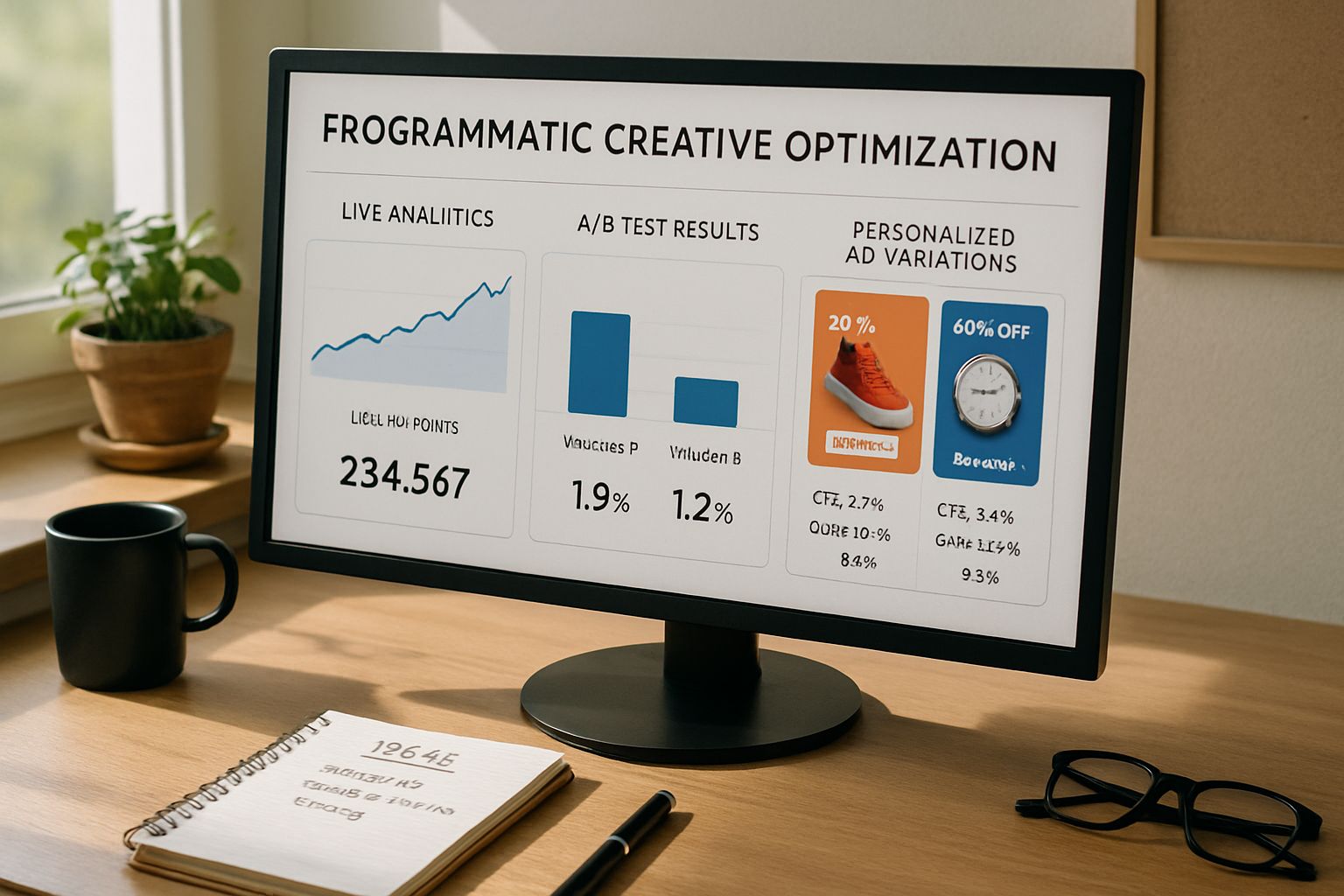
These platforms merge data, design, and machine learning into one automated workflow.
Furthermore, ad performance AI now accelerates iterative testing, reducing creative waste.
Meanwhile, creative testing automation slashes production time by generating countless asset variations.
Privacy shifts and channel diversification intensify demand for smarter creative decisions.
Moreover, CTV and digital out-of-home now support dynamic personalization at scale.
Vendors like Innovid and Jivox claim measurable lifts in engagement and efficiency.
However, transparency and integration complexities keep many brands cautious.
This article unpacks the market drivers, technology stack, challenges, and future outlook.
Readers will gain practical guidance for evaluating vendors and workflows.
Consequently, teams can navigate the evolving landscape with confidence and measurable rigor.
Let us explore the details step by step.
Market Shift Drivers Now
Generative AI ignites unprecedented creative scale.
Therefore, designers can produce hundreds of banners within minutes for multivariate testing.
Programmatic Creative Optimization Tools then select winning combinations in real time.
In contrast, earlier DCO efforts demanded manual setup and limited channel reach.
Now, CTV, retail media, and DOOH embrace algorithmic creative decisioning.
Consequently, brands extend personalization beyond display banners.
Regulation and cookie deprecation simultaneously push advertisers toward first-party data clean rooms.
Programmatic Creative Optimization Tools integrate with these environments to preserve targeting fidelity.
Additionally, API-first architectures let media teams trigger creatives based on real commerce events.
These market forces jointly accelerate adoption across verticals.
However, understanding the underlying technology stack remains critical.
Key Technology Stack Components
A modern stack unites several specialized layers.
Firstly, Creative Management Platforms generate modular assets using templates and AI copywriting.
Secondly, Dynamic Creative Optimization engines assemble and test those modules across contexts.
Thirdly, creative analytics solutions score attention and compliance signals.
Moreover, Programmatic Creative Optimization Tools orchestrate data ingestion, decisioning, and delivery between layers.
Most vendors embed ad performance AI to refine models after every impression.
Subsequently, APIs transmit winning variants back to DSPs and ad servers.
Identity resolution now happens inside secure clean rooms to respect privacy mandates.
Creative testing automation feeds resulting insights into design templates for rapid iteration.
Therefore, the loop continuously improves without manual spreadsheets or disjointed dashboards.
This integrated stack reduces latency and governance risk.
Consequently, performance metrics improve while creative teams stay in control.
Next, we review the evidence behind these gains.
Performance Evidence Highlights Now
Independent and vendor studies reveal tangible uplifts.
Innovid analyzed 200 billion CTV impressions across live sports inventory.
Their report showed personalized video creatives adding 20 extra seconds of viewer attention.
Additionally, interactive formats delivered 4.5-times higher engagement versus baseline video.
Programmatic Creative Optimization Tools bridge creative science and media budget discipline.
- Moreover, DCO campaigns often report 20-30% click-through improvements versus static ads.
- Furthermore, retail media tests recorded 15% sales lift after adopting ad performance AI models.
- Nevertheless, holdout experiments confirm 8% incremental conversions from creative testing automation loops.
Programmatic Creative Optimization Tools underpin each of these successes by matching context, audience, and creative elements.
In contrast, static creative assets rarely sustain engagement beyond initial novelty.
Therefore, investors see rising valuations for vendors specializing in intelligent creative analytics.
Evidence confirms that data-driven creative drives stronger business outcomes.
However, several obstacles still hinder universal deployment.
Let us examine those challenges.
Current Industry Challenges Ahead
Signal loss remains the loudest concern among advertisers.
Cookie deprecation limits audience precision, especially for cross-device campaigns.
Consequently, Programmatic Creative Optimization Tools must lean on first-party data and hashed identifiers.
Transparency also suffers when machine learning models behave like black boxes.
Therefore, creative strategists request explainability reports showing which elements drove lift.
Additionally, workflow complexity increases when CMPs, clean rooms, and DSPs require distinct integrations.
Brand guardians worry that short-term optimization could erode narrative cohesion.
Nevertheless, guardrails and rule-based decision graphs can mitigate this risk.
These challenges highlight critical gaps.
However, best practice frameworks are emerging rapidly.
Implementation guidance comes next.
Implementation Best Practice Guide
Successful teams involve creative, media, and analytics experts from day one.
Firstly, they define measurement plans with incrementality tests and privacy compliance reviews.
Secondly, they pilot limited audiences before scaling to broader placements.
Creative testing automation supports these pilots by rolling out rapid variant sets.
Furthermore, vendors like Jivox expose programmable personalization APIs for custom triggers.
Designers embed brand guidelines into templates to preserve voice and visual identity.
Moreover, Programmatic Creative Optimization Tools can export element-level insights into future briefs.
- Conduct privacy and security audits, including SOC2 documentation.
- Verify ad performance AI models with incrementality holdouts, not only CTR metrics.
- Maintain cross-functional stand-ups to review creative analytics dashboards weekly.
Professionals enhance expertise via the AI Human Resources™ certification.
Following these practices reduces risk and accelerates ROI.
Consequently, organizations stay competitive in fast-moving channels.
Finally, we explore future trends.
Future Outlook And Trends
Analysts project mid-teens compound growth for DCO and CMP markets through 2028.
Meanwhile, programmatic ad spend could reach USD 2.75 trillion by 2030.
Moreover, generative video will automate scene-level personalization across CTV and shoppable streams.
Programmatic Creative Optimization Tools will embed conversational interfaces for on-the-fly creative edits.
Additionally, ad performance AI will surface predictive attention metrics before campaigns launch.
In contrast, legacy creative approval cycles may appear sluggish and expensive.
Expect deeper alignment between measurement clean rooms and creative decision graphs.
Subsequently, creative testing automation will trigger cross-channel budget shifts automatically.
Nevertheless, human insight will remain essential for brand storytelling and ethical oversight.
The future promises faster, smarter, and more accountable creative workflows.
Therefore, preparation today yields sustainable competitive advantage tomorrow.
We now close with actionable takeaways.
Conclusion And Next Steps
Programmatic Creative Optimization Tools have moved from fringe experiment to essential capability.
Market forces—AI, privacy, and channel expansion—accelerate this momentum.
Furthermore, performance data confirms meaningful gains in attention, clicks, and sales.
Nevertheless, gaps in transparency, measurement, and governance demand deliberate planning.
Adopting ad performance AI responsibly requires cross-functional oversight and incremental testing.
Meanwhile, automation supplies the speed modern campaigns require.
Therefore, begin with clear objectives, secure data practices, and agile creative workflows.
Explore certifications like the linked option to build internal expertise and leadership.
Take action now to ensure your brand thrives in the next programmatic decade.


