

AI CERTs
2 months ago
Predictive Maintenance Vision Systems Boost Safety and Uptime
Cameras and algorithms now watch factories more than humans. Consequently, managers gain earlier warnings of leaks, cracks, and unsafe behavior. This shift revolves around Predictive Maintenance Vision Systems, which join AI with high-resolution optics. Moreover, falling edge-compute prices push vision inference to harsh shop floors. Operators report fewer emergency callouts and shorter repair cycles. Meanwhile, regulators welcome continuous visual records that document compliance. These converging forces position camera analytics as a central safety pillar. The article explores technology momentum, benefits, obstacles, and deployment playbooks. Readers will also find market figures and expert insights supporting the business case. Finally, actionable certifications give professionals an upskilling pathway into this expanding discipline.
Predictive Maintenance Vision Systems
At its core, the approach fuses cameras, drones, and edge GPUs with smart analytics. Furthermore, algorithms detect visual anomalies long before vibration or temperature sensors alarm. Grand View Research values the broader machine vision market at USD 20.38 billion today. Analysts forecast a near doubling by 2030, buoyed by production-ready vision maintenance rollouts.
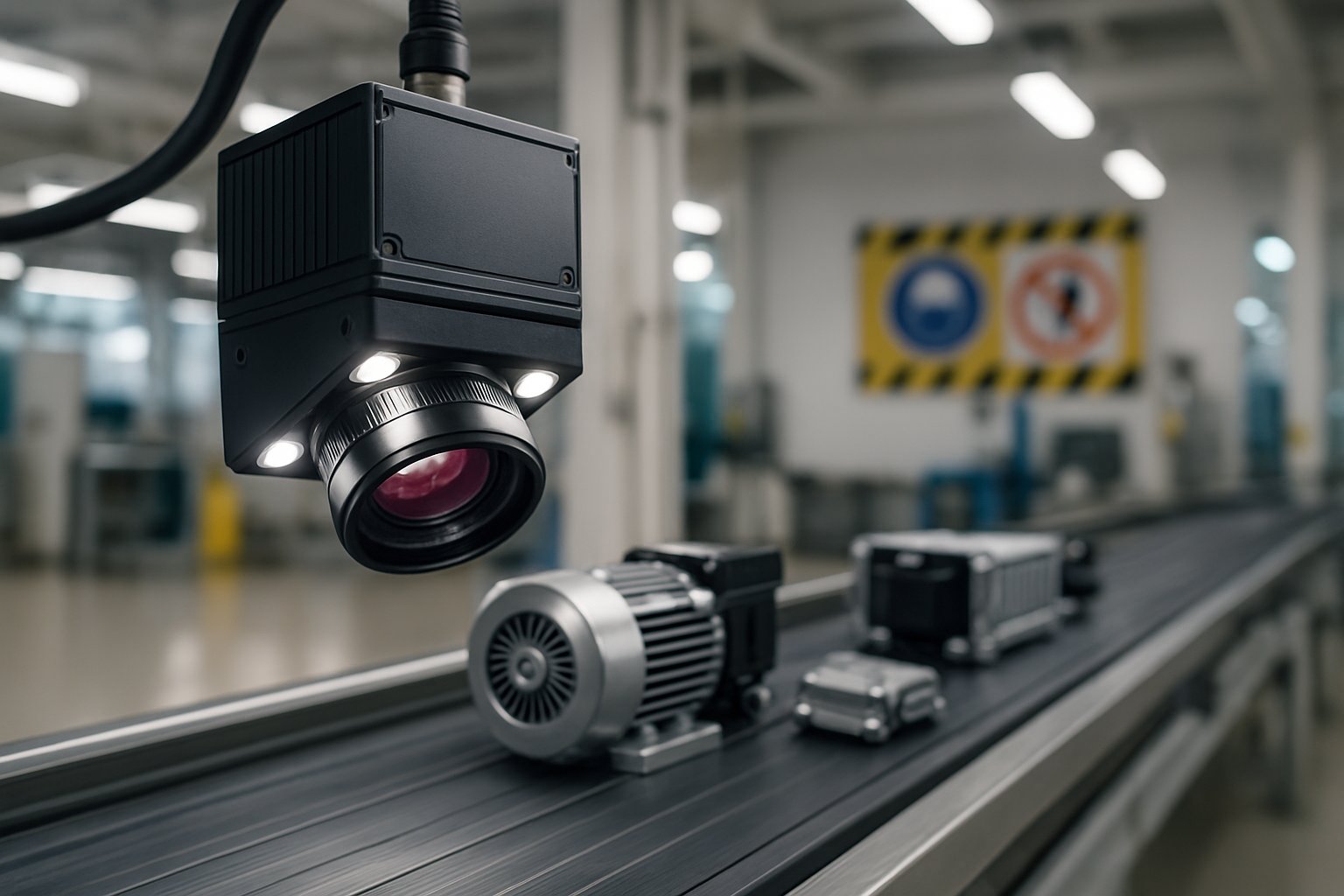
McKinsey benchmarks suggest predictive programs cut unplanned downtime up to 50 percent. Consequently, asset availability rises and emergency repairs decline, improving worker safety metrics. Predictive Maintenance Vision Systems contribute uniquely by spotting surface degradation and PPE gaps. These visual signals often emerge weeks earlier than functional anomalies.
Vendor alliances accelerate adoption. For example, NVIDIA and Siemens tout 25x faster AI execution within digital twins. In contrast, ABB integrates smart cameras directly with Genix for closed-loop control. Each partnership underscores the strategic rush toward scalable, camera-centric preventive safety.
Visual data now sits at the heart of maintenance economics. Consequently, markets reward vendors that operationalize insights at scale.
Edge Hardware Enables Scale
Edge devices turn raw pixels into instant decisions without cloud latency. Importantly, Predictive Maintenance Vision Systems now run on fanless GPUs drawing under fifteen watts. Moreover, rugged IP67 smart cameras withstand vibration, dust, and temperature swings. Therefore, installation timelines drop, and pilots progress into production within weeks.
Processing nearby also protects sensitive operations from network outages. Nevertheless, cybersecurity teams must harden firmware and segment traffic to contain threats. Predictive Maintenance Vision Systems at the edge often trigger automatic work orders. Integration with CMMS platforms eliminates manual data reentry and reduces reaction time.
Hardware advances extend beyond fixed cameras. Drones carrying 3D sensors perform turbine or catenary sweeps without climbing crews. Subsequently, utilities using Optelos reported 60 percent faster remediation cycles. Rail operators echo similar gains from high-speed wayside inspection portals.
Edge hardware clearly unlocks scalable, low-latency safety oversight. However, success still depends on accurate system modeling, which digital twins address next.
Digital Twins Drive Insights
Digital twins synthesize vision, vibration, and historical maintenance logs into living replicas. Consequently, engineers test failure scenarios virtually before approving field changes. Siemens and NVIDIA position Omniverse as the analytic cockpit for such simulations. Machine vision streams feed the twin, updating surface geometry and component alignment continuously.
Predictive Maintenance Vision Systems inside twins forecast the remaining useful life of assets. In contrast, traditional dashboards only show past events, limiting proactive action. ABB reports double-digit efficiency gains when maintenance planners rely on twin-driven predictions. Additionally, auditors value preserved imagery that proves compliance decisions.
Data gravity poses practical issues. Transferring high frame-rate video to central models can saturate networks. Therefore, hybrid architectures run lightweight models locally, sharing metadata with the cloud. This compromise balances fidelity with bandwidth and governance.
Digital twins translate floods of pixels into context and foresight. Nevertheless, benefits mean little without tangible safety outcomes, explored in the next section.
Safety Benefits Outweigh Risk
Early hazard detection remains the prime advantage. Moreover, cameras reveal flange cracks or oil sheen invisible to other sensors. Predictive Maintenance Vision Systems therefore prevent catastrophic failures and evacuation events. Operators avoid dispatching workers onto energized lines or busy tracks.
- 30-50 % reduction in unplanned downtime (McKinsey)
- 18-25 % lower maintenance spend
- 60-70 % faster repair cycles (Optelos utility case)
- Fewer on-site climbs, improving crew safety
- Continuous audit trail for regulatory compliance
Furthermore, many deployments attach PPE monitoring to the same camera network. Computer vision flags missing helmets or harnesses, prompting real-time alerts. Factory AI supervisors appreciate the unified anomaly console.
Benefits also extend to insurance negotiations. Insurers reward factories that document proactive inspections with lower premiums. Consequently, return on investment improves even before maintenance savings accrue. These gains motivate budget holders to fund cross-plant rollouts.
Evidence shows meaningful risk reduction alongside clear financial upside. Yet, several technical and social obstacles still challenge widespread adoption.
Challenges Demand Rigorous Governance
Data bias threatens model accuracy across seasons and lighting. Nevertheless, scheduled retraining and domain adaptation mitigate drift. Academic reviews warn that inadequate datasets inflate false alerts and operator fatigue. Machine vision initiatives must capture diverse examples before go-live.
Privacy represents another hurdle. In contrast, union agreements often restrict worker surveillance without clear consent. Therefore, legal teams should draft retention schedules and anonymization protocols. Transparent governance builds trust and reduces deployment pushback.
On the technical side, PLC integration can decide life or death. Predictive Maintenance Vision Systems that control safety relays require SIL certification. Vendors such as ABB claim progress, yet independent audits remain scarce. Cybersecurity audits must cover firmware signing, encryption, and incident response playbooks.
These challenges highlight essential design and policy considerations. However, proven best practices already guide successful practitioners, as the following section shows.
Deployment Best Practices Guide
Successful teams start small yet plan for scale. Moreover, cross-functional squads align maintenance, OT, IT, and safety goals early. Pilot cells validate model performance using live production complexity. Subsequently, findings inform scalable architecture and governance templates.
Experts recommend a phased roadmap:
- Benchmark incident baselines and assign measurable targets.
- Choose rugged cameras that meet environmental requirements.
- Train models with diverse, labeled imagery, including failure cases.
- Integrate outputs with CMMS and digital twin platforms.
- Conduct cybersecurity and privacy assessments before expansion.
Additionally, crews should recalibrate cameras during scheduled shutdowns, reducing disruption. Factory AI dashboards must display confidence scores to curb alarm fatigue. Professionals can deepen skills through certification programs. One option is the AI for Everyone™ course on industrial AI fundamentals.
Continuous KPI tracking completes the loop. Therefore, dashboards should publish weekly false-positive and lead-time statistics. Management reviews use the metrics to approve further capital. Predictive Maintenance Vision Systems thrive when accountability is data-driven.
Mature playbooks convert promising pilots into enterprise safeguards. Consequently, organizations accelerate toward safer, more reliable operations.
Vision technology now stands at the forefront of industrial hazard prevention. Moreover, hardware, factory AI software, and digital twins create a cohesive safety fabric. Predictive Maintenance Vision Systems deliver measurable uptime gains and reduced human exposure. Nevertheless, success hinges on governance, certified integrations, and continuous model refinement. Forward-thinking professionals should examine pilots, gather unbiased metrics, and build multidisciplinary teams. Explore certifications like the AI for Everyone™ course to lead the charge confidently.


