

AI CERTs
2 months ago
Predictive Demand Orchestration Systems Reshape Retail Inventory
Supply chains faced historic volatility during recent retail seasons.
Consequently, big-box merchants reevaluated inventory playbooks.
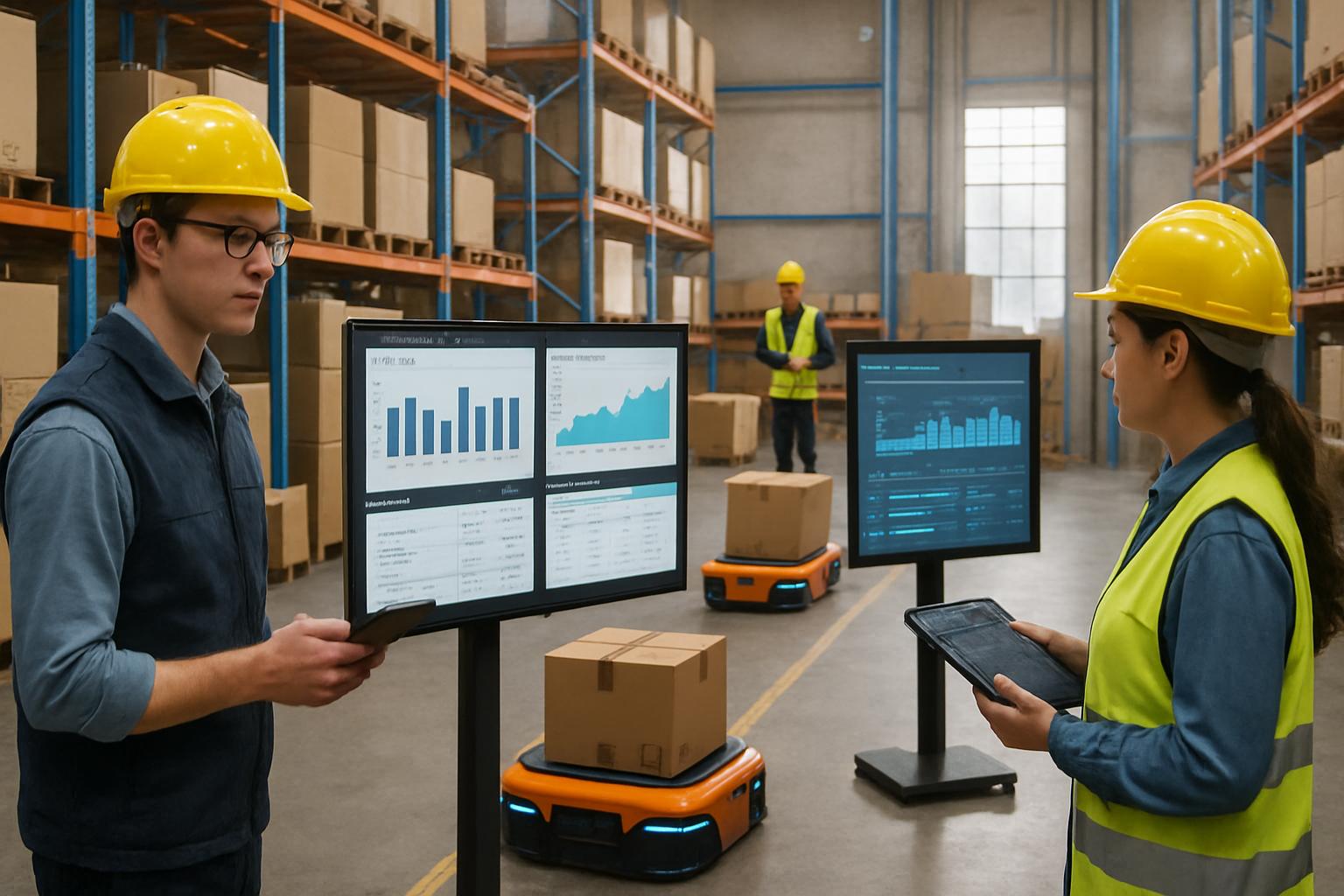
Predictive demand orchestration systems emerged as the favored upgrade for resilient operations.
Moreover, these platforms fuse machine learning, probabilistic forecasting, and autonomous decision logic.
The result is sharper inventory optimization and fewer empty shelves.
Meanwhile, executives crave data they can trust at aisle speed.
Retail analytics has matured, yet traditional tools often stall under multi-channel complexity.
Therefore, leaders now pursue end-to-end orchestration rather than isolated demand models.
This feature examines technology advances, market adoption, and practical guidance for practitioners.
It also highlights certifications that upskill teams embracing autonomous retail supply chains.
Rapid Market Shift Accelerates
Pandemic shock waves lingered, yet consumer demand now swings by channel, weather, and influencer buzz.
Consequently, planning cycles shortened from weeks to hours.
Gartner notes only 23% of supply-chain groups hold a formal AI strategy.
Nevertheless, capital still flows.
FutureMarketReport values retail inventory management software at USD 12.5 billion for 2025.
Market.us projects AI-driven inventory optimization surging toward USD 31.9 billion by 2034.
Moreover, vendors tout double-digit compound growth for orchestration categories.
Blue Yonder’s January 2026 launch underscored that trend with agentic planning agents.
Similarly, Walmart’s global playbook described a self-healing layer across stores and distribution centers.
Predictive demand orchestration systems now anchor many boardroom roadmaps.
In contrast, laggards risk inflated safety stock and lost share.
These numbers signal urgency; organizations must accelerate or absorb rising costs.
The market trajectory places orchestration firmly on strategic agendas.
Adoption momentum is unmistakable despite governance gaps.
However, understanding the underlying technology remains essential before deployment.
Core System Technology Explained
At its core, the platform ingests granular signals from POS, e-commerce, promotions, and weather feeds.
Subsequently, probabilistic models create demand distributions for each SKU, location, and horizon.
Therefore, the system quantifies risk rather than guessing a single number.
Predictive demand orchestration systems then translate those distributions into replenishment, allocation, and transfer decisions.
Decision engines blend rules, optimization solvers, and agentic AI that simulate trade-offs in milliseconds.
Moreover, closed-loop feedback refines parameters as sales flow back.
The architecture spans an analytic layer plus an orchestration layer; both require cloud scale.
Retail analytics pipelines must deliver sub-second latency for digital channels.
ToolsGroup and Blue Yonder report 12-millisecond inventory visibility during seasonal peaks.
Consequently, planners gain confidence to automate previously manual tasks.
Predictive demand orchestration systems also drive inventory optimization by aligning service targets with safety stock.
This alignment reduces working capital while protecting availability.
Such technical depth can appear daunting.
Yet modular APIs and SaaS deployments lower entry barriers for progressive retailers.
Robust technology foundations underpin business value; still, organizational drivers matter equally.
These fundamentals set the stage for adoption dynamics discussed next.
Adoption Drivers And Barriers
Retailers chase three primary outcomes: availability, speed, and capital efficiency.
Consequently, improved forecast accuracy attracts investment.
McKinsey studies cite 15–30% forecast-error reductions after implementation.
Moreover, inventory reductions of 20–35% follow successful rollouts.
The business case therefore resonates with CFOs.
Retail analytics scientists appreciate the lift because models now access richer data.
Predictive demand orchestration systems automate decisions, freeing planners for exceptions.
Nevertheless, barriers persist.
Data quality issues often derail pilots.
Legacy ERP silos fragment lead-time and promotion information.
In contrast, governance gaps expose firms to over-automation risks.
Gartner warns that immature AI strategies magnify these threats.
Skills shortages also slow scaling.
Professionals can deepen expertise with the AI+ Sales™ certification, which covers AI value framing.
Additionally, early cost overruns emerge when integration scope balloons.
Predictive demand orchestration systems succeed when cross-functional teams manage data, process, and change jointly.
Inventory optimization objectives must remain visible during each project phase.
These factors clarify why some pilots stall, while others sprint to production.
Challenges aside, real deployments offer tangible lessons explored next.
Retail Orchestration Case Studies
Walmart, Target, and Home Depot now illustrate orchestration at scale.
Business Insider quoted Target’s Prat Vemana declaring billions of predictions weekly.
Consequently, over 40% of Target inventory decisions run on advanced engines.
Walmart’s playbook describes self-healing inventory that reroutes stock before shelves empty.
Blue Yonder claims sub-15-millisecond visibility during the 2025 Thanksgiving surge.
Meanwhile, ToolsGroup was lauded by QKS Group for operationalizing probabilistic forecasts.
The following metrics summarize public impact claims:
- Forecast error reduced by up to 30%
- Stockouts cut by roughly 25%
- Working capital trimmed by 20–35%
Predictive demand orchestration systems underpin each achievement despite different store footprints.
Retail analytics dashboards expose root causes to associates in real time.
Moreover, mobile companions surface next-best actions on the sales floor.
Nevertheless, most figures stem from vendor reporting rather than independent audits.
Buyers should request third-party validation before basing bonuses on headline numbers.
These stories confirm value potential; still, execution discipline remains critical.
The next section outlines concrete implementation steps.
Practical Implementation Best Practices
Successful programs start with clear service-level, cost, and inventory targets.
Subsequently, teams assemble a unified data model covering POS, OMS, WMS, and supplier feeds.
Data engineers must document latency, accuracy, and governance rules.
Moreover, pilot stores should mirror network diversity.
Predictive demand orchestration systems thrive when they ingest contrasting demand patterns.
Establish a dual-mode launch: recommendations first, full automation later.
Therefore, planners can benchmark accuracy against legacy processes.
Maintain human override thresholds for anomalous situations.
Inventory optimization metrics, such as turns and safety stock, should anchor executive dashboards.
Meanwhile, change-management offices train associates on exception handling.
Organizations must also negotiate updated supplier SLAs reflecting faster allocation cycles.
Professionals may reinforce negotiating skills through the earlier noted certification link.
Finally, schedule quarterly model audits to detect drift and bias.
These disciplined steps minimize deployment surprises.
The concluding outlook reviews what comes next.
Future Outlook And Recommendations
Industry analysts foresee orchestration moving toward autonomous micro-services that self-tune across assortments.
Moreover, GenAI explainability layers will soon translate forecast distributions into plain language for executives.
Predictive demand orchestration systems will therefore become everyday decision colleagues rather than niche tools.
In contrast, retailers lacking a formal AI roadmap may confront widening margin gaps.
Consequently, boardrooms should define accountability, risk controls, and investment timelines within the next fiscal year.
Retail analytics spending will also shift from dashboarding to embedded decision engines, completing the loop.
Additionally, regulators could scrutinize algorithmic fairness in promotions, prompting transparent model documentation.
Organizations that prepare now will capture demand swings without excess stock.
These strategic insights inform the closing summary.
Big-box leaders have proven that orchestration drives measurable availability and cost gains.
Consequently, market data and case studies show rising momentum.
Predictive demand orchestration systems, when governed well, reduce stockouts and release working capital.
However, data quality, skills gaps, and over-automation risks still challenge many pilots.
Therefore, retailers must pair robust technology with disciplined governance and training.
Professionals can future-proof their careers by pursuing the linked AI certification and deepening cross-functional skills.
Act now, adopt best practices, and convert probabilistic insight into competitive advantage.


