

AI CERTS
2 months ago
PPC.co unveils AI Search Advertising readiness program
Advertisers see traffic shifting as conversational engines surface instant answers. Meanwhile, paid opportunities inside those interfaces remain vague but imminent. Consequently, PPC.co has launched a proactive service that tackles this uncertainty head-on. The AI PPC Readiness & Management program prepares brands for paid links in ChatGPT, Gemini, Perplexity, and Claude. Therefore, this launch signals a strategic shift toward AI Search Advertising planning before inventory officially opens.
Industry observers call the move timely, given AI Overviews are already reducing organic clicks across many sectors. However, readiness without measurement could waste budgets. PPC.co claims its framework bridges that gap through disciplined testing, attribution models, and risk controls. Moreover, the agency boasts a decade of PPC engagements, lending credibility to the offering. Early adopters hope the groundwork secures first-mover advantage when conversational platforms finally flip the switch on commercial formats.
Market Shifts Accelerate Fast
Search behavior is changing as large language models summarize the web in real time. Consequently, publishers report traffic drops whenever AI Overviews replace traditional snippets. IAB surveys show more than half of marketers already employ generative AI for creative or targeting. Nevertheless, only a third plan deeper governance investments, revealing a preparedness gap. Market analysts project double-digit growth for AI advertising technology through 2030, despite methodology differences. Therefore, budgets are shifting toward experimentation with conversational placements even before scalable supply exists. These forces create urgency around AI Search Advertising strategies that balance speed with controlled risk. Legacy media budgets are migrating as planners chase conversational engagement. In contrast, PPC budgets face erosion unless channels diversify.
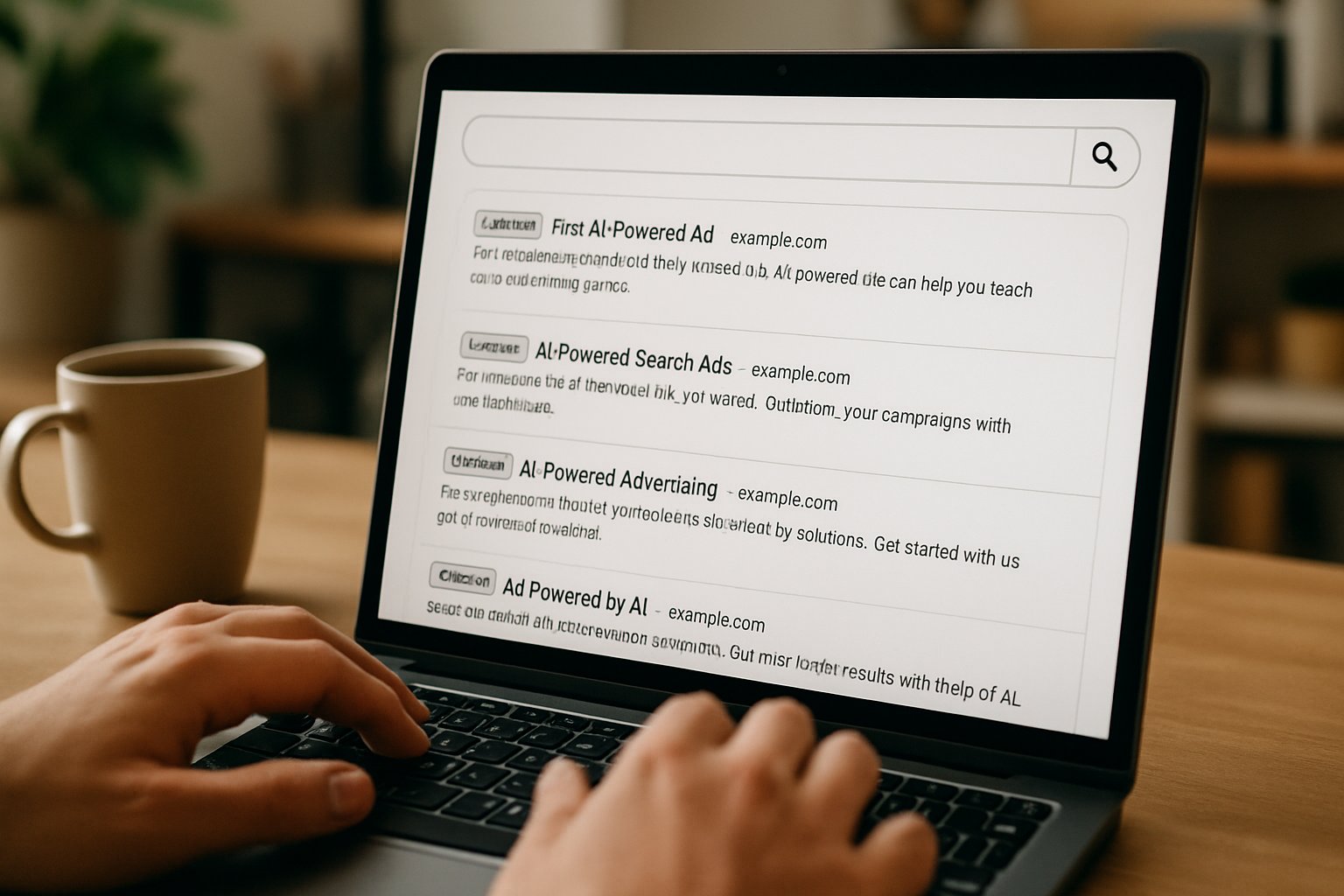
Advertisers cannot ignore these structural trends. However, they still need concrete service models to act.
Inside New PPC.co Offering
Timothy Carter frames the new program as a roadmap, not a speculative bet. Furthermore, the service starts with a readiness audit covering data, creative assets, and compliance. Analysts at PPC.co map high-intent prompts to commercial opportunities, creating a living taxonomy. Moreover, the team designs bid strategies that can port directly into future AI Search Advertising consoles. Attribution models borrow from view-through concepts because clicks may vanish inside chat flows. Finally, controlled pilots simulate projected costs and outcomes using existing paid search data.
This structured approach links vision with measurable milestones. Consequently, stakeholders gain evidence for budget approvals before platforms monetize.
Platform Ads Timeline Overview
Platform roadmaps remain fluid, yet recent milestones offer clues. In November 2024, Perplexity began labeling sponsored follow-up questions for brands like Whole Foods. Dan Taylor at Google recently denied immediate Gemini ads, yet AI Overviews already carry experimental inventory. Meanwhile, OpenAI has embraced ad support for ChatGPT's free tier.
- November 2024 – Perplexity launches sponsored questions pilot.
- May 2025 – Google expands AI Overviews ad experiments.
- January 2026 – ChatGPT confirms ad-supported free tier rollout.
- January 2026 – PPC.co releases AI PPC Readiness & Management offering.
These milestones illustrate staggered yet accelerating adoption of AI Search Advertising surfaces. Consequently, brands must monitor release notes weekly, because launch windows could close quickly.
The timeline demonstrates momentum but also ambiguity. Nevertheless, proactive planning protects marketers from chaotic go-live scrambles.
Measurement Still Proving Elusive
Traditional click-through models fail when the answer engine satisfies intent inside the conversation. Therefore, PPC.co recommends impression-level exposure metrics tied to downstream sales data. Additionally, the agency layers sentiment sampling to detect whether brand mentions influence purchase consideration. Advertisers have struggled here; IAB reports 70% encountered hallucinations or bias during recent AI campaigns. Nevertheless, early pilots suggest blended attribution can defend budgets until platform reporting matures. For AI Search Advertising to scale, standards similar to viewability must emerge across vendors. Earned media signals may still influence ranking within AI answers, complicating spend allocation.
Reliable metrics will decide long-term investment levels. Moreover, transparent data sharing will influence which platforms gain trust next.
Governance And Risk Factors
Brand safety remains a pressing concern because generative answers can drift off-message or cite dubious sources. Moreover, regulators are watching disclosure practices that blend organic and paid content. Readiness also means instituting governance checklists before budgets move. PPC.co embeds bias audits and legal reviews into its management workflow. Professionals can enhance compliance expertise with the AI Security Compliance™ certification. Consequently, certified teams spot hallucinations faster and escalate remediation without pausing campaigns. Without clear rules, AI Search Advertising could invite regulatory scrutiny and consumer backlash. Dan Taylor’s denial of Gemini ads underscores the reputational risk of premature announcements.
Risk frameworks protect both spend and reputation. In contrast, reactive fixes cost more and erode stakeholder confidence.
Securing Competitive Edge Early
Early movers often gain algorithmic preference when platforms weigh historic performance. Furthermore, prompt taxonomies built now can inform creative automation later, reducing labour costs. Brands integrating AI Search Advertising with existing PPC dashboards avoid siloed reporting. Additionally, teams that document governance from day one will face fewer procurement hurdles. Samuel Edwards argues that first advantage is meaningless without sustained measurement, reinforcing disciplined management. Therefore, readiness initiatives should parallel other funnel optimization projects rather than compete for capital. The agency advises reallocating upper-funnel media to fund early conversational tests.
Preparation amplifies future scale potential. Subsequently, budgets transition smoothly once high-volume inventory arrives.
Recommended Strategic Next Steps
Executives wondering where to start can follow a staged blueprint.
- Commission a readiness assessment covering prompts and data hygiene.
- Pilot limited spend in beta programs while collecting exposure metrics.
- Align procurement, legal, and finance on governance thresholds for smoother management.
- Document insights in a living playbook to guide larger AI Search Advertising deployments.
Moreover, marketers should monitor platform documentation weekly and subscribe to release notes. Tools that scrape interface changes can trigger internal alerts, preserving first-mover momentum.
Structured action plans prevent paralysis. Consequently, teams progress steadily despite market uncertainty.
AI answer engines continue rewriting the search playbook, yet disciplined preparation offers clarity. Brands that treat AI Search Advertising as a managed channel, not a gamble, will seize share first. Moreover, structured readiness audits, governance safeguards, and adaptive management equip teams for sudden platform pivots. Nevertheless, ongoing education remains essential. Professionals should explore the linked AI Security Compliance certification to strengthen cross-functional trust before budgets scale. Consequently, the next wave of AI Search Advertising winners will combine strategic foresight with accredited skill sets.


