

AI CERTs
2 hours ago
Posthumous AI Film Revives Val Kilmer Onscreen
News of an unexpected comeback has shaken Hollywood insider circles. One year after his death, Val Kilmer returns through algorithms. However, the Posthumous AI Film raises questions beyond nostalgia. Consequently, executives, unions, and ethicists are watching the experiment closely. Industry observers see a pivotal stress test for consent frameworks. Meanwhile, producers argue they are honouring Kilmer’s creative wishes. Fans debate whether digital resurrection preserves or distorts authentic artistry. Therefore, this report dissects the technology, contracts, economics, and cultural stakes. Analysts will find hard numbers, union language, and market forecasts inside. This overview sets the stage for deeper exploration ahead. In contrast, past CGI resurrections lacked current regulatory scrutiny. Subsequent developments now force the industry toward clearer standards.
Val Kilmer Legacy Reimagined
Before illness struck, Val Kilmer agreed to portray Father Fintan in As Deep as the Grave. This Posthumous AI Film continues the actor’s presence despite mortality. Kilmer died on 1 April 2025, leaving critical scenes unfinished. Nevertheless, producers kept his commitment alive using generative models. Mercedes Kilmer states her father embraced innovation to expand storytelling horizons.
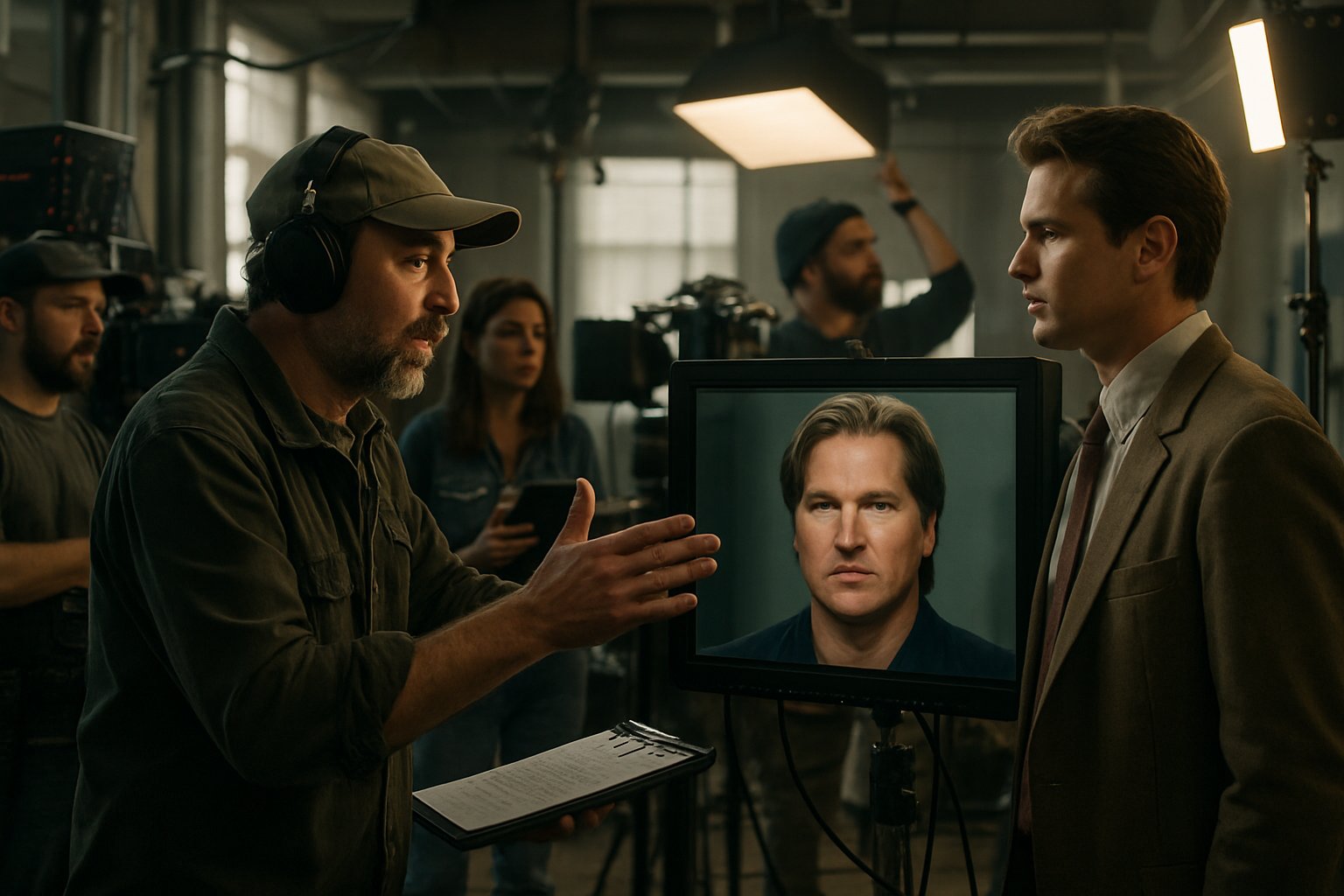
These details anchor the emotional core of the experiment. However, understanding the tools deployed requires technical scrutiny, addressed next.
AI Techniques Behind Resurrection
Generative Model Pipeline Overview
Engineers combined archival footage, body doubles, and neural rendering to rebuild Kilmer’s visage. Moreover, voice specialists referenced earlier Sonantic data to clone recognizable timbre for the Posthumous AI Film. In contrast, many prior digital resurrection efforts relied solely on CGI sculpting.
- Training hours remain undisclosed; comparable projects average 200 hours of footage.
- Grand View Research values AI media market at USD 25.98 billion for 2024.
- Analysts predict USD 99.5 billion by 2030, reflecting 24.2 percent annual growth.
- Industry surveys rank Posthumous AI Film potential among top five disruptive content trends.
Collectively, these figures reveal escalating investment behind likeness synthesis. Consequently, regulatory attention has intensified, as the following section explains.
Vendor Privacy Disclosure Gaps
Regulators often request transparency about training data provenance. However, companies cite proprietary protection when declining specifics. Consequently, observers fear hidden bias or copyright conflicts within unseen datasets. Independent audits could build trust without revealing competitive secrets.
Consent And Union Safeguards
SAG-AFTRA’s 2024 provisions demand informed consent for any digital replica of Val Kilmer. Additionally, estates must approve posthumous uses when prior consent is absent. Producers claim compliant paperwork covers Kilmer’s digital resurrection in this case. Mercedes Kilmer negotiated compensation and scope limitations on behalf of the estate. Nevertheless, contract texts for the Posthumous AI Film remain undisclosed, preventing independent verification.
These gaps underline the importance of transparent licensing. Subsequently, economic incentives further complicate ethical enforcement, discussed next.
- Separate voice and likeness consent required for each project.
- Minimum compensation equals original daily rate plus residuals.
- Performers can revoke consent if contract terms are breached.
State Policy Momentum Builds
New York passed a digital replica licensing bill in 2025. Moreover, California legislators are drafting similar protections with union input. Legal scholars anticipate patchwork compliance costs for multinational studios. Harmonisation efforts through federal proposals remain uncertain.
Market Forces Driving Adoption
Streaming platforms crave exclusive hooks to win subscriber fights. Consequently, resurrected icons offer powerful marketing narrative with minimal scheduling risk. Investors therefore welcome any Posthumous AI Film promising proven star appeal. Moreover, rising visual quality lowers perceived creative risk for studios. Grand View Research growth projections illustrate the lucrative trajectory.
These trends drive rapid adoption across cinema pipelines. However, artistic and cultural objections persist, explored in the next section.
Investor Sentiment Signals Shift
Recent venture reports highlight generative media startups outperforming broader tech indexes. Meanwhile, some funds establish ethics committees to evaluate portfolio risks. JPMorgan analysts warn hype cycles can mask unstable revenue models. Nevertheless, established studios hedge risk through strategic minority investments.
Global talent shortages in VFX amplify demand for automated performance tools. Therefore, educational pipelines must evolve to supply specialised engineers.
Creative And Ethical Debate
Critics fear an uncanny valley that disrupts emotional immersion. In contrast, supporters hail digital resurrection as modern myth-making. Scholars cite Indigenous representation risks in Val Kilmer’s priest-shaman role. Nevertheless, director Coerte Voorhees argues respectful consultation mitigated concerns. Furthermore, prior examples, including Rogue One’s Tarkin, show audiences gradually accept synthetic performances. The Posthumous AI Film confronts established notions of performance authenticity.
Artistic conversations remain fluid as technology advances. Consequently, attention shifts toward broader industry implications, addressed next. Moreover, sociologists caution that normalising synthetic grief rituals might reshape collective memory.
Audience Reaction Unknowns Persist
Early test screenings for comparable projects delivered mixed emotional responses. Some viewers applauded technical wizardry yet questioned narrative necessity. In contrast, older demographics expressed stronger discomfort with synthetic performances. Marketing teams plan educational featurettes to contextualise the technique.
Implications For Future Cinema
Posthumous AI Film practices may soon influence standard production insurance clauses. Additionally, distributors will gauge audience sentiment before mainstream deployment of any Posthumous AI Film. Meanwhile, European regulators contemplate harmonised right-of-publicity rules. Professionals may deepen expertise via the Bitcoin Security Professional™ certification. Such credentials help stakeholders navigate evolving contractual landscapes.
These forward-looking signals suggest policy, profit, and creativity will intersect intensely. Therefore, summarising core findings becomes essential. Consequently, accredited programs expedite workforce readiness amid accelerating adoption.
Practical Skills Checklist Overview
Producers must master contract negotiation, data governance, and cross-disciplinary collaboration. Additionally, technical leads need proficiency in neural rendering pipelines and Python. Lawyers should monitor evolving right-of-publicity statutes across jurisdictions. Journalists can strengthen coverage accuracy through continual certification and workshops.
Key Takeaways And Outlook
Val Kilmer’s return spotlights converging technology, law, and emotion within modern cinema. However, the Posthumous AI Film also exposes blind spots in transparency and enforceability. Moreover, market projections show investors rewarding bold adopters despite ongoing debate. Nevertheless, union safeguards remain vital to protect artistic autonomy and fair pay. Consequently, professionals must track regulatory shifts and pursue relevant credentials. In contrast, audiences will ultimately decide whether digital resurrection feels authentic or exploitative. Explore emerging standards and certifications to stay competitive as storytelling transforms further. Visit our resource hub and enroll in recognized AI credentials to lead this narrative revolution.


