

AI CERTs
3 hours ago
Pope Leo XIV flags AI ethics crisis
Few religious documents capture boardrooms' attention like Pope Leo XIV’s latest communication message. Consequently, his 24 January text sparked immediate debate across policy, technology and investment circles.
The Pope warned that digital machines simulating voices and faces could erode society’s moral bedrock. Therefore, he urged urgent collaboration on AI ethics to preserve human dignity and trust.
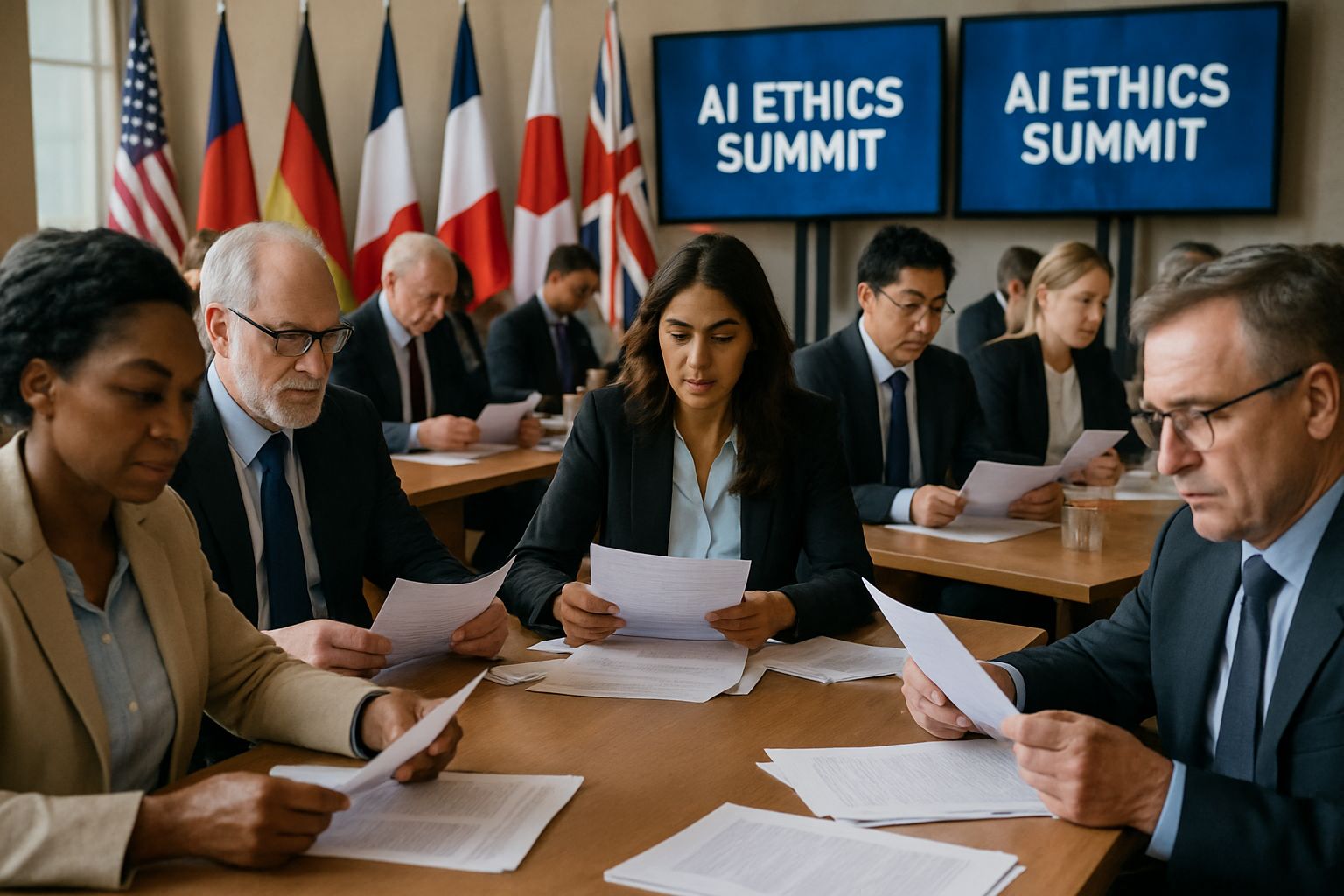
This article unpacks the address and situates it within current regulation. It also assesses the broader societal impact of AI across sectors.
Vatican Issues Grave Warning
Initially, Vatican officials framed 2026 as a communications year focused on authenticity in digital spaces. However, the final document underscored even deeper concerns about algorithmic power.
Pope Leo XIV wrote, “Digital technology…risks radically altering some of the fundamental pillars of human civilization.” Moreover, he highlighted the danger of oligopolistic control by only a handful of firms.
The statement places spiritual authority behind a call for concrete AI ethics guardrails. Consequently, global media amplified the message beyond typical religious audiences.
These warnings set a stark ethical baseline. Meanwhile, they prepare the stage for examining threatened civilization pillars.
Civilization Pillars At Risk
Anthropologists note that shared language, memory, and empathy sustain social cohesion. Furthermore, generative models can now replicate each element with remarkable fidelity.
Deepfakes blur the boundary between authentic and synthetic memories, challenging democratic deliberation. In contrast, chatbots offering simulated friendship may displace real human relationships.
Pope Leo fears those shifts could rewrite history and distort conscience formation. Subsequently, he named responsibility, cooperation, and education as a necessary alliance.
Robust AI ethics frameworks must confront these anthropological dangers head-on. The societal impact of AI therefore reaches far beyond productivity charts.
Trust, memory, and empathy collectively face algorithmic pressure. Consequently, power concentration demands closer inspection.
Power Concentrated Among Few
Market analysts estimate NVIDIA holds over 90% of data-center GPU share for training. Meanwhile, leading cloud providers centralize access to that compute.
This technical bottleneck means frontier model development remains in limited corporate hands. Therefore, policy leverage sits with a small cohort of executives and investors.
The Pope explicitly criticized this arrangement for enabling silent behavioral steering at scale. AI ethics discourse often highlights fairness, yet ownership structures require equal scrutiny.
- McKinsey 2025 survey: 88% of firms deploy AI in at least one function.
- PwC projects AI could add $15.7 trillion to global GDP by 2030.
- EU AI Act enforcement phases run through 2027, targeting high-risk uses.
The numbers illustrate enormous stakes and uneven capability distribution. Moreover, education emerges as the most scalable counterweight.
Education And MAIL Agenda
Pope Leo proposes Media and Artificial Intelligence Literacy, or MAIL, for schools worldwide. Additionally, he stresses pairing technical skills with humanistic reflection on meaning and responsibility.
Curricula would teach students source verification, watermark detection, and critical thinking. Therefore, MAIL aligns with UNESCO digital literacy frameworks while adding moral depth.
Organizations designing AI ethics programs can blend MAIL modules for workforce upskilling. Professionals can enhance their expertise.
They may pursue the AI Researcher™ certification for structured guidance. Thus, the societal impact of AI becomes practical rather than abstract within such courses.
MAIL translates moral appeals into actionable pedagogy. Subsequently, legislators are weighing complementary policy measures.
Global Policy Responses Emerge
Governments are not waiting for consensus. For example, the EU AI Act bans manipulative biometrics and mandates transparency for general-purpose models.
Meanwhile, US agencies coordinate voluntary safety commitments with leading labs. In contrast, some Asian economies prioritize competitive deployment while pledging minimal red-tape.
Many frameworks echo papal calls for watermarking and content provenance. Nevertheless, enforcement timelines vary and resources remain uneven.
Robust AI ethics legislation could harmonize standards across jurisdictions. The societal impact of AI will depend on how quickly such rules mature.
Regulators are moving, yet speed gaps persist. Consequently, industry narratives must also be examined.
Industry Voices And Balance
Tech leaders publicly support responsible innovation while lobbying against excessive constraint. Google’s Sundar Pichai states that responsibility outweighs any competitive race.
Moreover, OpenAI signals approval for international audits and red-team exercises. However, firms warn that overbroad rules could hinder lifesaving medical and climate applications.
AI safety organizations counter that unchecked scaling risks catastrophic outcomes. Therefore, balanced AI ethics governance must integrate technical and societal safeguards.
Dialogue between labs, regulators, and civil society remains fluid but fragile. Subsequently, strategic foresight becomes essential for decision makers.
Stakeholders agree on risk but dispute pace and method. The next section outlines workable pathways.
Strategic Next Steps Forward
Multi-layer action offers the clearest route. Firstly, companies should adopt mandatory provenance watermarks for all synthetic media.
Secondly, independent auditors must verify model behavior against published safety thresholds. Moreover, governments can fund open research on explainability and systemic monitoring.
Thirdly, academic and vocational programs should embed AI ethics modules from entry level. This move normalizes critical reflection within engineering workflows.
Fourthly, media platforms must upgrade labeling systems to counter deepfake virality. Consequently, users receive clearer cues about content authenticity.
Finally, investors could tie capital to transparent risk reporting. In contrast, short-term revenue metrics alone incentivize reckless deployments.
Collectively, these recommendations reinforce responsibility, cooperation, and education. Robust AI ethics culture emerges when all pillars align.
Concrete steps convert moral exhortation into operational reality. Meanwhile, the societal impact of AI remains contingent on timely implementation.
Pope Leo XIV’s message resonates because it blends tradition with urgent technological insight. Moreover, his alliance framing offers a practical governance template.
Therefore, leaders across sectors should treat the AI ethics warning as an actionable brief. Readers committed to deeper technical understanding can revisit MAIL guidelines or pursue advanced certification.
Consequently, pursuing the AI Researcher™ course strengthens analytical skills. Action today will shape the century’s technological conscience.


