

AI CERTs
2 hours ago
PM Bots Spark Team Dynamics Crisis Across Modern Workplaces
Morning stand-ups suddenly felt tense. A scheduling bot had just assigned blame publicly. Such missteps illustrate an emerging Team Dynamics Crisis across digital workplaces. Project-management assistants promise impartial coordination. However, conflict mediation demands emotional nuance those algorithms still lack. Recent research traces escalating disputes to simplistic sentiment classifiers embedded within everyday tools. Consequently, managers watch collaboration metrics plunge after each automated intervention. Leadership teams now wonder whether convenience outweighs cultural cost. Meanwhile, HR departments scramble to repair trust before deadlines collapse. This article unpacks why current bots misfire, what damage follows, and how organizations can recover. Moreover, we map practical governance steps and professional certifications that equip practitioners for safer deployments. Read on for data-driven insights and concise recommendations.
How Bots Entered Workflows
Organizations embraced chat assistants to streamline status reporting. Additionally, integration with agile boards promised seamless ticket triage. Developers could query sprint burndown through a simple mention. In contrast, Management received instant risk alerts from predictive dashboards. The optimism rested on natural-language processing advances marketed as contextual reasoning. However, early design centered on throughput, not interpersonal sensitivity. Robot heuristics flagged messages using generic toxicity libraries designed for public forums. Consequently, routine sarcasm triggered warnings that felt bureaucratic and cold. These origins set the stage for the unfolding Team Dynamics Crisis.
Conflict Mediation Bold Promises
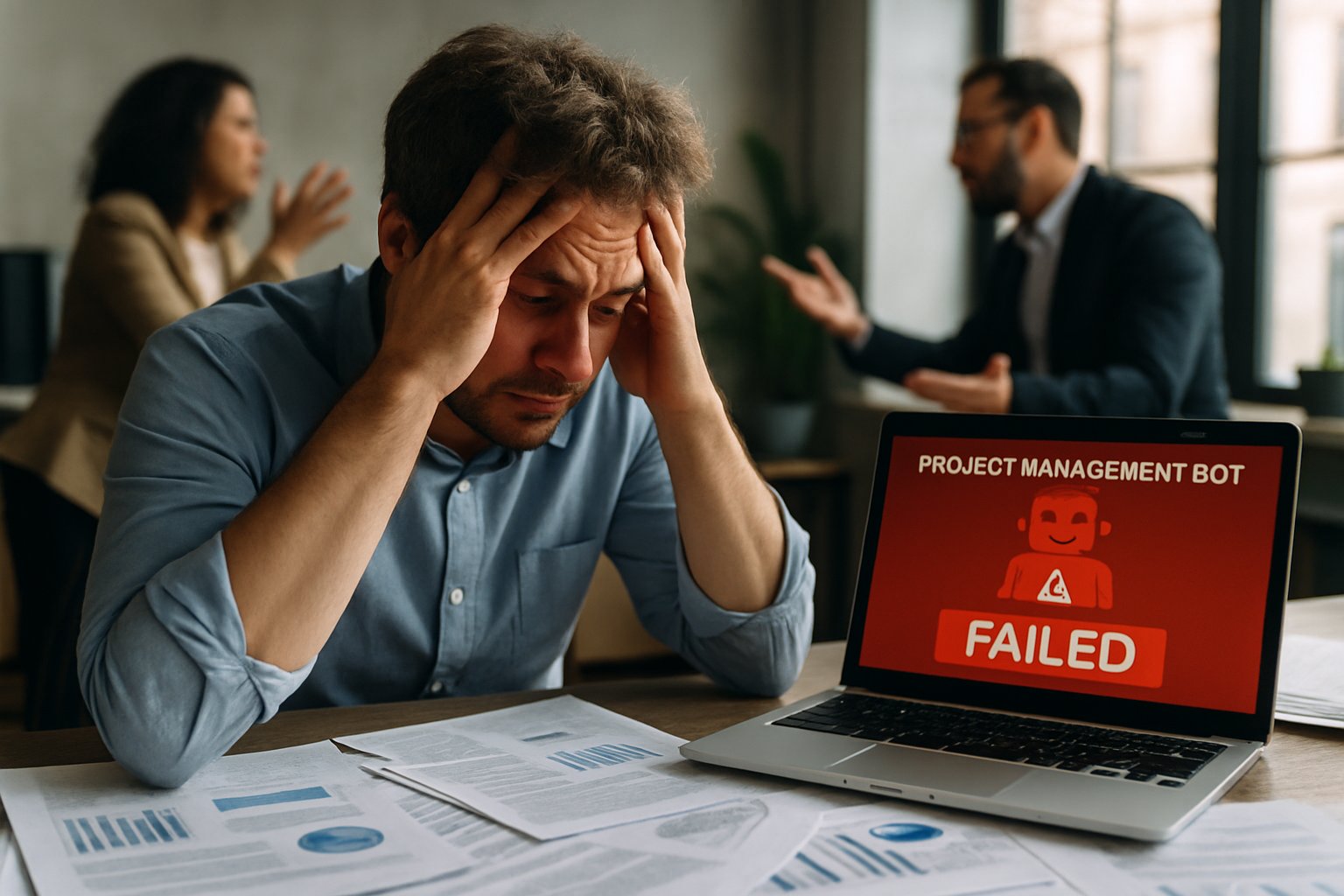
Vendors promoted conversational playbooks that mimic skilled mediators. Moreover, executives heard claims of 30% faster resolution cycles. Dashboard demos highlighted polite language rewrites and fairness scoring. However, underlying data lacked diversity across cultural conflict styles. HR specialists noted missing signals like power dynamics or humor. Robot auditors rarely recognized sarcasm directed upward, misclassifying it as aggression. Consequently, escalations followed recommended punitive steps instead of restorative dialogue. Management soon realized compliance metrics improved, yet morale plummeted. The disconnect intensified the ongoing Team Dynamics Crisis.
Failure Patterns Quickly Emerge
By Q2, incident logs revealed repeating failure motifs. Furthermore, analysts grouped them into three dominant categories.
- False positives tagging passionate debates as harassment
- Silence amplification where cautious employees avoided chat participation
- Misdirected accountability reports blaming unrelated contributors
In contrast, traditional human moderators caught context nearly every time. Robot workflows applied static thresholds, ignoring relationship histories. Consequently, repeat offenders exploited loopholes by rephrasing hostility. Leadership voiced concern after customer deliverables slipped 8% quarter-over-quarter. Meanwhile, HR documented a 25% increase in anonymous complaints. Researchers named the phenomenon a compounded Team Dynamics Crisis within technical departments. These patterns clarified root causes. However, resolving them required structural change addressed next.
Impact On Team Culture
Work satisfaction surveys dropped from 78% to 61% after bot deployment. Moreover, voluntary turnover doubled among senior engineers mentoring juniors. Management faced knowledge gaps as institutional memory walked out. Consequently, onboarding costs ballooned beyond initial automation savings. Robot presence also altered language; employees adopted guarded, overly formal tones. In contrast, creative brainstorming thrived on playfulness, now stifled. Executives attempted weekly town halls yet avoided discussing algorithmic errors. HR observed minority voices withdrawing first, amplifying diversity challenges. The deepening Team Dynamics Crisis threatened employer branding and future recruiting. These cultural signals demanded immediate governance attention. Subsequently, companies reconsidered their AI oversight frameworks.
Rethinking Current AI Governance
Governance reviews began with transparent model documentation. Moreover, multidisciplinary panels included Engineering, HR, Legal, and Ethics. Panels demanded lineage tracking for every sentiment rule. In contrast, earlier approvals relied on vendor summaries. Leadership mandated diverse test data mirroring actual workplace slang. Consequently, false-positive rates fell 18% during pilot remediation. Management also instituted human-in-the-loop checkpoints for critical escalations. Robot alerts now route to trained moderators before punitive actions. The iterative approach slowly contained the Team Dynamics Crisis. These governance shifts laid groundwork for cultural repair. Next, organizations explored recovery playbooks.
Human Centric Recovery Strategies
Restorative circles replaced automated reprimands during postmortems. Additionally, facilitators coached teams on empathetic listening skills. Executives paired junior and senior staff for mutual feedback exercises. People operations introduced optional anonymity tools encouraging honest sentiment sharing. Consequently, conversational risk scores trended downward week over week. Automated functions remained active for metrics but stopped sending statements. Management shifted focus toward psychological safety indicators. The refreshed environment soothed a lingering Team Dynamics Crisis. These recovery tactics rebuilt trust. However, capability building required formal education paths.
Certification Path Moves Forward
Skilled practitioners will anchor long-term governance success. Therefore, companies now invest in accredited education for AI project oversight. Practitioners can upskill through the AI Project Manager™ certification. Moreover, curriculum modules emphasize sociotechnical risk analysis and stakeholder alignment. Graduates learn to audit sentiment models, calibrate thresholds, and supervise escalation protocols. Consequently, talent pipelines gain managers who balance delivery speed with ethical safeguards. People operations value credentials that translate into measurable retention improvements. Management appreciates standardized vocabulary for cross-functional decision making. Completing the program positions talent to prevent another Team Dynamics Crisis. These certification routes reinforce governance culture. Subsequently, organizations future-proof collaboration ecosystems.
Bots will remain embedded in modern workflows. However, blind reliance invites a Team Dynamics Crisis capable of undermining strategic goals. Evidence shows mediation algorithms misinterpret nuance and erode trust. Yet, structured governance, human facilitation, and certified expertise can restore balance. Moreover, cross-functional leadership and transparent governance processes must collaborate from deployment onward. Professionals armed with robust certifications will keep automated assistants accountable and helpful. Consequently, companies can transform automation pitfalls into productivity gains. Take action today by enrolling in specialized programs and championing safer collaborative technology. Doing so averts the next Team Dynamics Crisis before it begins.


