

AI CERTS
1 hour ago
Perplexity’s Locally Run AI Push: Mac Mini Proxy Revolution
Furthermore, the upcoming Personal Computer version physically runs on a Mac Mini in your office. Consequently, Perplexity claims huge productivity gains, citing $1.6 million saved during internal trials. This article dissects the product, its economic case, and its security posture. Along the way, we evaluate whether Locally Run AI can become mainstream inside cautious enterprises.
AI Proxy Market Shift
Historically, hosted chatbots dominated early enterprise adoption. However, second-generation agents now seek deeper autonomy across files, calendars, and APIs. The shift turns the agent into a Persistent co-worker rather than a reactive assistant. Analysts therefore describe this moment as the rise of the AI Proxy. Locally Run AI amplifies that vision by eliminating latency and compliance friction for sensitive workloads.
Moreover, executives prefer retaining local logs for audit readiness. Perplexity positions its Personal Computer as emblematic of this preference. Consequently, the competitive field now includes hardware vendors, security firms, and model aggregators jockeying for mindshare. The market is converging on goal-driven agents that stay near enterprise data. Next, we explore how Perplexity implemented that approach.
Inside Perplexity Computer Suite
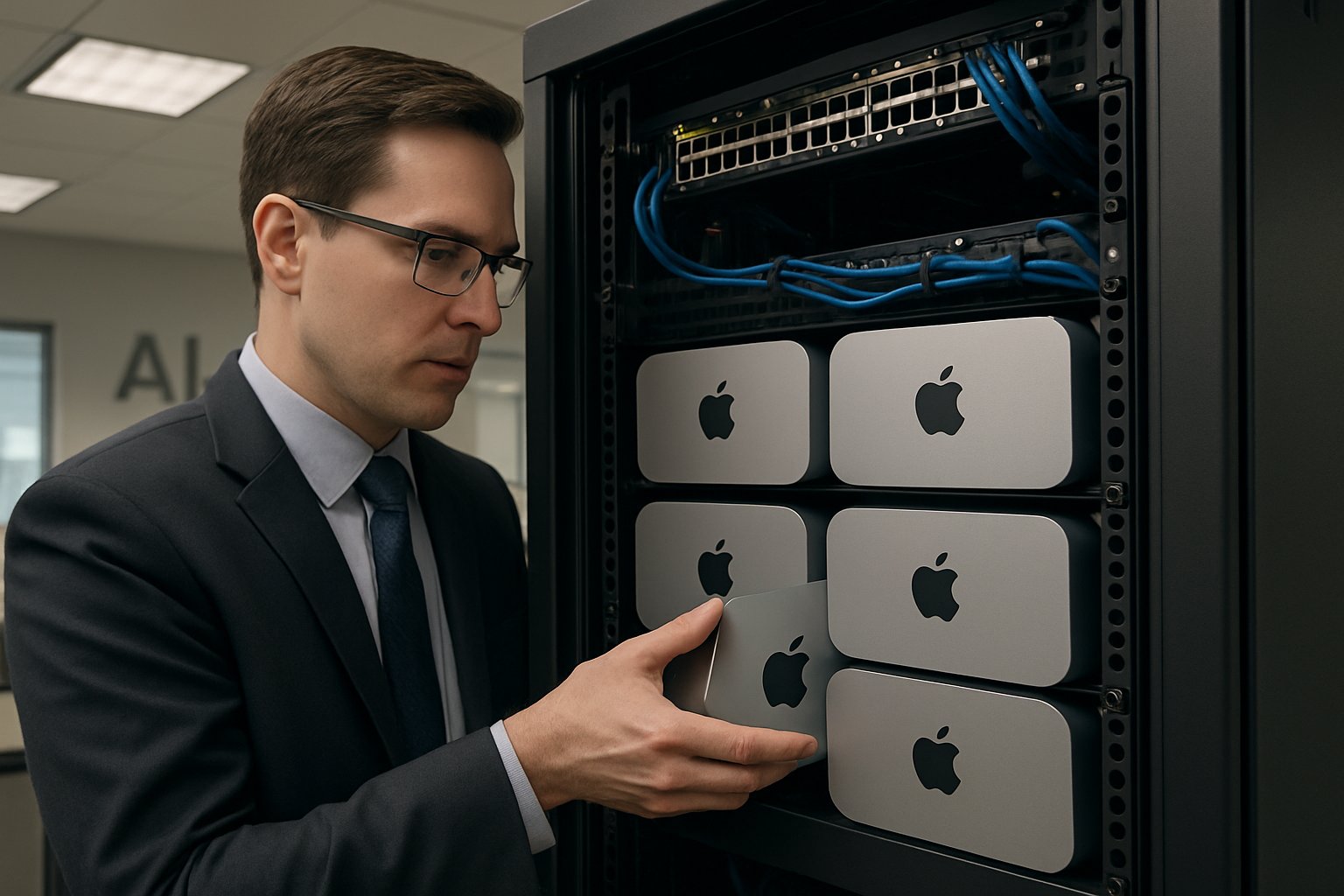
Perplexity Computer trains no new model itself. Instead, it orchestrates about twenty frontier models behind one interface. Additionally, the service chooses the cheapest accurate model for each subtask. Therefore, users see faster answers and cost stability. Personal Computer extends these capabilities into a Mac Mini sitting on the customer's network. Meanwhile, the system runs 24/7 and keeps a Persistent session history across tasks. Key features include audit trails, approval gates, and a manual kill switch.
Notable technical elements:
- Multi-model "Model Council" routing logic
- Premium data sources such as Statista and PitchBook
- Enterprise connectors for Snowflake, Salesforce, HubSpot
- Developer APIs covering Search, Agent, Embeddings, Sandbox
Furthermore, Perplexity quotes an internal study covering 16,000 queries. That test credited Computer with completing 3.25 years of work in four weeks. Locally Run AI advocates see the claim as evidence of tangible ROI. Skeptics nevertheless want independent replication. The suite showcases ambitious scope and lofty metrics. However, benefits mean little without proven security, our next focus.
Persistent Digital Proxy Benefits
Running the agent locally unlocks new automation layers. For instance, the Proxy can merge spreadsheet data with CRM APIs while owners sleep. Consequently, morning dashboards contain freshly reconciled numbers.
- Time savings on research and formatting tasks
- Lower SaaS spend through optimized model selection
- Improved compliance thanks to local data residency
Moreover, executives appreciate the clear audit logs produced by every action. The Persistent design means long-term goals survive reboots and interface changes. Locally Run AI therefore resembles an outsourced analyst glued to the office. Professionals can enhance their expertise with the AI Developer™ certification. Such credentials help teams govern and extend complex agent workflows. Benefits look compelling across finance, marketing, and legal teams. Yet mounting risks demand equal attention.
Security Risks And Mitigations
Every autonomous agent increases the attack surface. In contrast, Locally Run AI partly reduces cloud exposure but introduces local networking dangers. Research into OpenClaw revealed prompt injection exploits deleting inboxes. Therefore, Perplexity added sandbox execution, strict approval prompts, and an emergency kill switch. CrowdStrike partnership promises endpoint enforcement against runaway processes.
Nevertheless, external audits remain scarce. Experts urge disclosure of pentest reports and shared threat models. Mac Mini hardware needs secure boot, disk encryption, and timely OS patches. Moreover, credential storage must avoid plain-text mishaps. Perplexity plans SOC2 and SAML SSO support to satisfy enterprise checklists. Controls appear thoughtful yet unproven publicly. Consequently, procurement teams will scrutinize every mitigation.
Enterprise Adoption Considerations Today
Budget discussions inevitably arise. TechCrunch cited a $200 monthly Perplexity Max tier granting Computer access. However, Personal Computer pricing still lacks final disclosure. Some prospects already own a Mac Mini and expect software-only licensing. Others prefer vendor-supplied hardware for predictable support. Procurement leaders also weigh integration depth with Snowflake and Salesforce. Meanwhile, compliance officers demand documentation proving no sensitive data exits the local box.
Perplexity’s executive stated they pursue value, not mass adoption. That stance aligns with high-margin enterprise playbooks. Consequently, Locally Run AI deployments will first appear in analytics-heavy verticals. Early movers include finance desks and strategic consultancies. They already pay steep licensing fees for premium research sources. Adoption hinges on pricing clarity and reference customers. Next, we examine Mac Mini deployment specifics.
Mac Mini Deployment Details
Perplexity selected Apple’s compact desktop for predictable thermals and strong single-core performance. Additionally, the vendor can preload firmware controls before shipping. Buyers may alternatively reuse existing units with a simple install script. However, enterprise IT must configure VLAN isolation and strict outbound rules. The agent boots automatically and reconnects to Perplexity’s cloud when approved.
Persistent session data stays on the internal SSD to speed future tasks. Perplexity promises that logs never leave without explicit consent. Consequently, the local device functions as both cache and guardrail. Deployment simplicity remains a selling point. Yet long-term support and patch cadence will influence satisfaction.
Future Outlook And Guidance
Analysts expect agent orchestration wars to intensify over eighteen months. Meanwhile, regulators draft guidelines for safe autonomous operations. Therefore, vendors embracing transparency and standardized audits will gain trust fastest. Locally Run AI must couple agility with verifiable governance. Perplexity holds an advantage through its multi-model architecture and enterprise focus. Nevertheless, competitors like OpenAI and Anthropic will not stand idle. Leaders should pilot limited scopes, measure ROI, and iteratively expand.
Teams lacking internal expertise should pursue targeted training. Consequently, the previously mentioned AI Developer™ certification offers an accessible first step. Success will belong to organizations balancing innovation with security discipline. Strategic pilots create defensible knowledge. Careful governance turns pilots into scalable value.
Perplexity’s Personal Computer embodies the broader shift toward Locally Run AI. Moreover, its Persistent design and Mac Mini hardware align with enterprise governance demands. However, strong security evidence must accompany that convenience. Independent audits, transparent pricing, and clear ROI metrics remain missing puzzle pieces. Consequently, cautious pilots backed by certified talent will determine adoption speed.
Professionals should monitor updates, test the Proxy in controlled scopes, and document measurable gains. Locally Run AI could then graduate from experiment to core infrastructure across data-driven teams. Explore advanced training paths and secure an innovation edge today. Start with an accredited certification and lead your organization into the agentic future.


