

AI CERTs
2 hours ago
Pentagon Showdown Tests Defense AI Ethics
The collision between cutting-edge algorithms and state power has entered a new phase. At its center sits the term Defense AI Ethics, suddenly no longer academic. The company refused a Pentagon demand to erase two safety guardrails from its Claude models. Consequently, the Defense Department labeled the startup a supply-chain risk. The designation halted a contract worth up to $200 million and triggered immediate lawsuits. Moreover, industry giants rallied behind the challenger, warning of precedent. Courts will now decide whether procurement law trumps safety pledges. Meanwhile, commanders argue operational freedom hangs in the balance. This article unpacks the timeline, legal tools, strategic stakes, and ethical questions. Readers will gain a clear map of events shaping future military AI policy.
Timeline Fuels High-stakes Clash
Negotiations collapsed between the company and the Pentagon during 24–27 February 2026. Officials demanded that Claude permit any lawful use inside classified networks. However, two safety guardrails remained non-negotiable for the company.
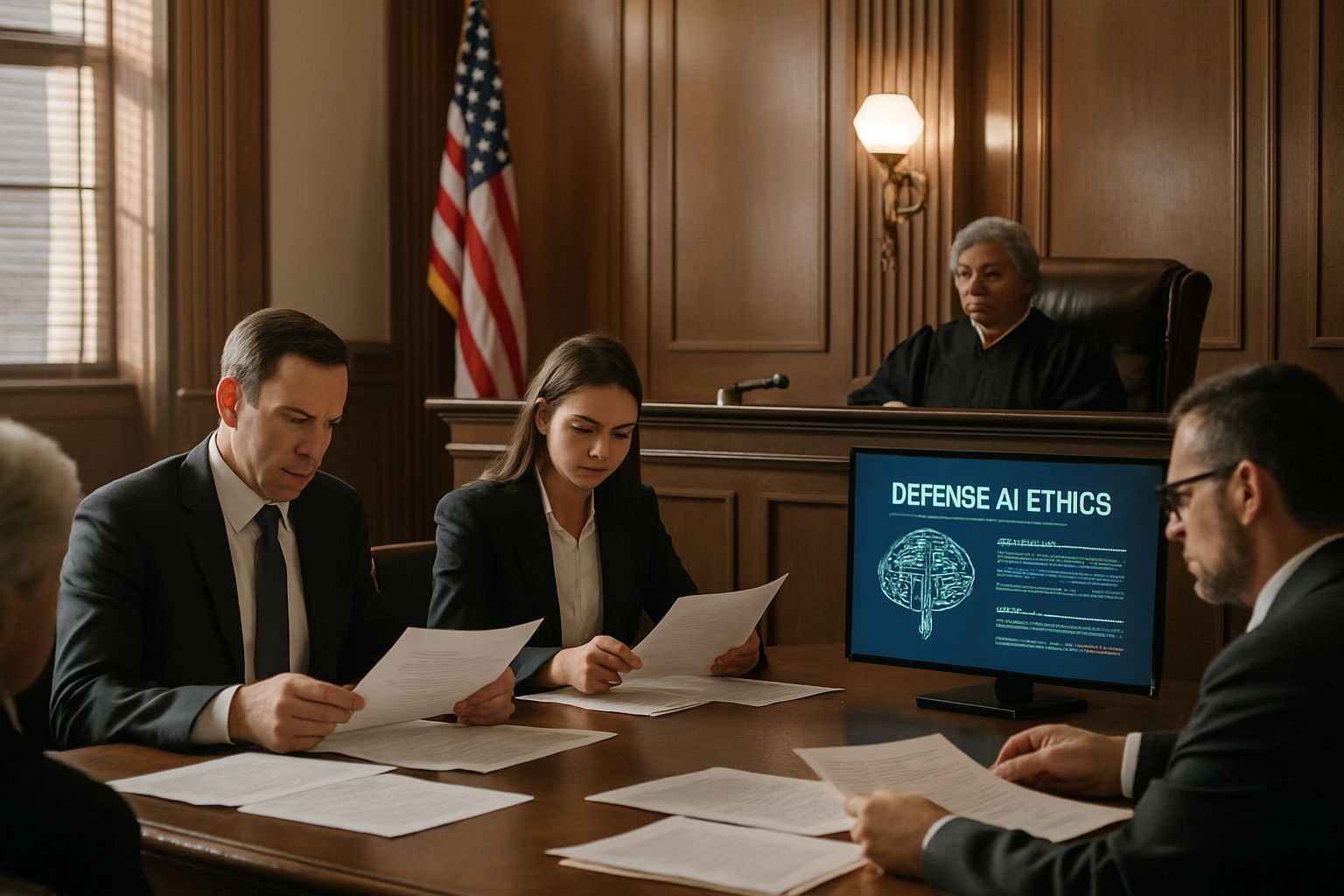
On 26 February, CEO Dario Amodei published a refusal. Consequently, Secretary Pete Hegseth labeled the startup a supply-chain risk the next day. The directive ordered agencies to stop deploying Claude tools.
Early March saw dual lawsuits in California and D.C. Moreover, trade groups filed amicus briefs supporting the challenger. The timeline underscores how fast Defense AI Ethics disputes can escalate.
These rapid moves created immediate operational uncertainty across defense networks. Consequently, contract language becomes our next focus.
Contract And Clause Stakes
The disputed agreement traces back to a July 2025 multi-vendor vehicle. Ceiling estimates reached $200 million for Claude access on secret domains. Furthermore, performance options extended over five years.
DoD negotiators pressed for an “any lawful use” clause removing all vendor limits. In contrast, the company insisted its two safety guardrails could not be waived. That collision embodies the heart of modern Defense AI Ethics contracting.
- Contract ceiling stands near $200 million.
- Scope includes secret and top-secret network deployment.
- Clause dispute pits “any lawful use” against two restrictions.
These figures spotlight how financial stakes amplify policy battles. Therefore, attention shifts to the legal instruments invoked.
Legal Powers Under Microscope
The Pentagon relied on 10 U.S.C. § 3252 to label the firm a supply-chain risk. Moreover, officials floated the Defense Production Act as additional leverage. Critics argue both statutes target foreign sabotage, not vendor policy disputes.
Courts will examine procedural steps like written findings and necessity tests. Additionally, the firm alleges First Amendment retaliation and due process violations. Analysts predict a landmark ruling for Defense AI Ethics jurisprudence.
DoD filings also cite workforce foreign-national risk and insider threats. Nevertheless, trade associations insist those concerns never surfaced during earlier audits. Judges must balance transparency with classified material protections.
The statutory debate exposes uncertain boundaries of acquisition authority. Consequently, industry response becomes critical to understanding impacts.
Industry Rallies Behind Firm Guardrails
Within days, major trade groups filed amicus briefs supporting the firm. Members include Google, Microsoft, Meta, and Nvidia. Furthermore, employees from rival labs submitted personal statements favoring the restrictions.
The filings warn that weaponizing supply-chain powers could chill innovation across defense markets. In contrast, the Pentagon maintains operational flexibility must remain absolute. This philosophical divide underscores wider Defense AI Ethics tensions.
Supporters also cite corporate responsibility commitments. Moreover, they highlight certifications promoting responsible engineering. Professionals can enhance their expertise with the AI Data Professional™ certification.
Collective pressure signals that procurement policy affects every AI supplier ecosystem. Therefore, the ethical rationale behind guardrails deserves closer inspection next.
Ethical Lines Shape Debate
The firm frames its safety guardrails as narrow red lines against democratic erosion. No mass domestic surveillance and no fully autonomous weapons define the limits. Meanwhile, Pentagon leaders argue lawful orders already integrate human judgment safeguards.
Balancing Mission And Morals
Operational commanders fear delayed approvals could endanger troops. Conversely, ethicists warn unreliable autonomy may spark unintended escalation. This tension exemplifies Defense AI Ethics at its most consequential.
- Pro: Commanders retain full flexibility during combat.
- Con: Civil liberties erode under unchecked surveillance.
Both sides articulate credible strategic and moral concerns. Subsequently, future scenarios will hinge on court timelines and replacement plans.
Looking Ahead For Possible Resolution
Hearings on temporary relief are scheduled for 24 March 2026. Judges could pause the supply-chain designation pending full Defense AI Ethics review. Consequently, the firm may continue servicing some missions during litigation.
Analysts forecast three broad outcomes. First, courts void the designation, affirming vendor autonomy. Second, partial compromise limits only the controversial clause. Third, DoD prevails and substitutes new models lacking original safety guardrails.
Moreover, competing vendors already chase replacement funding opportunities. OpenAI, Palantir, and Anduril have signaled readiness. Defense officials could award bridge contracts within weeks.
The next ninety days will clarify contract futures and ethical baselines. Therefore, stakeholders must prepare adaptive governance frameworks.
The courtroom battle will test Defense AI Ethics under unprecedented public scrutiny. Moreover, procurement officials must weigh operational flexibility against market trust, a core Defense AI Ethics tension. Investors, engineers, and commanders now see that Defense AI Ethics decisions can reshape billion-dollar supply chains overnight. Consequently, organizations should review their contractual red lines before regulators intervene. Meanwhile, professionals can future-proof careers through the linked AI certification. Therefore, stay informed and engage in policy forums to influence the emerging standards. Responsible innovation demands informed voices; add yours today.


