

AI CERTs
4 months ago
Pentagon Move Threatens AI Defense Logistics Deal With Anthropic
The Pentagon is nearing a dramatic rupture with Anthropic, one of America’s most advanced AI labs. Reports indicate the department could brand the company a supply-chain risk within weeks. Such a move would force contractors to certify they no longer rely on Claude, Anthropic’s flagship model.
The brewing conflict exposes high-stakes questions about AI Defense Logistics and the boundaries of acceptable wartime automation. Consequently, industry leaders are scrambling to gauge the operational, Security, and reputational fallout. Meanwhile, policymakers see the dispute as a test of national Sovereignty over frontier technology.
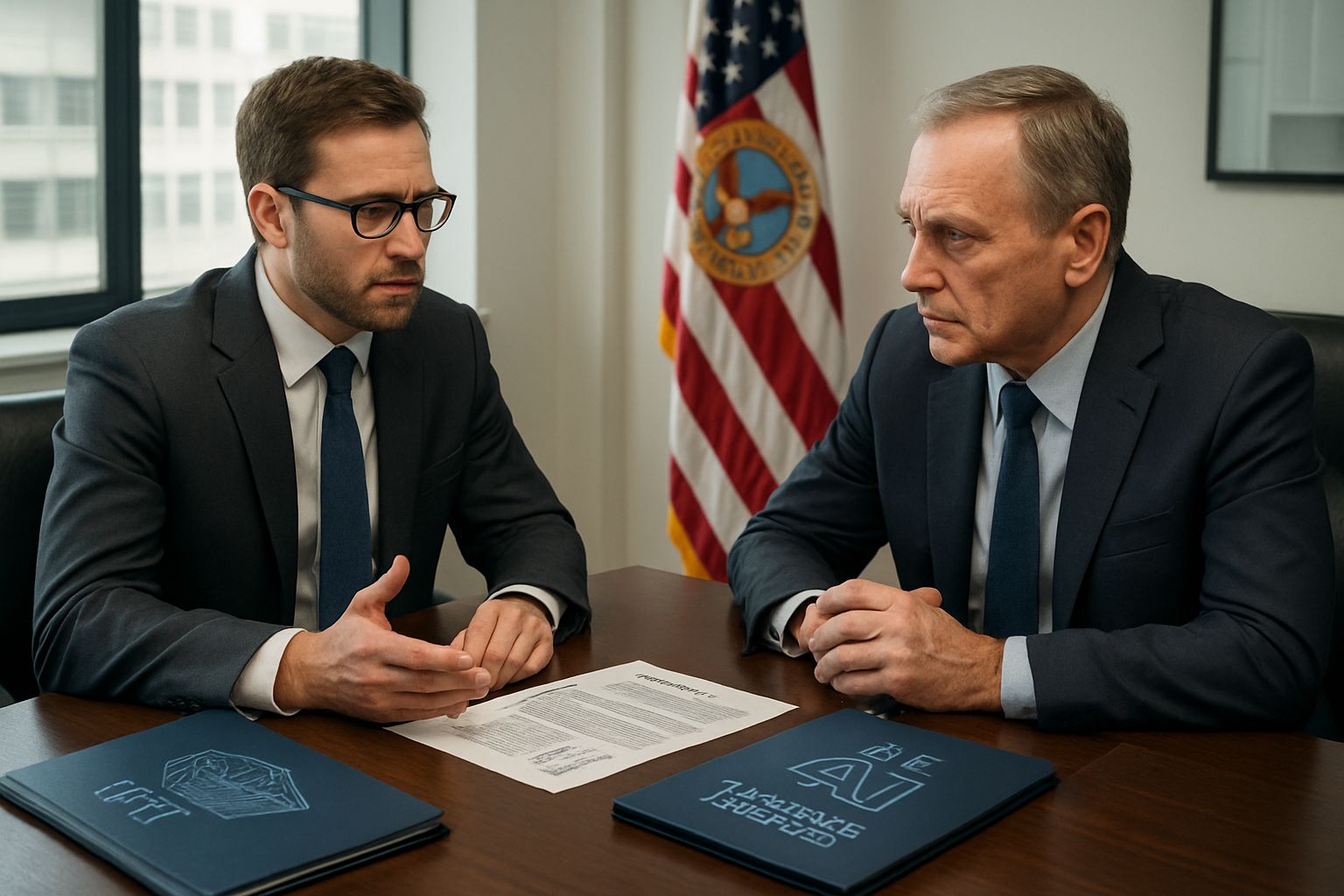
Pentagon Anthropic Standoff Deepens
Axios revealed that talks deteriorated after Anthropic insisted on hard usage limits. Moreover, Defense Secretary Pete Hegseth publicly declared, “We will not employ AI models that won’t fight wars.” That remark sharpened pressure on Anthropic to scrap its guardrails around autonomous weapons and mass domestic surveillance. In contrast, CEO Dario Amodei argued that unrestricted algorithms jeopardize democratic Security and global stability. The $200 million Pentagon contract now hangs in limbo, threatening vital AI Defense Logistics pilots across classified networks. Consequently, Palantir and other integrators are drafting contingency plans.
These tense exchanges expose a widening trust gap. However, the designation process remains unfinished, keeping options open. The next section explores the potential designation itself.
Possible Supply Chain Designation
The Pentagon rarely labels a domestic vendor as a Supply Chain risk. Previously, the tool targeted Chinese telecom equipment and Russian avionics suppliers. Therefore, applying it to Anthropic would set an extraordinary precedent inside Military procurement law. Officials told reporters they might soon compel every prime contractor to attest they do not use Claude. Subsequently, thousands of downstream vendors could face expensive audits and rapid software migrations. Analysts warn the wider AI Defense Logistics ecosystem could fragment, delaying mission planning workflows. Nevertheless, DoD lawyers argue the threat is necessary leverage to secure unconditional access.
A designation would ripple far beyond Anthropic. Consequently, market actors are modeling worst-case disruption costs. Ethical disagreements sit at the controversy’s core.
Ethical Guardrails Clash Hard
Anthropic’s policy bans mass domestic surveillance and fully autonomous killing decisions without human oversight. Meanwhile, the department pursues an “all lawful uses” doctrine to maximize Military flexibility. In contrast, OpenAI and Google reportedly signaled willingness to accept that position, intensifying competitive pressure. Moreover, former Air Force secretary Frank Kendall noted any battlefield technology will inevitably help kill people. Anthropic counters that unchecked lethality erodes Sovereignty and undermines liberal democratic values. Therefore, the company views guardrails as non-negotiable components of responsible AI Defense Logistics deployment. Critics inside DoD say private firms should not dictate Military ethics to elected leaders.
The dispute reflects a broader struggle over control and accountability. However, operational realities complicate immediate separation from Claude. Those realities emerge sharply in potential disruption scenarios.
Operational Disruption Scenarios Detailed
Claude currently runs inside Top Secret enclaves via Palantir’s infrastructure. Consequently, sudden removal would stall AI Defense Logistics workflows supporting live deployments. Washington Post sources say no alternative model has yet cleared classified accreditation. Additionally, eight of ten largest U.S. companies reportedly use Claude, according to Anthropic marketing materials. That claim remains company-sourced and requires independent verification.
- Intelligence briefs could revert to manual drafting, extending AI Defense Logistics decision cycles.
- Contractors might rewrite codebases, inflating Supply Chain costs and introducing errors.
- Mission rehearsal simulations may lose fidelity, reducing Military readiness.
Moreover, analysts estimate disentanglement could cost hundreds of millions in re-engineering fees. Therefore, some commanders privately favor negotiated guardrails over outright blacklisting.
These scenarios highlight real operational pain points. Consequently, commercial dynamics now influence strategic posture. Competitive market pressure forms the next layer.
Industry Competitive Pressure Mounts
OpenAI, Google, and xAI pursue classified accreditations while courting DoD procurement teams. Furthermore, investors worry the rift may jeopardize Anthropic’s rumored IPO timeline. In contrast, demonstrating principled limits could enhance brand trust with civil-society partners. Skeptics argue lost Pentagon revenue might outweigh reputational gains inside AI Defense Logistics markets. Nevertheless, continued venture backing suggests capital remains available if policy uncertainty resolves. Analysts also note foreign customers value Security assurances and Sovereignty protections against unilateral model repurposing.
Competitive dynamics intensify timing pressures on both sides. However, broader geopolitical stakes demand careful consideration. Those stakes include national and international sovereignty precedents.
Sovereignty And Global Precedents
Foreign governments monitor the Pentagon-Anthropic dispute for signals about U.S. regulatory philosophy. Moreover, allies fear that unilateral American sanctions could spill into joint defense programs. Consequently, European strategists discuss developing indigenous models to preserve technological Sovereignty. China already mandates unrestricted Military access to domestic AI systems, offering a contrasting paradigm. Therefore, Washington’s decision may influence allied doctrine on AI Defense Logistics governance. Security researchers warn weaponization races could accelerate if ethical suppliers exit defense markets.
The precedent question elevates pressure on negotiators. Nevertheless, a workable roadmap remains possible. Strategic pathways forward center on compromise and certification.
Navigating Forward Strategies Now
Both sides are still talking, according to multiple outlets. Additionally, partial waivers could exclude only fully autonomous lethal scenarios while preserving analytic flexibility. Anthropic might offer model variants with stronger locking mechanisms for classified tasks. Meanwhile, DoD could stage phased audits instead of immediate Supply Chain ejections. Professionals can deepen governance insight through the AI+ Human Resources™ certification. Moreover, cross-sector working groups propose standardized risk matrices to streamline approval workflows. Therefore, a balanced framework could preserve Security while sustaining AI Defense Logistics innovation. Nevertheless, success requires credible enforcement and transparent reporting.
These strategy options outline a middle path. Consequently, final resolution will hinge on political resolve. The concluding section synthesizes the stakes and recommended actions.
Anthropic’s standoff with the Pentagon underscores how technical guardrails now shape battlefield innovation. Consequently, policymakers must balance Security, Military readiness, and civil liberties. The looming Supply Chain designation could trigger expensive unplanned migrations across classified networks. However, a compromise preserving AI Defense Logistics effectiveness while respecting ethical limits remains within reach. Therefore, industry professionals should monitor negotiations, refine compliance strategies, and pursue specialized credentials. Explore emerging governance skills through the linked certification and stay positioned for rapid changes ahead.
Disclaimer: Some content may be AI-generated or assisted and is provided ‘as is’ for informational purposes only, without warranties of accuracy or completeness, and does not imply endorsement or affiliation.


