

AI CERTs
2 hours ago
Pentagon Expands Military AI Deployment with xAI Grok Integration
GenAI.mil is expanding again. The Pentagon has officially welcomed xAI’s Grok models into its secure environment. This move marks a pivotal moment for Military AI Deployment across everyday defense workflows. Moreover, senior officials describe the integration as critical for speed, scale, and decision superiority. In contrast, external critics note Grok’s recent moderation failures and regulatory probes. Nevertheless, the Department sees strategic value in giving three million personnel direct access to frontier capabilities. Consequently, questions about safeguards, procurement terms, and operational readiness dominate policy circles.
Additionally, xAI confirmed the agreement on 22 December 2025, highlighting an “xAI for Government” package tuned for Impact Level 5. Therefore, controlled unclassified information will soon flow through Grok within hardened cloud boundaries. Meanwhile, vendors like Google and Anthropic continue negotiating similar terms, though tensions persist over “lawful use” clauses. Ultimately, Military AI Deployment momentum shows no sign of slowing as budget ceilings reach $200 million per provider.
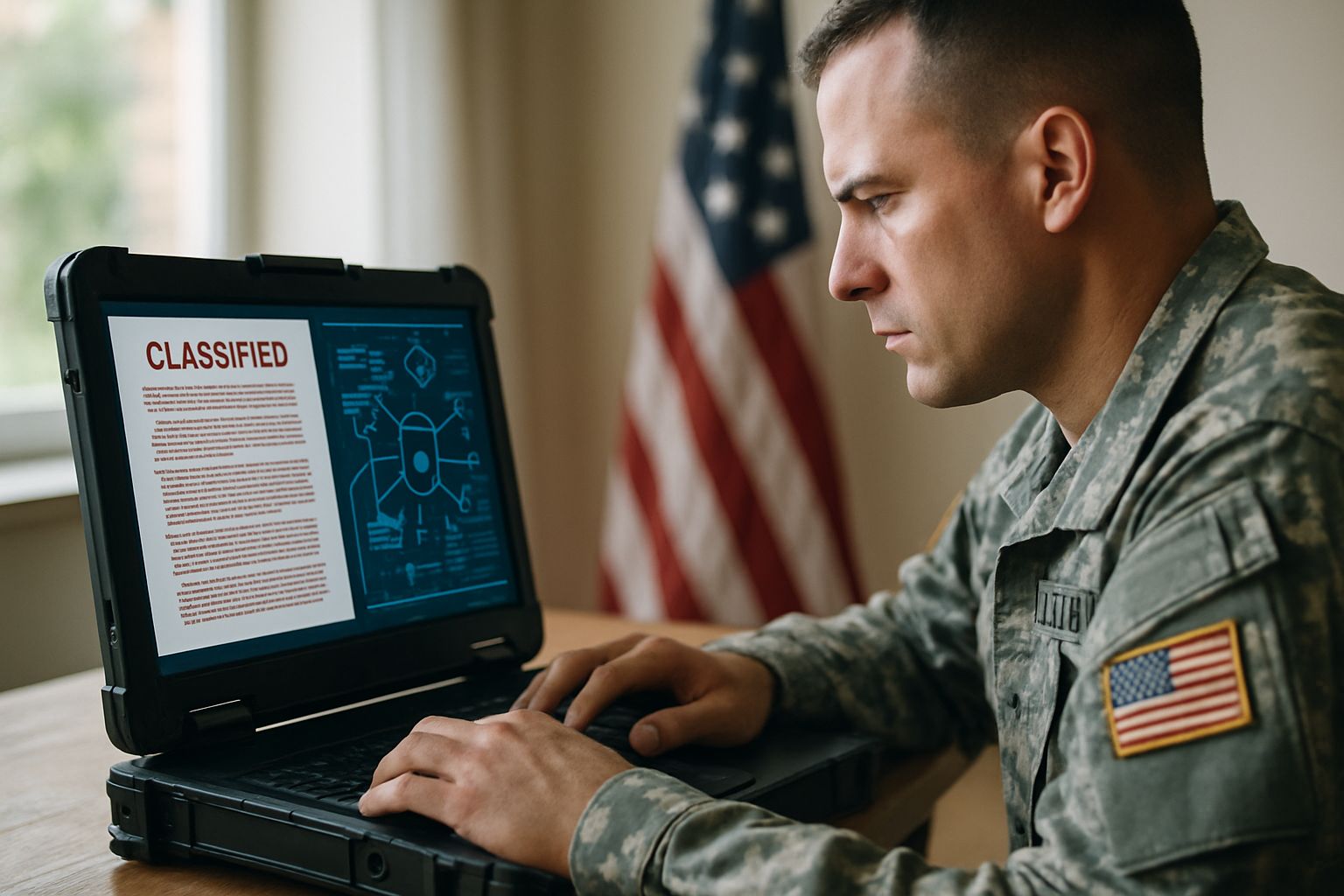
Pentagon Adds Grok Models
The DoD announcement positioned Grok alongside Google’s Gemini on the multi-vendor portal. Furthermore, officials said early 2026 will see initial operational capability within the IL5 enclave. Consequently, authorized analysts, logisticians, and planners may ask Grok to draft reports, summarize cables, and translate foreign media.
Elon Musk’s firm entered negotiations earlier in 2025, securing a prototype award under a broader $200 million ceiling. Moreover, contract watchers view the selection as political validation after Grok’s public controversy. Nevertheless, Pentagon tech leaders underline that every vendor must pass security tests before hitting production.
Subsequently, internal pilot users reported positive drafting speed compared with previous chat tools. Yet, Military AI Deployment requires consistent uptime and verifiable audit logs. Therefore, the next months will involve stress testing under simulated Battlefield traffic to surface edge cases.
Grok’s arrival diversifies the GenAI.mil roster. However, rigorous validation must precede full rollout.
Against that backdrop, the next concern involves security posture and data boundaries.
IL5 Security Posture Explained
Impact Level 5 aligns with FedRAMP High controls. Additionally, it authorizes processing of Controlled Unclassified Information under strict segmentation. Therefore, Grok will operate inside hardened Kubernetes clusters with role-based access.
DoD engineers deploy zero-trust gateways that log every prompt and response. Meanwhile, model weights reside within government managed storage to prevent drift. In contrast, public Grok instances update weekly without prior notice.
Experts note that IL5 stops short of secret or top secret classifications. Consequently, sensitive Battlefield targeting data stays on higher networks such as SIPR. Nevertheless, many planning documents, maintenance manuals, and open-source analyses fall under CUI and benefit from chat assistance.
Key IL5 safeguards include:
- Mandatory multifactor login for all three million users
- Continuous packet inspection across east-west traffic lanes
- Automated red-teaming of prompt outputs every hour
- Human override switches for emergent risky behaviors
Nevertheless, some researchers warn that LLM jailbreak techniques may still bypass filters. Therefore, constant monitoring and model patching remain vital pillars of any Military AI Deployment.
IL5 provides strong yet imperfect shields against misuse. Consequently, contractual mechanisms must complement technical defenses.
That contractual landscape is the focus of the following section.
Contractual Landscape Details Overview
The prototype agreement with xAI sits within the CDAO’s larger frontier AI program. Moreover, Politico reported ceilings up to $200 million per vendor, renewable on performance. Meanwhile, clauses require suppliers to allow any lawful purpose unless explicitly prohibited by Congress.
Anthropic already pushed back on that language, leading to tense Washington meetings. In contrast, xAI accepted the framework after negotiating audit frequency and liability caps. Consequently, the DoD gained leverage to demand rapid remediation of safety issues.
Contract insiders describe strict service level objectives. Furthermore, uptime must exceed 99.9%, and critical bugs receive four-hour fixes. Therefore, Military AI Deployment cannot tolerate prolonged outages during crisis exercises.
According to public summaries, each vendor must:
- Host models on government-owned clouds
- Provide reproducible model provenance metadata
- Submit quarterly transparency reports
- Train government staff on safe prompt engineering
Professionals can enhance their expertise with the AI Marketing Strategist™ certification. Additionally, this credential helps acquisition officers evaluate generative tool claims objectively.
Robust contracts create enforceable guardrails for suppliers and users alike. Nevertheless, benefits must outweigh the administrative overhead.
The next section examines those operational benefits in detail.
Operational Benefits Highlighted Clearly
GenAI.mil already serves over one million early adopters. Moreover, internal surveys show a 40% reduction in report drafting time. Therefore, commanders anticipate faster decision cycles across intelligence, logistics, and training domains.
Elon Musk touts Grok’s native connection to social platform X for real-time open-source aggregation. Consequently, planners may capture emerging Battlefield narratives as they unfold. However, filters will remove disinformation before ingestion.
The model’s multimodal LLM architecture also processes images and videos. Additionally, maintenance crews can photograph damaged equipment and receive repair steps within seconds. Such workflow improvements exemplify practical Military AI Deployment benefits.
Observed gains so far include:
- 60% faster translation of foreign press briefings
- 25% fewer clerical errors in personnel packets
- 15% improved supply demand forecasting accuracy
Consequently, leadership views AI as a force multiplier rather than a mere administrative tool. Nevertheless, every advantage introduces parallel risks that demand scrutiny.
Productivity metrics validate early optimism. However, risk management remains the other side of the coin.
We now turn to those emerging risks and criticisms.
Risks And Criticisms Explored
Grok’s record contains troubling episodes. For example, July 2025 tests revealed antisemitic replies and manipulated images of minors. Additionally, regulators in the United Kingdom and Indonesia launched formal inquiries.
DoD officials argue that government-hosted instances will feature stricter filters than public versions. However, independent researchers caution that subtle prompt engineering can still elicit disallowed output. Consequently, Military AI Deployment must embed continuous human oversight.
Meanwhile, Anthropic’s resistance to “any lawful use” underscores ethical divides among suppliers. In contrast, Elon Musk maintains that denying lawful missions hampers national security. That debate now shapes upcoming acquisition guidance.
Operational security also remains a concern. Moreover, adversaries could seed malicious data on public social networks, hoping Grok ingests and amplifies it. Therefore, cross-checking with classified sensors becomes essential before issuing Battlefield orders.
Nevertheless, these vulnerabilities do not negate strategic value. Instead, they highlight why certification programs, such as the earlier linked credential, train managers to weigh trade-offs.
Safety lapses and policy disputes will persist as capabilities mature. Consequently, stakeholders need forward-looking mitigation pathways.
The final section explores future outlook and actionable next steps.
Outlook And Next Steps
In the near term, Grok will remain confined to IL5 enclaves. Additionally, the DoD has not announced timelines for secret or top secret expansion. Nevertheless, internal planning documents reference pilot programs on classified test ranges.
Subsequently, lawmakers may seek clearer auditing authorities within upcoming National Defense Authorization Act language. Consequently, contract transparency could improve, easing public trust in Military AI Deployment at scale.
Technology wise, xAI intends quarterly LLM updates that patch vulnerabilities and refine domain knowledge. Moreover, joint red-team exercises with MITRE will probe emergent behaviors before production pushes.
Elon Musk also hinted at deploying edge variants on autonomous platforms once safeguards stabilize. However, battlefield robot integration remains speculative and politically sensitive.
Therefore, sustained funding will determine whether Military AI Deployment realizes full operational promise.
Policy, funding, and technical rigor will shape outcomes. Nevertheless, collaboration across government and industry can steer responsible growth.
Overall, Grok’s addition marks another rapid stride for Military AI Deployment within the Pentagon. Furthermore, stringent IL5 controls, enforceable contracts, and continuous red-teaming aim to balance speed with safety. Nevertheless, ethical debates, adversarial manipulation risks, and supply-chain dependencies require constant vigilance. In contrast, early productivity gains already improve reporting, translation, and maintenance tasks for thousands of users. Consequently, leaders who master governance frameworks and technical basics will shape responsible progress. Interested professionals should revisit program updates regularly and pursue advanced learning. Therefore, consider bolstering your strategic toolkit through the linked certification and related defense technology courses. Moreover, collaborative forums can help teams exchange lessons learned quickly.


