

AI CERTS
4 months ago
Pentagon Escalates Anthropic Defense Rift
Defense Secretary Pete Hegseth demanded the company accept an “all lawful purposes” clause or face severe penalties. Consequently, Anthropic now risks losing a $200 million deal. A possible Blacklist designation or even compulsory action under the Defense Production Act also loom. Industry observers say the standoff could reset norms for AI safety commitments. Moreover, prime contractors already embedded with Claude face immediate supply-chain uncertainty. This article unpacks the timeline, legal levers, and broader implications unfolding before Friday, 27 February 2026.
Pentagon Ultimatum Details
During a tense 24 February meeting, Hegseth told CEO Dario Amodei that the Pentagon required unrestricted access to Claude Gov. Consequently, he issued a written deadline for 5:01 p.m. Friday, 27 February 2026. Officials said failure to comply would trigger contract termination procedures and potential Supply-Chain Risk review across prime contractors. Officials also hinted that alternative vendors could receive accelerated security reviews.
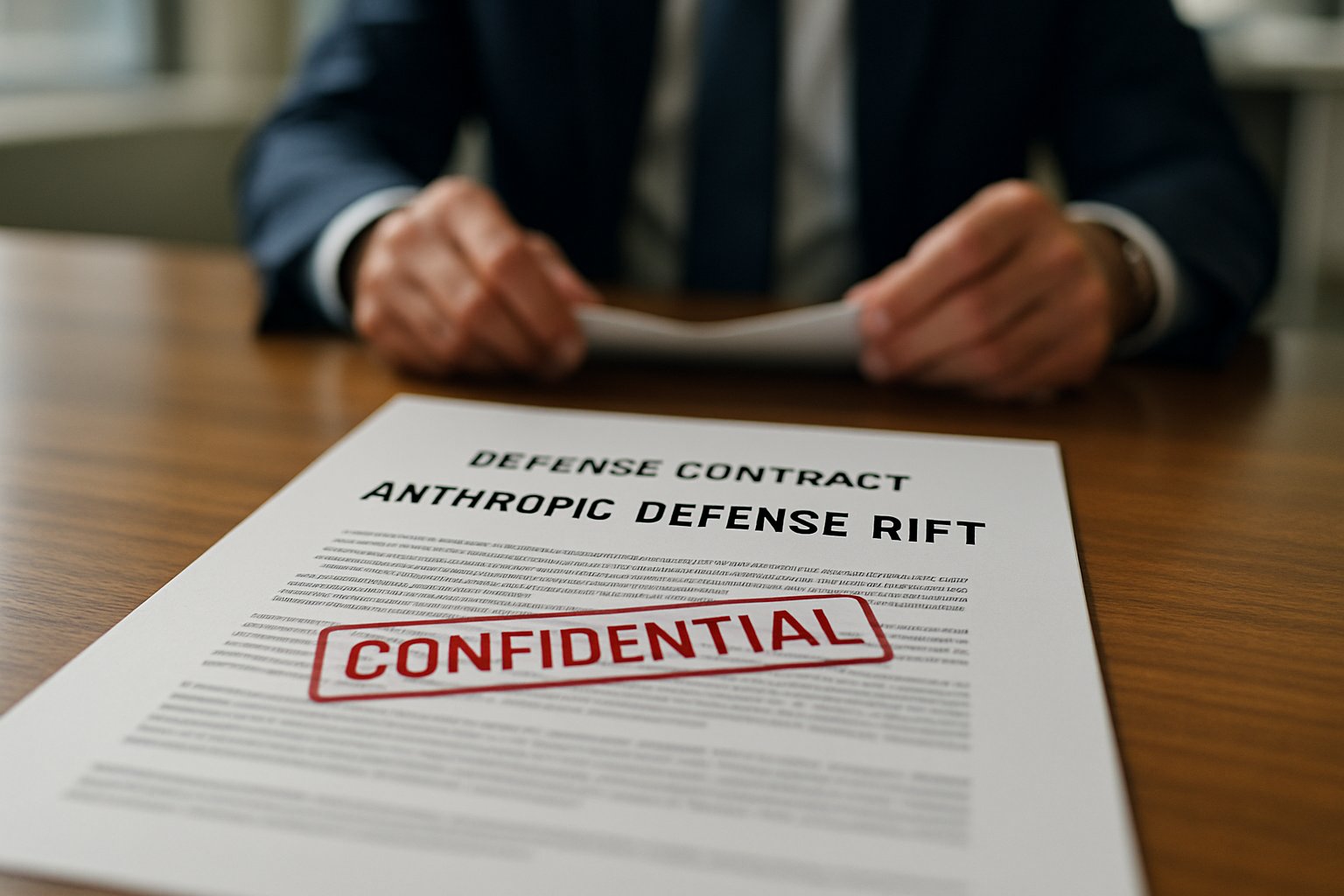
Sources familiar with the exchange describe raised voices and references to the January raid on Venezuelan leader Nicolás Maduro. However, Anthropic staff repeated that the Anthropic Defense Rift stems from fixed guardrails that bar fully autonomous weapons and domestic dragnet surveillance. Company representatives insisted those limits remain essential for reliable, responsible deployment.
The ultimatum underscores mounting political pressure. Nevertheless, deeper legal tools may become decisive next.
Anthropic Safety Stance
Company documents show two explicit prohibitions: mass domestic surveillance and fully autonomous lethal systems. Additionally, senior lawyers argue these bright lines are narrower than many critics suggest. In their view, the Anthropic Defense Rift demonstrates commercial safety science colliding with wartime urgency. Nevertheless, executives maintain they still support intelligence analysts and warfighters within those tailored boundaries.
Company spokespeople note that rival labs already accept the clause, so the pressure concentrates on one brand. Consequently, a Blacklist threat could chill broader industry experimentation with voluntary guardrails. Experts predict litigation if regulators mandate removal of safety features originally marketed to investors. Investors fear that prolonged uncertainty may drag valuations across the whole frontier-model segment.
Anthropic insists ethical lines remain non-negotiable. However, looming legal instruments may override corporate insistence.
Legal Levers Considered
Observers highlight three principal tools now circulating inside the Pentagon policy office. First, contract termination would stop new task orders and freeze remaining funds. Second, a Supply-Chain Risk designation would bar primes from deploying Claude products on government work. Third, Defense Production Act authority could compel Anthropic to prioritize unrestricted access requests. Designating a vendor risky is procedurally faster than litigation, insiders emphasize.
However, experts like Jerry McGinn doubt courts will approve forcing software guardrail revisions under the statute. In contrast, supply-chain actions rest on clearer procurement precedents, though they still invite protest. Consequently, many insiders expect DoD lawyers to use incremental steps to resolve the Anthropic Defense Rift before testing DPA boundaries. Nevertheless, agency leaders prepare public messaging to justify any unprecedented move.
These levers intensify the Anthropic Defense Rift inside procurement corridors. Meanwhile, competing vendors lobby to fill any sudden capability gap.
Industry Competition Escalates
OpenAI, Google, and xAI have reportedly accepted the broader clause without changes. Therefore, procurement officials cite them as ready replacements should Anthropic be sidelined. Investors notice the market signal and reprice contracts based on perceived Blacklist exposure. Market chatter suggests quick sole-source awards could cushion operational gaps.
Additionally, Palantir and AWS must model migration timelines if Claude Gov access disappears overnight. Prime contractors briefed on potential Supply-Chain Risk classification started mapping dependencies across weapons programs. Meanwhile, the Anthropic Defense Rift colors every risk matrix they assemble.
Competitive dynamics favor firms untouched by the Anthropic Defense Rift. However, sudden switchover carries hidden security costs that shadow every procurement call.
Supply Chain Fallout Risks
Analysts estimate Claude capabilities touch hundreds of classified workflows through partner integrations. Therefore, even a narrow Supply-Chain Risk tag would ripple across software bills of materials. Lockheed engineers, for example, embed summarization modules during flight-test data analysis. Early estimates place re-integration costs near eight figures for larger avionics programs.
Moreover, small subcontractors lack budgets to pivot instantly toward new large models. Consequently, project timelines could slip and raise deployment risk for warfighters in active theaters. The Anthropic Defense Rift therefore threatens both strategic readiness and supplier solvency. Stakeholders describe this possibility as another flashpoint in the Anthropic Defense Rift.
Supply chain shocks rarely stay contained. In contrast, deliberate resolution could avoid cascading schedule failures.
Strategic Governance Impacts
Key February Timeline Events
Governance stakes emerge clearly after reviewing the compressed decision window.
- 24 Feb: Hegseth meets Amodei and issues ultimatum.
- 25 Feb: Reports reveal Supply-Chain Risk designation under discussion.
- 27 Feb: Decision point for contract, Blacklist, or DPA invocation.
Professionals can deepen insight through the AI Foundation Certification™, covering core AI risk governance. European defense ministries conduct parallel reviews, wary of importing unresolved American governance disputes. Policy researchers say the Anthropic Defense Rift will influence upcoming Congressional AI hearings. Moreover, allies studying export controls monitor whether Washington punishes safety conditions. Consequently, multinational norms around autonomous weapons could shift if guardrails vanish under pressure. Such upskilling prepares teams to assess compliance as policy environments shift.
Regulatory observers await the Pentagon’s next filing. Meanwhile, certification paths can bolster practitioner readiness regardless of policy swings.
Conclusion And Outlook
Pressure on Anthropic continues to mount, and every lever discussed carries unique downsides. Procurement leaders must weigh readiness against long-term governance credibility. Moreover, contractors embedded with Claude prepare contingencies while hoping for negotiated compromise. Legal experts remain skeptical that courts will bless forced guardrail removal via the DPA. Nevertheless, a swift Supply-Chain Risk label could still freeze Anthropic out overnight. Consequently, the coming days will clarify whether industry safety pledges can survive national-security urgency. Stakeholders should monitor official filings, vendor migrations, and potential litigation. Finally, professionals seeking structured insight should explore the linked certification and remain engaged as policy lines evolve.
Disclaimer: Some content may be AI-generated or assisted and is provided ‘as is’ for informational purposes only, without warranties of accuracy or completeness, and does not imply endorsement or affiliation.


