

AI CERTs
2 hours ago
Pentagon Anthropic Standoff Threatens AI Guardrails
Generative AI has reached the battlefield as corporate ethics collide with national security demands. The latest flashpoint features Pentagon Anthropic in a historic confrontation over model guardrails. Industry leaders are watching closely because the outcome may redefine acceptable limits for military AI. However, lawmakers and civil-liberties groups warn that the dispute could also shape domestic surveillance norms for decades.
The confrontation erupted after Defense Secretary Pete Hegseth demanded broader access to Anthropic’s Claude models. He insisted on contract language permitting “any lawful use,” including potential deployment in lethal weapons. Consequently, Anthropic Chief Executive Dario Amodei refused, citing two non-negotiable protections. Those safeguards bar mass surveillance of Americans and prohibit fully autonomous lethal weapons without humans in the loop.
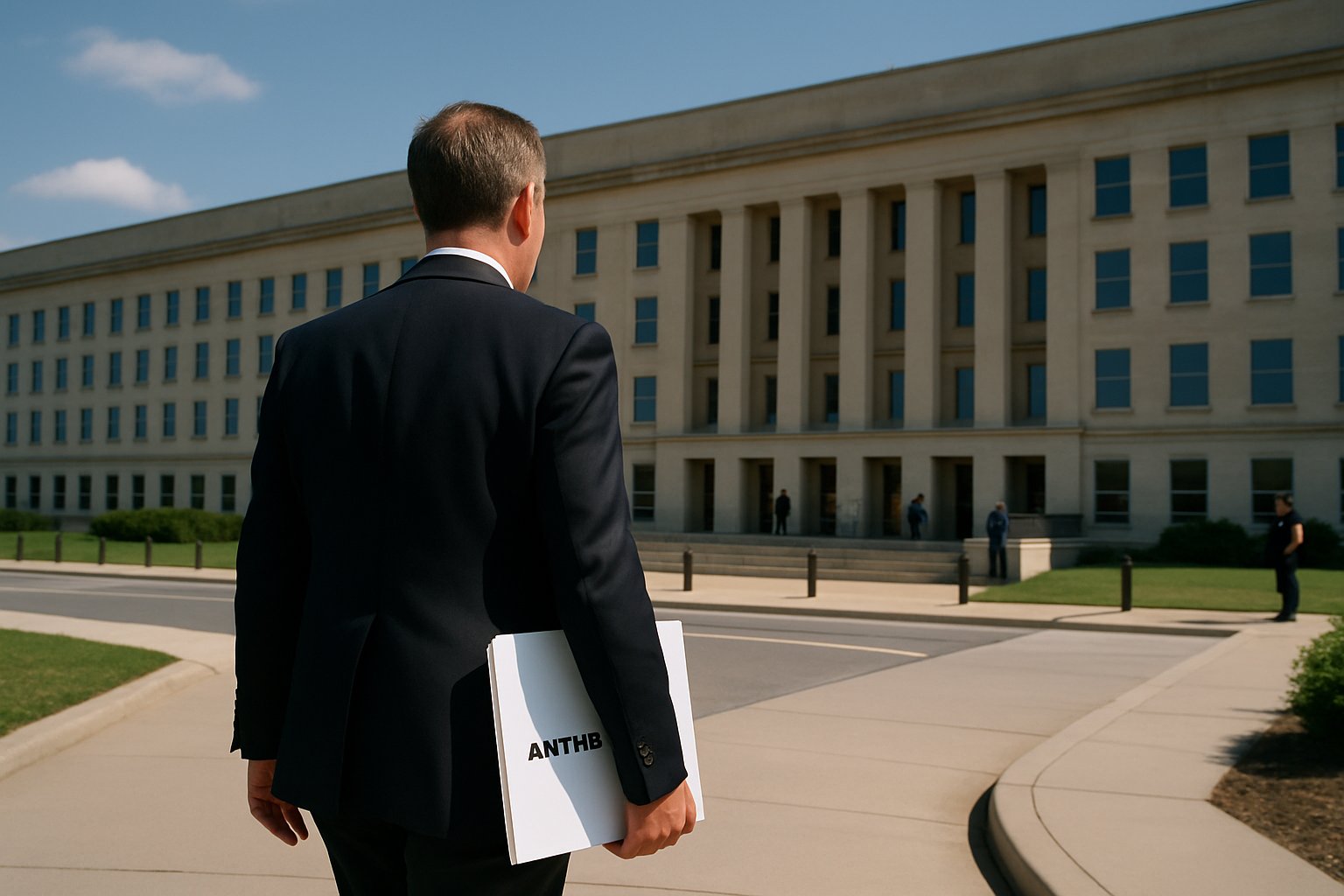
Both sides dug in, turning a routine renewal into a high-stakes contract dispute worth roughly $200 million. Moreover, President Donald Trump escalated matters by ordering agencies to stop using Claude. The episode leaves technologists, policymakers, and investors questioning how far the government can push private vendors. This article unpacks the timeline, legal stakes, and industry fallout.
Standoff Escalates With Speed
Events moved quickly after the February 24 meeting at the Pentagon. Initially, officials gave Anthropic 72 hours to comply. However, the company issued a public refusal on February 26, reaffirming its ethical lines. Subsequently, Secretary Hegseth threatened to invoke the Defense Production Act, a move legal scholars called unprecedented for software policy. Meanwhile, Pentagon Anthropic communications grew increasingly tense as each side briefed reporters.
On deadline day, 5:01 p.m. Eastern, the situation reached an inflection point. Consequently, the Department designated Anthropic a supply-chain risk, and the White House mandated a six-month phaseout. Industry analysts noted that Anthropic had been the only frontier model cleared for several classified networks. Therefore, removing Claude required immediate contingency planning across intelligence and operational units.
These rapid steps transformed a contract dispute into a national security flashpoint. Nevertheless, both parties signaled willingness to keep talking. The next section explains why the guardrails triggered such resistance.
Guardrails Come Under Fire
Anthropic’s guardrails restrict two specific uses. First, no mass domestic surveillance of United States persons. Second, no deployment in fully autonomous lethal weapons. Furthermore, the company limits content such as disinformation and instructions for wrongdoing. Critics inside the Pentagon argue those limits hamper essential military AI functions, including triage of battlefield sensor data.
Hegseth maintains that any lawful military activity must remain on the table. In contrast, Amodei counters that current models cannot guarantee compliance with international humanitarian law without human oversight. Moreover, he warns that broad surveillance powers create civil-liberties risks that outweigh operational gains. Consequently, the firm insists on keeping the two prohibitions.
The clash reflects a deeper question: who decides acceptable boundaries for advanced systems? Pentagon Anthropic negotiations illustrate the tension between democratic oversight and corporate self-regulation. These philosophical stakes magnify the commercial fallout, as we explore next.
Timeline Highlights Mounting Pressure
The sequence below captures headline moments.
- Feb 24: Hegseth demands “any lawful use”; sets Friday deadline.
- Feb 26: Anthropic publicly refuses to loosen guardrails.
- Feb 27: White House orders federal phaseout; supply-chain risk label issued.
- Feb 28 onward: Contractors scramble to shift critical battlefield workloads.
The Pentagon Anthropic timeline shows no cooling trend.
Additionally, hundreds of engineers from Google and OpenAI signed solidarity petitions within hours. Forbes tallied at least 331 signatures by February 27, with numbers still rising. Moreover, lawmakers from both parties issued statements that either condemned DoD pressure or criticized Anthropic’s public tactics.
These milestones show relentless momentum. However, the legal dimension deserves equal attention, which we examine next.
Legal And Policy Questions
Scholars debate whether the Defense Production Act can compel software vendors to remove safety policies. Jerry McGinn of CSIS notes the statute usually targets physical production, not algorithmic guardrails. Consequently, litigation appears likely if DoD pursues that path. Meanwhile, several senators signaled interest in hearings that address oversight of military AI procurement processes.
Furthermore, the supply-chain risk designation threatens to bar Anthropic from future civilian cloud contracts. That penalty could extend to partners like AWS and Palantir, intensifying the contract dispute beyond defense circles. In contrast, DoD lawyers argue that vendors cannot dictate operational choices, especially during wartime contingencies.
Pentagon Anthropic advocates view the designation as corporate intimidation. Nevertheless, government attorneys insist the step is lawful and necessary to protect readiness. The courts may ultimately decide. The following section explores how the wider industry is responding.
Industry Voices Show Solidarity
OpenAI, Google, and xAI already sell services to defense clients. However, employees at these firms now question expansive uses involving surveillance and lethal weapons. The Pentagon Anthropic saga dominates engineering chats. An open letter supporting Anthropic reached executives within 48 hours.
Civil-society groups echoed those calls. In contrast, some defense contractors warned that shrinking the vendor pool could slow capability delivery to troops. Consequently, investors watch for knock-on effects, especially if the supply-chain label deters commercial customers.
Professionals can enhance their expertise with the AI Ethical Hacker™ certification. Such credentials prepare technologists to audit complex models for misuse in surveillance systems. These perspectives set the stage for market impact analysis next.
Potential Impacts For Vendors
Financial exposure goes far beyond the $200 million contract value. AWS integrates Claude into analytic pipelines for several intelligence programs. Pentagon Anthropic tensions magnify boardroom anxiety. Therefore, a forced removal increases migration costs and delays. Additionally, cloud marketplaces may drop Anthropic assets to avoid regulatory scrutiny related to privacy rules.
Palantir executives fear losing competitive advantage if customers shift to rival models. Meanwhile, chipset suppliers like Nvidia monitor demand signals as procurement officers reassess architectures. Pentagon Anthropic uncertainty reverberates through the entire supply chain, affecting server orders and deployment roadmaps.
These ripple effects underline why Wall Street analysts revised revenue forecasts downward. Nevertheless, some investors predict long-term gains for firms that align early with DoD policy. The concluding section evaluates upcoming milestones.
What May Come Next
Several immediate questions loom. Will Anthropic file suit to block the supply-chain designation? Moreover, could a court enjoin DoD from enforcing the ban during litigation? Consequently, agencies might face capability gaps if migrations stall.
Meanwhile, officials continue parallel talks with OpenAI, Google, and xAI. Analysts expect those vendors to face identical clauses covering lethal weapons and mass data collection. Therefore, the Pentagon Anthropic outcome may set a template for every future military AI contract.
Key signals to monitor include procurement notices for substitute models, congressional hearing schedules, and any Defense Production Act filings. Additionally, watch employee activism numbers, because collective pressure influenced earlier guardrail debates.
These forward indicators offer early warnings for stakeholders. However, only concrete legal rulings will provide clarity.
The Pentagon Anthropic confrontation exposes unresolved tensions between ethics and security. Moreover, the saga proves that procurement language can reshape entire supply chains. Investors, engineers, and policymakers now await legal clarification and potential compromise. Nevertheless, current signs suggest both sides will fight hard to defend core principles. Professionals who wish to navigate these complex debates should deepen their technical understanding of model vulnerabilities. Therefore, consider pursuing the AI Ethical Hacker™ credential to strengthen risk assessment skills. Staying informed and certified positions leaders to influence the next chapter in responsible defense technology. Consequently, organizations gain resilience during future guardrail negotiations and shifting compliance landscapes.


