

AI CERTS
3 hours ago
Pasqal’s €340M Bet: AI Quantum Computing Scales Up
AI Quantum Computing sits at the convergence of advanced physics and enterprise demand for accelerated problem solving. Therefore, Pasqal’s raise offers a timely case study on how startups navigate capital markets, sovereign priorities, and technical risk. Moreover, the company promises to remain rooted in France while courting Wall Street multiples through a dual listing blueprint. The following analysis unpacks the numbers, technology, strategy, and implications for the broader ecosystem.
Funding Signals Market Shift
Pasqal raised €170 million in fresh equity from Parkway, Quanta Computer, LG Electronics, and shipping group CMA CGM. Additionally, Inflection Point committed about €170 million in convertible financing that activates upon public listing.
- €170 million private equity tranche
- ~€170 million committed convertible financing
- $289 million SPAC trust cash (pre-redemption)
- $158 million existing Pasqal cash
Consequently, total expected proceeds reach at least €340 million before considering SPAC trust cash. The partner SPAC, Bleichroeder Acquisition Corp. II, currently holds roughly $289 million in its trust. If redemptions stay low, combined gross proceeds could exceed $600 million, according to regulatory filings. Moreover, Pasqal maintains around $158 million cash on hand, giving extra operational runway.
These figures illustrate growing investor conviction in AI Quantum Computing despite volatile public markets for hardware vendors. However, execution risks remain, especially around SPAC shareholder redemptions and SEC review timelines. The financing package positions Pasqal to accelerate production and hiring. Meanwhile, strategic motivations behind neutral atoms merit closer attention.
Neutral Atoms Technology Edge
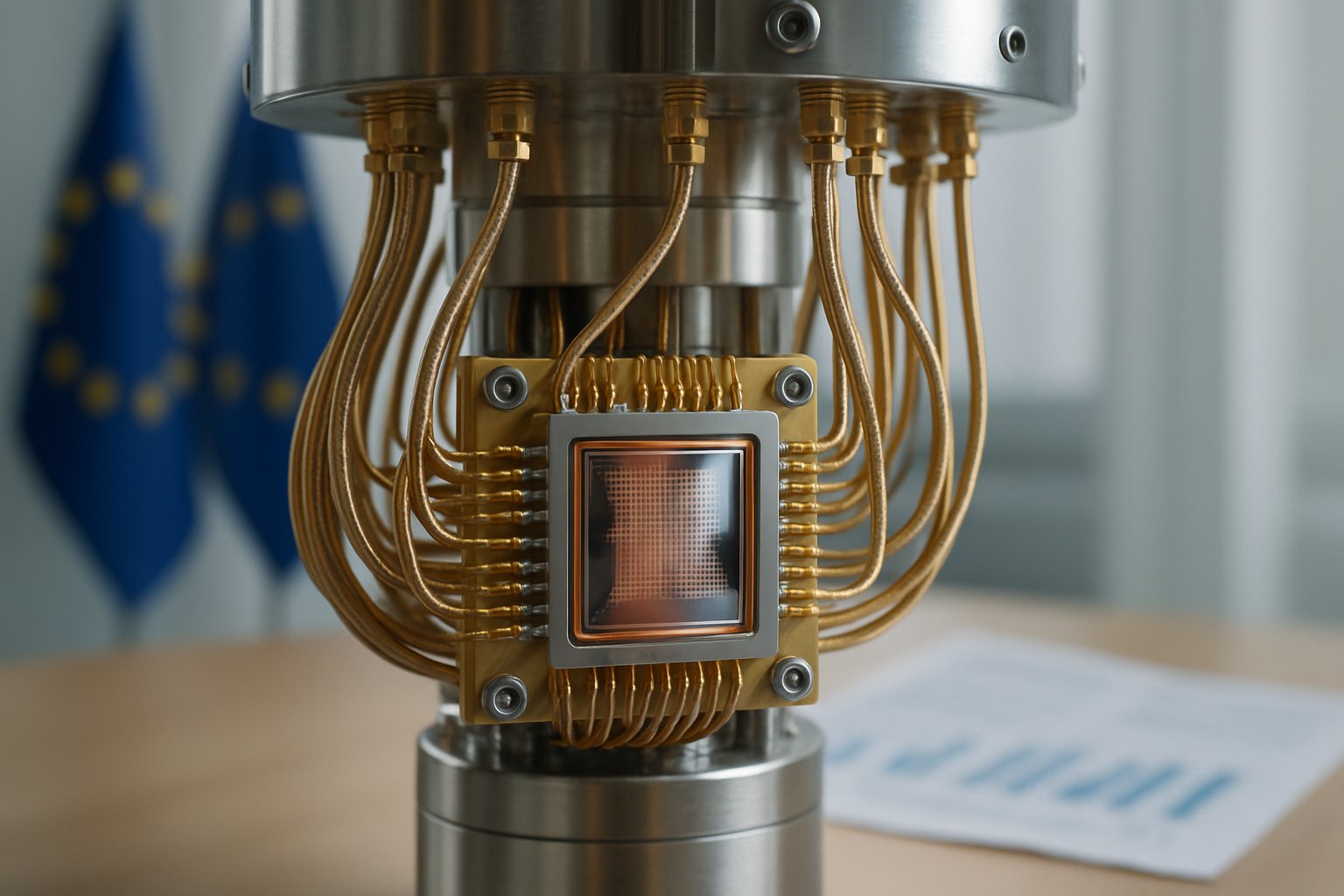
Pasqal builds processors that trap neutral atoms such as rubidium using tightly focused laser tweezers. Lasers arrange the atoms into programmable arrays and excite them into high-energy Rydberg states for entangling gates. Consequently, the architecture offers native all-to-all connectivity, favorable coherence, and promising scaling toward thousands of qubits. Moreover, Pasqal claims seven quantum computers are already deployed, with three additional systems in production. Use cases range from fluid dynamics to portfolio optimization, areas where AI Quantum Computing can complement classical accelerators.
In contrast, superconducting and trapped-ion competitors still wrestle with limited connectivity and complex control electronics. Nevertheless, experts caution that fault-tolerant thresholds remain distant, even for neutral atoms platforms. These technical dynamics underpin Pasqal’s valuation narrative. Robust performance claims attract investors seeking differentiated AI Quantum Computing hardware. Consequently, governance and market access strategies become equally important.
Dual Listing Strategic Rationale
Pasqal plans a dual listing that merges the Bleichroeder SPAC on Nasdaq with a later Euronext float. Therefore, management hopes to capture deep U.S. liquidity while preserving European shareholder alignment. Global fund managers increasingly allocate to AI Quantum Computing plays listed on major U.S. venues. Bpifrance and other national investors welcomed the blueprint, seeing it as a hedge against talent flight. Moreover, the two-exchange structure offers optionality for future secondary raises without leaving France’s legal jurisdiction.
In contrast, earlier European quantum firms pursued single U.S. listings and faced criticism over strategic assets relocating. Consequently, Pasqal emphasizes that headquarters, manufacturing, and most jobs will stay in France. Analysts also note the structure could cushion valuation swings between two exchanges. The two-exchange strategy balances access and sovereignty. However, national pride alone cannot assure commercial success.
France Anchors Global Ambitions
Pasqal’s roots lie in the country’s quantum optics community, co-founded by Nobel laureate Alain Aspect. Additionally, the company employs around 275 staff, including more than 70 PhDs across Paris and Palaiseau sites. Management intends to hire fifty more employees within eighteen months, doubling production capacity near the French capital. Moreover, local government support and Bpifrance backing strengthen supply chain development inside the nation.
Consequently, policymakers present the raise as evidence that the nation can nurture globally competitive deep-tech champions. Nevertheless, international rivals such as IonQ and Rigetti already trade publicly and command strong partnerships. Local advantages give Pasqal credibility for market expansion. Next, commercial traction will face investor scrutiny.
Commercial Milestones And Risks
Pasqal reports unaudited 2025 revenue doubling year-on-year, supported by about $80 million in booked business. Clients include CMA CGM, Thales, and NVIDIA collaborators exploring maritime routing, defense simulations, and AI Quantum Computing chemistry workflows. Furthermore, seven deployed machines already generate cloud usage fees and professional services revenue. However, analysts warn that grant and project income must evolve into recurring product revenue to justify valuations.
Regulatory risk also looms, because the SPAC transaction awaits SEC clearance and shareholder votes. Moreover, heavy redemptions could shrink available cash, forcing additional dilution or cost controls. Technology milestones carry uncertainty; fault-tolerance remains years away for neutral atoms and for rivals. Balanced growth requires disciplined execution across revenue, regulation, and research. Therefore, investors should examine both capital structure and certification pathways for talent.
Investor Takeaways And Next
Institutional investors weigh three themes before committing. Firstly, the financing stack provides runway exceeding two years of projected burn. Secondly, neutral atoms progress promises differentiated AI Quantum Computing performance once systems exceed 1,000 qubits. Thirdly, the dual listing could unlock analyst coverage and passive index inclusion, improving share liquidity. However, redemptions or market volatility may still squeeze available cash at closing.
Consequently, seasoned professionals consider skill upskilling essential for credible technical diligence. Professionals can validate expertise through the AI+ Quantum Specialist™ certification. Moreover, holders signal familiarity with core AI Quantum Computing principles and deployment challenges. Capital, technology, and talent together drive competitive advantage. Subsequently, closing conditions will define short-term valuation moves.
Pasqal’s €340 million financing marks a pivotal moment for Europe’s quantum scale-ups. The mix of private capital, convertible commitments, and a dual listing pursues growth without abandoning domestic roots. Neutral atoms technology, if executed, could deliver compelling AI Quantum Computing solutions for complex industrial workloads. However, public markets will demand credible revenue, disciplined spending, and clear technical milestones. Therefore, investors and technologists should track SEC filings, customer adoption, and certification-backed expertise over the coming quarters. Act now by reviewing the referenced certification and preparing due-diligence frameworks before the shares price.


