

AI CERTs
3 months ago
Panasonic Green Transformation Solutions Power Net-Zero AI
Panasonic has fused its AI rollout with an aggressive decarbonization agenda. This twin strategy debuted at CES 2026 under the banner of Panasonic GREEN IMPACT. Industry analysts now frame the approach as a practical “Net-Zero AI” blueprint. At its core, the company promises end-to-end Green Transformation Solutions for energy-hungry compute. Consequently, sustainability leaders are examining whether Panasonic can align massive AI demand with net-zero targets. Furthermore, rival vendors point to surging data-center emissions as a looming obstacle. Meanwhile, regulators tighten disclosure rules, emphasizing verifiable emissions cuts over vague marketing claims. This article dissects Panasonic’s framework, metrics, and market context for technical decision-makers. Readers will gain actionable insights on hardware choices, reporting standards, and emerging business risks. Finally, we outline certifications that deepen professional expertise inside the evolving green AI ecosystem.
GX Powers Net-Zero AI
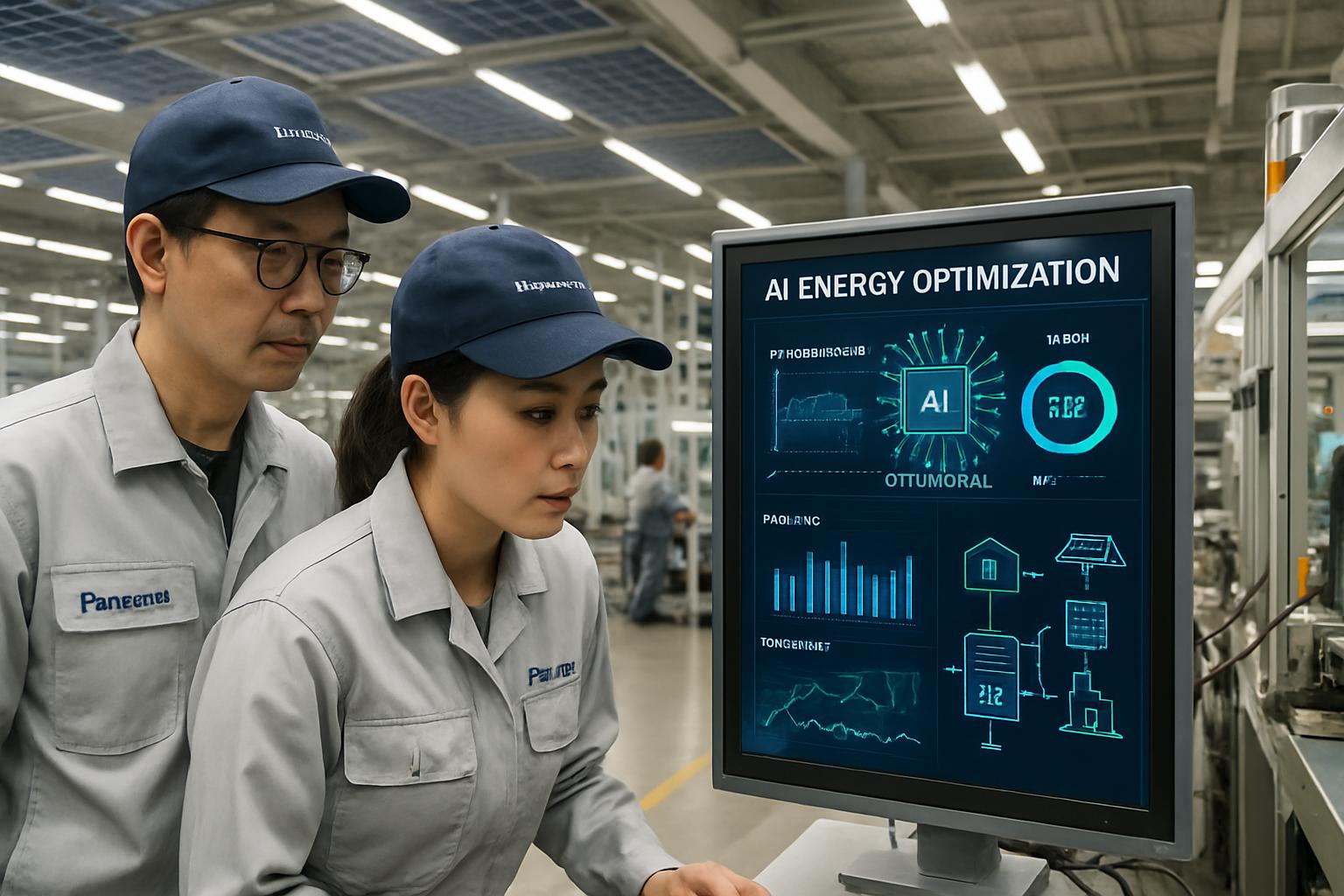
Panasonic calls its overarching sustainability effort GREEN IMPACT, anchored in Science Based Targets. However, the company adds an AI layer named Panasonic Go and CPS 2.0. Together, these platforms form the technology spine for operational optimization. Moreover, cloud connectors feed factory, warehouse, and retail data into Sustainable AI Modeling workflows. Consequently, managers receive prescriptive actions that trim energy, waste, and idle time. In contrast, legacy systems react after consumption spikes rather than predict them. The proactive stance underpins claims that Net-Zero AI can boost throughput while cutting emissions. Analysts view this integration as a template large enterprises could replicate. Such alignment of software, hardware, and targets exemplifies forward-looking Green Transformation Solutions. Panasonic combines AI analytics with verified goals to create measurable efficiency gains. Therefore, the groundwork is set for deeper hardware discussions next.
Core Green Transformation Solutions
CPS 2.0 sits above a hardware toolkit designed for energy-intensive AI clusters. First, liquid cooling pumps paired with high-efficiency compressors lower server PUE to near 1.05. Additionally, conductive polymer capacitors and MEGTRON substrates exemplify ESG Tech Innovation inside power-dense boards. Meanwhile, rack-level lithium storage enables peak shaving during training cycles. Consequently, operators can offset volatile grid prices and curtail diesel backup reliance. Panasonic HX integrates solar, batteries, and hydrogen fuel cells into a unified energy management system. Moreover, automated appliance disassembly supports closed-loop material recovery across product lines.
- Liquid cooling pumps for energy-dense racks
- Conductive polymer capacitors and MEGTRON substrates
- Rack-level storage plus EMS software
- HX renewable microgrid modules
- Circular disassembly robots enabling Green Transformation Solutions at end-of-life
Collectively, these assets embody market-ready Green Transformation Solutions for hyperscale demand. Such breadth differentiates Panasonic from suppliers offering isolated parts only. Integrated components, storage, and renewables present an end-to-end decarbonization stack. Consequently, attention shifts to factory emissions progress.
Factory Decarbonization Progress Milestones
Panasonic reports 44 net-zero factories at the end of 2024. Subsequently, that number rose to 45 during fiscal 2025, spanning Asia, Europe, and America. Panasonic Energy alone converted 17 of 21 battery sites through rooftop PV, storage, and HX controls. Furthermore, waste recycling rates now reach 99.3 percent across global manufacturing. In contrast, many electronics peers still rely on renewable certificates rather than on-site generation. The SBTi verified target demands a 90 percent value-chain reduction by 2050. Such factory wins bolster the credibility of Panasonic’s Green Transformation Solutions story. Sustainable AI Modeling applications monitor energy intensity per line and flag anomalies in real time. Managers then adjust processes before inefficiencies propagate. Real facilities show measurable cuts today, yet tougher scope-3 work looms. Nevertheless, standardized avoided-emissions metrics could showcase broader impacts next.
Standardizing Avoided Emissions Metrics
Avoided emissions, sometimes called Scope 4, estimate customer-side carbon reductions. However, methodologies vary, inviting accusations of greenwashing when figures appear inflated. WBCSD released Guidance v2.0 during 2025 to harmonize calculations across industries. Moreover, Panasonic co-chairs an IEC working group developing the upcoming 63372 standard. Consequently, the company can claim leadership while securing external validation. ESG Tech Innovation depends on transparent, comparable data for investor confidence. Sustainable AI Modeling also needs trustable baselines to attribute algorithmic efficiencies. Panasonic plans to disclose methodology updates in the 2026 Sustainability Data Book. Consensus metrics will clarify real climate value and spotlight exaggerated marketing. Therefore, standardized reporting feeds into rising market demand, discussed next.
Rising Market Demand Context
AI workloads require unprecedented power densities and cooling budgets. Meanwhile, hyperscalers pursue net-zero AI campuses like the DataVolt–NEOM project. Consequently, suppliers offering integrated energy, cooling, and recycling win procurement shortlists. Panasonic positions its Green Transformation Solutions as plug-and-play modules for such campuses. Additionally, policymakers in Europe tie incentives to measured energy savings. ESG Tech Innovation scores high during tender evaluations, especially for financial institutions. Furthermore, corporate buyers request Sustainable AI Modeling benchmarks before signing multiyear GPU leases. Market timing therefore appears favorable for Panasonic’s vertically integrated stack. Demand signals align with Panasonic’s portfolio strengths, yet competition intensifies. Nevertheless, risk factors deserve equal attention.
Risks And Challenges Ahead
No strategy is risk-free. Scope-3 supplier emissions remain difficult to measure and reduce. However, failure to address them could undermine SBTi credibility. Critics also warn that avoided-emissions claims may mask slow inventory reductions. In contrast, Panasonic advocates third-party reviews to counter skepticism. Energy-intensive hydrogen production poses another hurdle for on-site fuel cells. Furthermore, regional grid decarbonization timelines may slip, limiting absolute reductions. Panasonic’s Green Transformation Solutions must adapt scenarios as policy and technology evolve. ESG Tech Innovation metrics will spotlight any lagging factories quickly. Consequently, proactive disclosure and agile supply-chain programs remain essential. Execution risks are real but manageable through transparency and collaboration. Therefore, professionals should watch upcoming factory audits and hydrogen roadmaps.
Actionable Takeaways And Certification
Technical leaders can draw several practical lessons. First, integrate energy analytics with Sustainable AI Modeling early in design cycles. Second, prioritize components that advance Green Transformation Solutions, not isolated efficiency tweaks. Third, align disclosures to emerging avoided-emissions standards to secure ESG Tech Innovation capital. Professionals can deepen expertise through the AI+ Human Resources™ certification. Moreover, certification holders demonstrate mastery of responsible workforce deployment for emerging AI systems. Panasonic’s upcoming case studies will offer additional implementation blueprints. Concrete actions, credentials, and data standards together unlock scalable climate impact. Consequently, the journey from concept to net-zero AI can accelerate industrywide.
Panasonic’s Net-Zero AI framework merges verified targets, advanced hardware, and transparent reporting. Furthermore, competitive momentum grows as hyperscalers demand greener infrastructure. The company’s Green Transformation Solutions provide a compelling template others may emulate. Nevertheless, success hinges on strict avoided-emissions methodology and continuous supply-chain engagement. Therefore, stakeholders should monitor upcoming factory audits, hydrogen pilots, and data-center deployments. Explore the referenced certification and apply these insights to accelerate your own sustainable AI journey.


