

AI CERTS
3 hours ago
Palantir NHS Deal Sparks UK Health Data Sovereignty Showdown
Ministers respond that robust governance, privacy-enhancing technology, and contractual safeguards protect every record.
Consequently, the next twelve months will test whether the deal delivers promised efficiencies or collapses under public pressure.
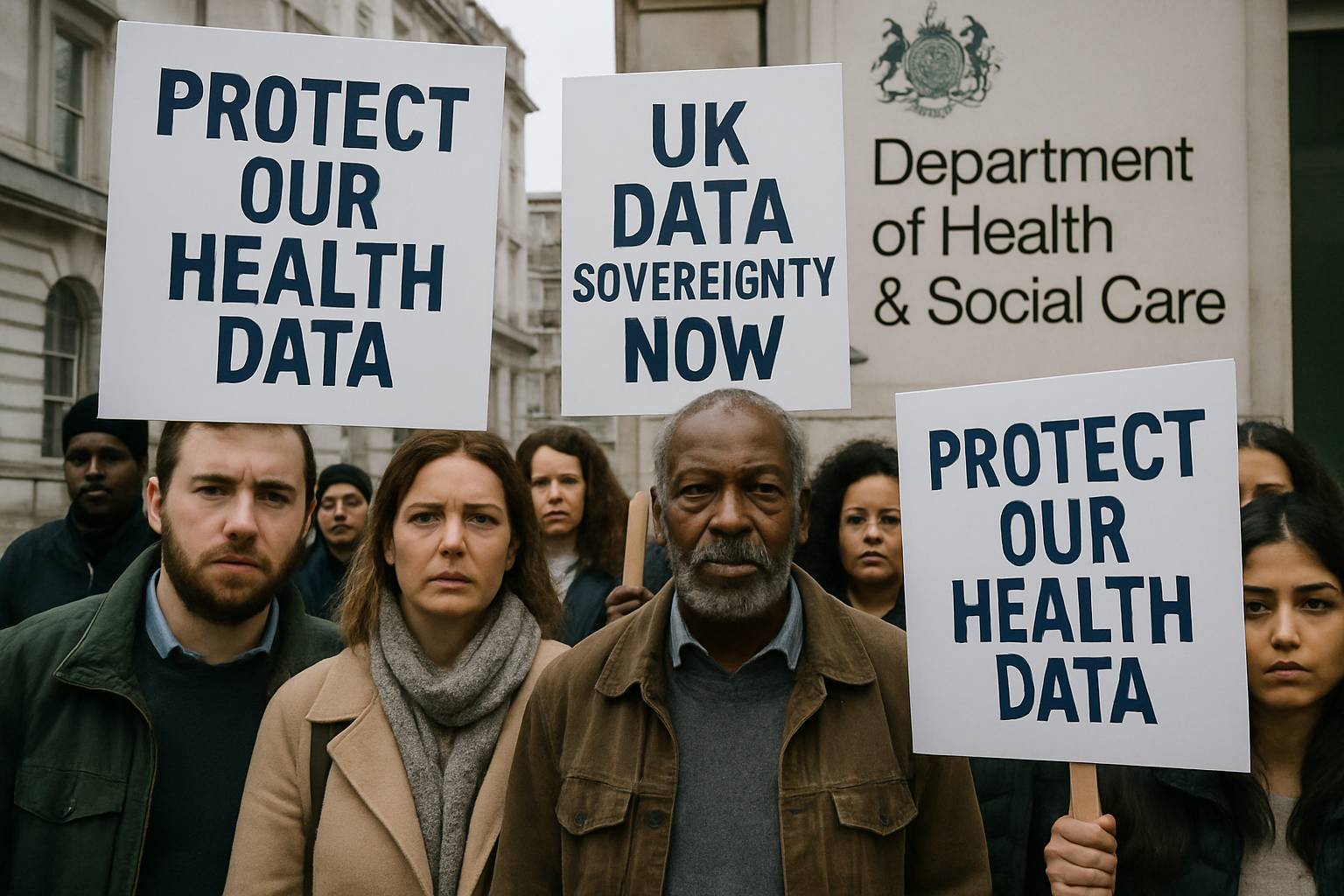
Meanwhile, ideological groups across civil society have rallied thousands of supporters through petitions, briefings, and town-hall events.
Patient activism, once niche, now shapes boardroom agendas within many hospital trusts evaluating the platform.
This article analyses the contract roots, the mounting resistance, the government deals narrative, and the looming review deadline.
Moreover, we explore technical safeguards and professional upskilling opportunities, including the AI+ UX Designer™ certification for health data leaders.
Palantir Contract Origins Explained
Historically, NHS analytics relied on fragmented local systems that limited cross-trust insight.
Therefore, NHS England pursued a federated model promising unified dashboards without centralising raw records.
In November 2023, officials signed the seven-year FDP contract with a Palantir-led consortium after competitive tender.
Consequently, up to 240 organisations may migrate analytics workloads onto Palantir Foundry infrastructure under monitored governance.
Contract headlines quoted £330 million, although procurement notices display smaller near-term amounts plus extension clauses.
Critics argue such government deals embed long-term vendor dependence behind complex break-point language.
Nevertheless, ministers highlight value for money metrics and assert that data ownership remains entirely with NHS bodies.
Observers noted that UK Health Data Sovereignty remained a procurement principle, yet contractual wording appeared ambiguous.
These origin details reveal ambitious scope yet contested governance.
However, the political climate soon shifted toward organised resistance.
Rising Opposition Voices Emerge
By early 2026, ideological groups including Medact, Amnesty, and Privacy International coordinated an aggressive campaign.
Furthermore, a Medact briefing claimed 47,000 patients had written objection letters to local boards.
Patient activism expanded across social media, placing executives under unexpected reputational spotlight.
Speakers at rallies chanted UK Health Data Sovereignty to frame the fight as constitutional.
Meanwhile, the British Medical Association advised clinicians to limit FDP engagement until transparency improved.
NGOs framed Palantir’s history in policing and defence as incompatible with public service ethos.
In contrast, Palantir responded that critics prioritised ideology over measurable patient outcomes.
Opposition momentum intensified through February and March briefings.
Consequently, Westminster debate escalated, drawing ministers into defensive posture.
Next, attention turned to official assurances and technical safeguards.
Government Defence And Assurances
Parliamentary replies from March 2026 repeated a core message: Palantir never owns or controls NHS data.
Additionally, ministers cited privacy-enhancing technologies such as pseudonymisation and secure compute enclaves.
They emphasised that UK Health Data Sovereignty is preserved through contractual audit rights and local key management.
Independent IG experts will publish an audit summary later this year.
Officials also pointed to reported early gains, including reduced elective backlog days during pilot analyses.
However, they offered limited granular evidence, fuelling scepticism within ideological groups and clinician unions.
These official reassurances outline protective architecture but leave important technical questions unanswered.
Therefore, real-world adoption metrics became the next battleground.
Clinical Impact And Adoption
Pilot work at Chelsea and Westminster Trust demonstrated faster bed allocation modelling using the platform’s dashboards.
Moreover, Palantir announced staff upskilling programmes to embed analytics literacy within frontline teams.
Professionals can enhance their expertise with the AI+ UX Designer™ certification.
Nevertheless, several northern trusts publicly declined onboarding, citing privacy gaps and patient activism pressures.
Subsequently, adoption statistics diverged: NHS England claimed double-digit rollouts, yet campaigners counted fewer than ten active deployments.
- £330 million potential contract value
- Up to 240 eligible organisations
- 47,000 documented patient objections
- Early 2027 first major review point
Stakeholders requested granular metrics to contextualise the dashboard savings claimed by early adopters.
These figures illustrate impressive scale alongside persistent doubts.
Consequently, debate around UK Health Data Sovereignty intensified on governance fronts.
Our next section examines that sovereignty argument in depth.
UK Health Data Sovereignty Debate
Campaigners define UK Health Data Sovereignty as patients’ right to influence secondary data use.
Moreover, they argue that proprietary code and overseas influence threaten that right within opaque government deals.
In contrast, ministers claim the federated architecture meets domestic legal thresholds and supports NHS modernisation.
Legal advisers from Good Law Project highlight uncertain exit costs, warning of future public finance exposure.
Additionally, they note differential privacy methods remain untested at full national scale.
Palantir counters that all algorithms are auditable under contract and that independent penetration tests occur quarterly.
Thus, sovereignty discussions hinge on trust, not only technology.
Subsequently, policy analysts turned to upcoming contractual checkpoints.
Paths Toward Contract Review
The FDP contract contains break clauses scheduled for early 2027, following performance and governance evaluation.
Consequently, both supporters and opponents are mobilising evidence dossiers to influence that review.
Patient activism groups plan spring roadshows to maintain pressure before formal assessments begin.
Meanwhile, Palantir is expanding training centres, hoping adoption metrics outpace ideological groups’ critique timeline.
Furthermore, some MPs propose interim hearings to measure compliance with UK Health Data Sovereignty benchmarks.
These manoeuvres underscore that final decisions remain reversible.
Nevertheless, stakeholders must act swiftly given rapid implementation cycles.
Strategic implications appear clearer when we summarise key lessons.
Strategic Choices Lie Ahead
UK Health Data Sovereignty debates will intensify as pilot evidence collides with reputational concerns.
Moreover, transparency around privacy safeguards, vendor economics, and community consent will determine lasting legitimacy.
Industry leaders should monitor parliamentary sessions, FOI releases, and adoption statistics while preparing contingency strategies.
Professionals may also future-proof careers by pursuing data-centric credentials like the earlier linked AI+ UX Designer™ certification.
Consequently, the forthcoming review offers a genuine pivot point for the NHS digital agenda.
Whether the contract endures or ends, lessons on government deals, patient activism, and data governance will resonate globally.
Therefore, decision-makers must weigh efficiency promises against enduring demands for sovereign, accountable data stewardship.
Protect UK Health Data Sovereignty by engaging in upcoming consultations.
Stay informed, scrutinise new evidence, and explore advanced certifications to lead responsibly within the evolving analytics landscape.


