

AI CERTS
2 hours ago
OSTP’s AI Reforms: Copyright Law Implications
Meanwhile, industry and civil-society groups have already filed detailed reactions. In contrast, previous administrations focused on adding safeguards rather than removing barriers. Therefore, the current Request for Information signals an ideological pivot. Moreover, the notice aligns with the White House America’s AI Action Plan. Stakeholders must grasp the timeline, the economic stakes, and the split reactions. These insights will help enterprises steer strategy while regulators redraw boundaries.
White House Policy Context
OSTP released the America’s AI Action Plan on July 23, 2025. Subsequently, the plan mandated an inventory of legacy rules that frustrate adaptive systems. Moreover, its first pillar stresses accelerated innovation through regulatory modernization.
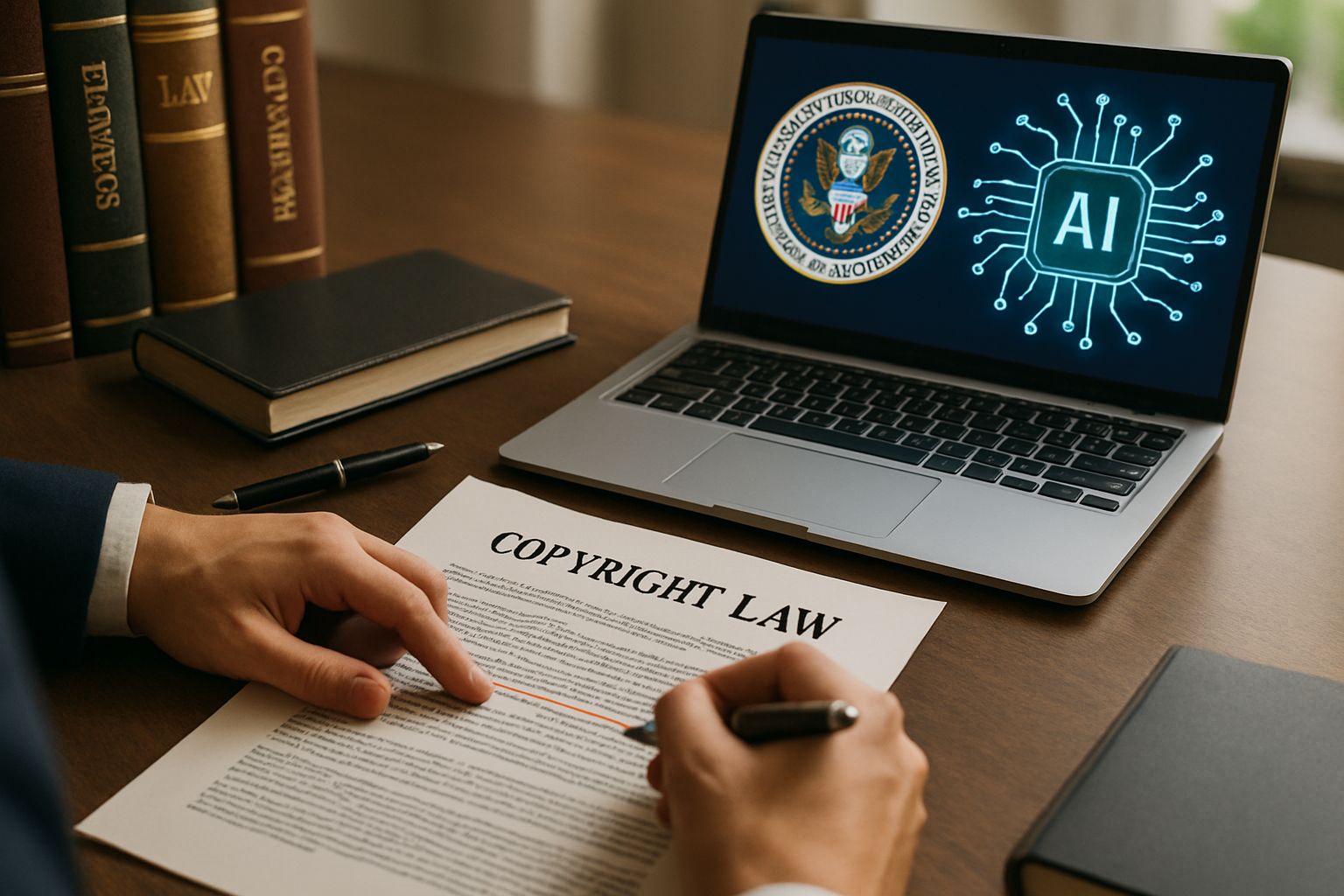
Therefore, the recent Request for Information implements that directive. It invites detailed examples of statutory mismatches and asks agencies to propose remedies. Consequently, the process aims to synchronize health, finance, and transportation guidelines with emerging machine-learning workflows.
In contrast, earlier frameworks emphasized risk management over speed. Critics claim that shift could erode accountability. Nevertheless, supporters highlight fierce global competition and the trillions at stake.
These directives confirm administration priorities. However, granular rule changes will decide practical outcomes. The filing’s timeline sets an urgent cadence.
RFI Scope And Deadlines
The Federal Register published the RFI on September 26, 2025 under docket TECH-2025-0067. Interested parties had until October 27 to respond with line-item barriers, proposed waivers, and supportive evidence. Additionally, officials cautioned commenters against including proprietary data because filings become public under FOIA.
The notice organizes potential barriers into five categories. Furthermore, it lists specific questions to draw granular feedback across sectors.
- Regulatory mismatches with adaptive models
- Structural incompatibilities in procurement forms
- Lack of clarity in Copyright Law frameworks
- Direct hindrance from outdated IP definitions
- Organizational factors slowing NMA compliance
Consequently, lawyers, engineers, and researchers flooded Regulations.gov with hundreds of documents. Balanced Copyright Law norms surfaced as a recurrent theme across filings. Several filings came from the National Mining Association, better known as NMA, highlighting autonomous haulage issues. Therefore, sector diversity promises a broad evidence base for agencies.
Deadlines may have passed, yet analysis is ongoing. Meanwhile, agencies prepare internal action memos.
Economic Stakes Drive Urgency
Citigroup now projects hyperscaler AI infrastructure spending of $2.8 trillion through 2029. Moreover, analysts expect roughly $490 billion in capital expenditure by 2026 alone. McKinsey estimates that generative systems could add up to $4.4 trillion in yearly value.
Consequently, the White House argues that regulatory drag creates measurable GDP risk. In contrast, civil-society groups question whether headline numbers justify sweeping deregulatory steps. Nevertheless, large energy requirements make timely permitting central to investment decisions.
Copyright Law also carries economic implications for data-hungry models. Reform advocates claim clarity will unlock cross-sector IP licensing efficiencies. Meanwhile, publishers fear revenue erosion if exceptions expand too aggressively. Infrastructure forecasts rarely consider copyright transaction costs despite mounting licensing disputes.
Financial projections keep pressure high. Therefore, regulatory calendars are shrinking, not expanding.
Diverging Voices On Reform
Industry groups like AdvaMed and BSA applauded the filing. Moreover, Microsoft and NVIDIA told reporters that alignment would shorten procurement cycles. Supporters also view clearer Copyright Law safeguards as essential for training medical models.
Nevertheless, the Electronic Frontier Foundation sounded alarms. Kit Walsh warned that federal preemption could undermine First Amendment protections. In contrast, the National Taxpayers Union insisted that fragmentation harms startups more than it protects consumers.
NMA highlighted mine-safety monitoring requirements as outdated for autonomous trucks. Meanwhile, AHA requested mandatory outcome tracking for clinical algorithms. Consequently, OSTP must balance expansive freedom with sector-specific guardrails.
Positions remain polarized across mission lines. However, the docket offers granular compromises for future drafts.
Key Agencies And Players
OSTP remains the central orchestrator, yet Commerce, FTC, and FCC hold complementary authorities. Additionally, the Department of Energy oversees grid expansion vital for data centers. DOJ will coordinate litigation against state rules considered incompatible with federal objectives.
Private actors also influence momentum. Hyperscalers funnel procurement toward chip vendors while pushing Copyright Law modernization behind the scenes. Meanwhile, NMA, AHA, and EFF lobby for sector-specific amendments.
IP councils inside publishing giants track each filing closely. Global authorities, including many national copyright offices, monitor every docket update for alignment cues. Moreover, patent offices worldwide monitor the debate for harmonization cues. Consequently, even foreign ministries may cite OSTP findings in their standards.
The web of actors complicates consensus. Nevertheless, structured coordination can turn complexity into opportunity.
Potential Impact On Copyright
Training datasets often contain protected works. Therefore, developers seek predictable safe harbors before scaling services. Clearer Copyright Law language could shield fair-use text mining and reduce litigation overhead.
However, rights holders fear compulsory licensing could depress copyright royalties. They also worry that broad exemptions might dilute exclusive IP incentives. In contrast, open-source advocates argue that permissionless innovation accelerates research breakthroughs.
OSTP did not propose text; it only solicited examples. Consequently, agencies could use the docket to tailor Copyright Law adjustments with empirical backing. Subsequently, Congress may amend IP chapters if consensus emerges.
Balanced reform remains uncertain. However, early drafts may surface during agency reports.
Next Steps For Industry
Enterprises should audit current compliance frameworks against likely scenarios. Additionally, they can benchmark their filings against NMA, AHA, and BSA submissions for sector cues. Meanwhile, governance teams must track forthcoming summary documents and related agency notices.
Professional upskilling will sharpen strategic positions. Managers can formalize AI governance expertise through the AI Project Manager™ certification. Moreover, credentials help translate Copyright Law nuances into operational controls.
Companies should prepare concise talking points for follow-up consultations. Consequently, lobbying efforts can address unresolved IP ambiguities before draft regulations appear. Therefore, early engagement reduces retrofit costs once final rules land.
Strategic readiness demands skill and vigilance. Subsequently, execution speed will separate leaders from laggards.
Conclusion
The office's AI deregulation push has moved from vision to evidence gathering. However, final outcomes will hinge on how agencies reconcile safety, infrastructure, and Copyright Law obligations. Meanwhile, economic projections and global rivalry ensure tight timelines. Nevertheless, enterprises can influence the process by monitoring dockets, strengthening IP literacy, and certifying governance talent. Act now, review your policies, and pursue advanced credentials to stay ahead of sweeping reform.


