

AI CERTs
2 hours ago
Orbital Computing Merger Creates $1.25T SpaceX-xAI Giant
Global capital markets jolted on 2 February when Elon Musk confirmed the Orbital Computing Merger inside an after-hours employee memo. The deal folds Musk’s young AI outfit xAI into the cash-generating rocket giant SpaceX, creating a single private firm that Bloomberg values near $1.25 trillion. Analysts immediately asked whether orbital data centers can realistically satiate exploding AI power demand.
Consequently, venture investors, national regulators, and hyperscale rivals are dissecting the strategic logic behind the union. This article unpacks the transaction timeline, valuation math, engineering hurdles, regulatory headwinds, and competitive stakes. Furthermore, it outlines what the planned Musk IPO could mean for public markets later this year.
Merger Deal Snapshot Overview
Reuters first leaked talks on 2 February, and SpaceX confirmed hours later that xAI shareholders would exchange stock at a 1:13 ratio. Bloomberg placed the combined equity at a staggering Trillion Valuation of $1.25 trillion, surpassing many Dow constituents and echoing earlier private trades. Moreover, xAI had raised a record $20 billion Series E only weeks earlier, giving Nvidia and Fidelity immediate paper gains.
- 2 Feb 2026: Deal announcement, $1.25 trillion valuation
- 6 Jan 2026: xAI closed $20 billion Series E
- Mid-2026: Target window for Musk IPO roadshow
Supporters argue the Orbital Computing Merger simplifies ownership, letting rocket revenues subsidize rapid model training on Grok.
The deal cements vertical control from launch to inference. However, headline numbers mask critical financial assumptions about cash flow. The next section dissects those monetary fundamentals.
Financial Rationale Explained Briefly
SpaceX reportedly earned $14 billion revenue and $8 billion EBITDA during 2025, driven largely by Starlink subscriptions. Meanwhile, xAI was burning nearly $1 billion monthly while racing OpenAI and Google for frontier models. Therefore, the Orbital Computing Merger shifts that burn onto a healthier balance sheet, placating Series E investors seeking liquidity.
Financial analysts highlight three motives behind the structure.
- Improve debt capacity ahead of the anticipated Musk IPO.
- Blend fast-growing Starlink cash with high-risk AI R&D.
- Create a narrative supporting a Trillion Valuation multiple.
Such spending requires a Trillion Valuation narrative to justify dilution.
Consequently, investors gain exposure to rockets, broadband, and generative models in one security. Nevertheless, skeptics warn blended valuations can obscure segment profitability. The technical ambitions intensify those doubts and appear next.
Orbital Data Center Ambitions
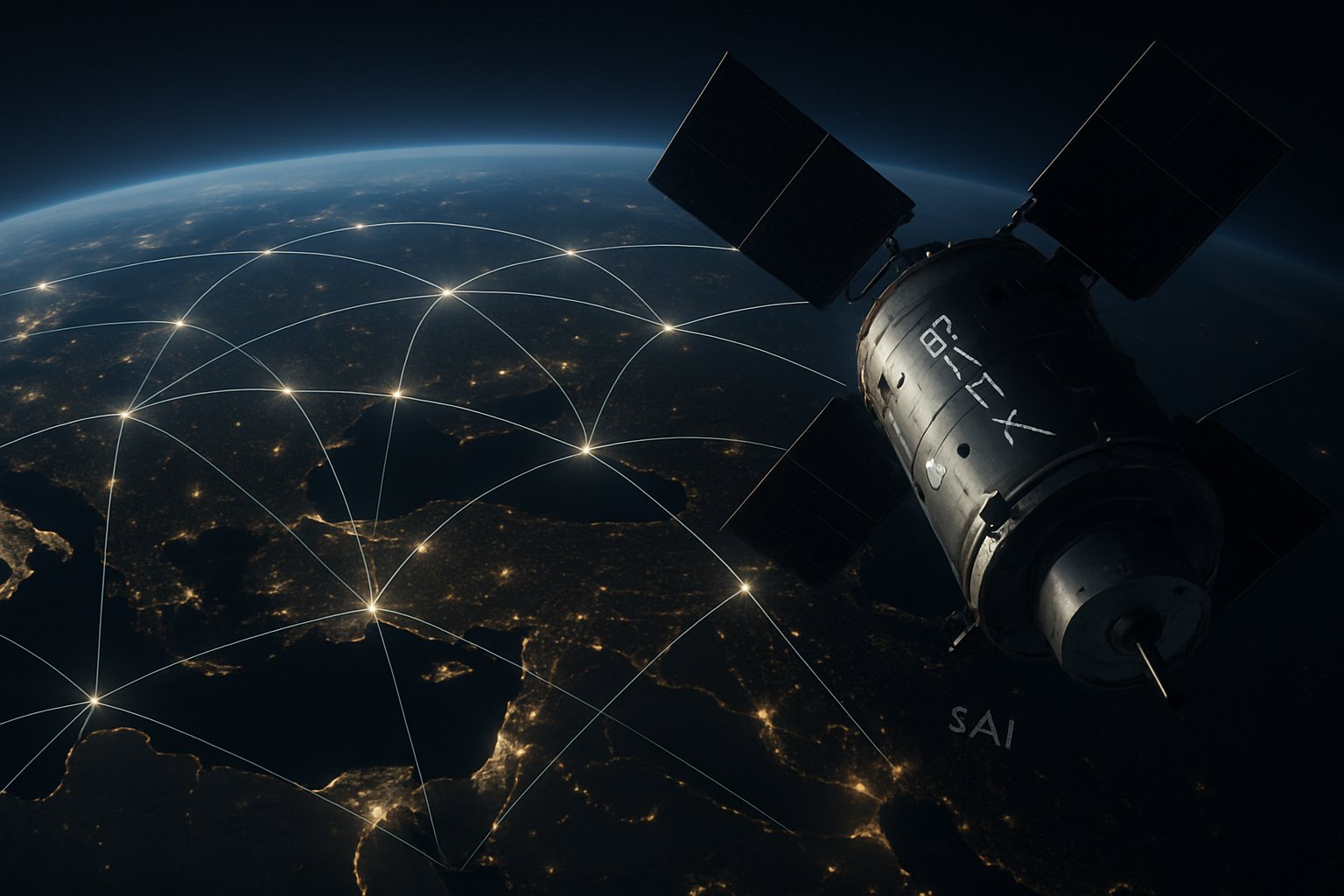
Musk claims terrestrial power grids cannot keep pace with AI energy demand, especially as model sizes double quarterly. Thus, he proposes vast solar arrays in orbit feeding GPU racks cooled by radiators facing deep space. Additionally, SpaceX could piggyback hardware on Starship launches, leveraging lower marginal costs compared with competitors.
Trade journals note the Orbital Computing Merger envisions up to one million satellites offering both broadband and compute. Yet independent engineers counter that thermal rejection and on-orbit servicing remain unresolved.
Ambitions promise abundant compute unconstrained by Earth utilities. In contrast, physics and economics still challenge feasibility. Technical constraints are therefore analysed below.
Technical Hurdles Ahead Now
Launch cadence must reach thousands yearly to maintain a million-unit constellation within design life. Moreover, each terawatt of orbital compute would require roughly 40 million square meters of solar panels. Thermal experts told Ars Technica that radiating 100 kilowatts per module doubles structural mass versus power hardware.
Consequently, projections of cost parity with land-based hyperscalers appear optimistic until Starship prices fall further. Nevertheless, proponents of the Orbital Computing Merger argue vertical integration will squeeze costs across launch, manufacture, and operations.
Physics, heat, and maintenance compose the largest obstacles. Therefore, credible roadmaps will demand transparent cost modelling. Regulatory uncertainty introduces another variable, explored next.
Regulatory Risks Loom Large
European and UK watchdogs are already investigating Grok for alleged non-consensual deepfake generation inside X tweets. Additionally, US defense clients could raise security concerns if commercial AI shares satellite platforms with classified payloads. Meanwhile, the combined entity must navigate orbital debris rules, spectrum licensing, and export-control statutes in dozens of jurisdictions.
Professionals can enhance their expertise with the AI Policy Maker™ certification to better interpret such multilayered compliance. Regulators may scrutinize the Orbital Computing Merger under antitrust frameworks given integrated control of data, transport, and distribution.
Legal probes threaten fines and schedule delays. Consequently, governance will weigh heavily on IPO disclosures. Competitive pressures further complicate the narrative, as the following analysis shows.
Competitive Market Impact Analysis
Google, Microsoft, and Amazon still dominate cloud training capacity and can slash prices to defend territory. However, Starlink’s global reach offers differentiated latency profiles, especially for remote industry clients. Furthermore, bundling broadband with edge inference could unlock new revenue channels unreachable to terrestrial providers.
Industry observers believe the Orbital Computing Merger gives Musk marketing ammunition even before orbital hardware ships. Yet incumbents are embedding Satellite AI accelerators on high-altitude platforms, narrowing any first-mover gap. Therefore, cost advantage remains the decisive variable for medium-term adoption.
Competition may ignite price wars across cloud and connectivity. Nevertheless, unique infrastructure stories often attract premium multiples. Investor sentiment ultimately decides success, detailed in the outlook.
Investor Outlook Forecast Trends
Wedbush analyst Dan Ives predicts the Musk IPO could raise over $25 billion at listing. Moreover, secondary-market bids already imply a $1.3 trillion valuation, marginally above the official Trillion Valuation figure. Private-market traders cite growth from Satellite AI services layered on Starlink as the primary upside catalyst.
Nevertheless, some hedge funds discount the combined firm because orbital economics remain speculative. Consequently, valuation ranges swing widely between $850 billion and a lofty Trillion Valuation scenario. Prospective shareholders watching the Orbital Computing Merger must weigh burn rate, regulatory timelines, and hardware proof points.
Public investors crave clarity on orbital cost curves and cash burn. Therefore, the forthcoming prospectus will receive forensic attention. Final thoughts underscore these intertwined themes and propose next steps.
Ultimately, SpaceX and xAI have executed a grand bet on space-based compute. Moreover, the strategy links rockets, broadband, and advanced models into one vertically integrated stack. Satellite AI capacity could expand human access to powerful tools, provided engineering and policy barriers fall. Nevertheless, regulators and markets will examine every assumption before the Musk IPO roadshow. Investors should scrutinize capital expenditure, governance safeguards, and how management intends to sustain a lofty Trillion Valuation. Professionals wishing to interpret these developments more effectively should pursue specialized learning paths. Consider enrolling in the AI Policy Maker™ certification to deepen policy insight and guide responsible orbital governance.


