

AI CERTS
4 weeks ago
OpenAI’s Automated Vulnerability Discovery Arms Race
Meanwhile, rivals from Anthropic and Microsoft are pushing similar features, signalling an arms race. In contrast, researchers warn that agent tooling itself widens attack surfaces. This article dissects how Codex Security works, where it excels, and what leaders must watch.
Moreover, we ground the analysis in fresh metrics from the 1.2-million-commit beta and two headline CVEs. Additionally, we map the offering onto a USD 10-billion AppSec market that is shifting toward continuous, Automated Vulnerability Discovery pipelines. Readers will gain tactical guidance, market context, and pointers to the AI Security Level 2™ certification that sharpens defensive skills.
Agentic Coding Model Basics
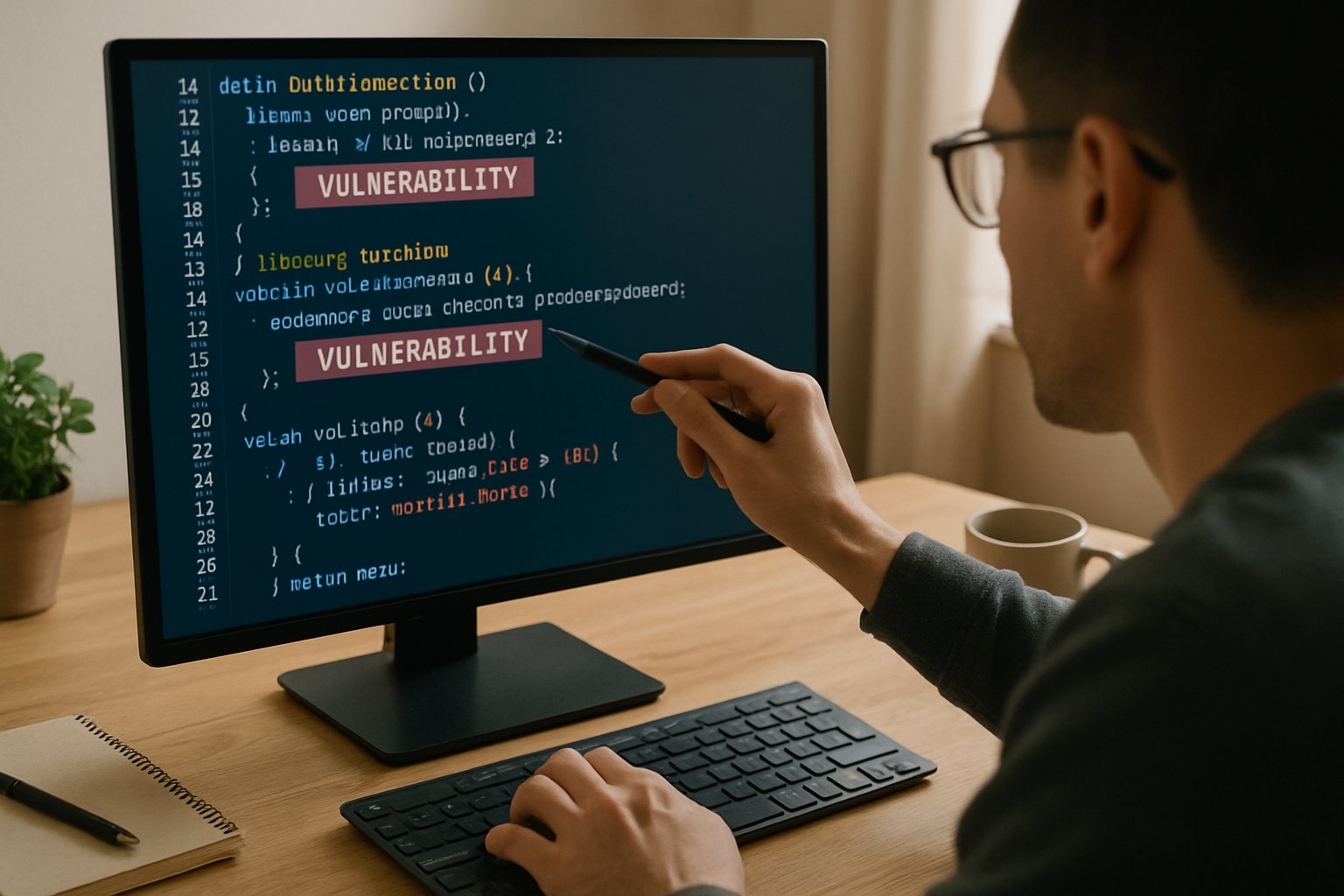
Codex Security builds on an agentic coding stack that can read, alter, and execute source files. Therefore, the Security Agent loads repository history and forms a natural-language threat model describing possible attacker paths. Subsequently, the agent reasons over code, using tooling hooks to navigate large projects efficiently.
Validation occurs in an isolated container that mirrors production dependencies. Consequently, potential exploits become reproducible proof-of-concepts, trimming false positives by up to 50 percent in beta testing. Automated Vulnerability Discovery becomes credible only when findings survive such sandbox scrutiny.
These agent fundamentals underpin the rest of Codex Security. However, economic pressures also drive adoption.
Market Forces Driving Adoption
Global spending on application security reached almost USD 10.65 billion in 2025, according to Grand View Research. Moreover, analysts forecast quadruple growth by 2033, fueled by stricter regulations and escalating breach costs.
Enterprise leaders therefore chase scale. Automated Vulnerability Discovery offers simultaneous coverage across thousands of repositories without linear headcount expansion. Furthermore, internal surveys show engineering teams losing patience with noisy legacy scanners.
- 1.2 million commits scanned during Codex beta
- 792 critical issues flagged; under 0.1 percent of commits
- 10,561 high-severity bugs uncovered
- 84 percent noise reduction in one repository
Consequently, vendors race to bundle similar features. Anthropic introduced Claude Code Security, while GitHub expanded Copilot into CI pipelines. This intensifying competition will reshape Cyber Defense buying patterns.
Market dynamics incentivize rapid deployment, yet workflow clarity remains essential. Consequently, understanding the pipeline steps is critical.
Core Workflow Explained Clearly
The Codex workflow starts when the Security Agent constructs a repository-specific threat model. In contrast, legacy scanners often apply generic rules without context.
Next, Automated Vulnerability Discovery logic inspects code ranges prioritized by past bug density and trust boundaries. Moreover, the agent chains reasoning steps, hopping between files and documentation.
Suspected flaws then reach sandbox validation, where exploit scripts run under controlled conditions. Therefore, only issues with confirmed impact move forward, easing triage burdens.
Finally, the agent drafts minimal patches and opens pull requests. Additionally, every fix re-enters the sandbox to prevent regressions. Automated Vulnerability Discovery thus loops until humans approve and merge changes.
That end-to-end cycle blends speed with human oversight. Nevertheless, benefits arrive alongside important limitations.
Security Benefits And Limits
Validated proof-of-concepts provide clear reproduction steps, letting teams reproduce crashes in minutes. Consequently, Cyber Defense teams can focus on remediation rather than root-cause hunting.
Moreover, the Security Agent integrates into IDEs and CI systems, streamlining workflows developers already trust. Automated Vulnerability Discovery also surfaces logic errors that static analysis misses, improving coverage breadth.
Nevertheless, automation may breed false confidence. Overreliance could deskill engineers who no longer practice manual review habits. In contrast, sandbox escapes or configuration tricks, as shown by CVE-2025-59532, can backfire on defenders.
Benefits are significant, yet risks cannot be dismissed. Therefore, examining real incidents clarifies exposure.
Risks And Recent CVEs
Check Point Research uncovered CVE-2025-61260, where project configurations triggered command injection in the Codex CLI. Subsequently, attackers could hijack local build environments before any Security Agent scan began.
Wiz later exposed CVE-2025-59532, revealing that sandbox mounts allowed writes outside the workspace. Consequently, malicious code could tamper with host files despite isolation promises.
These cases spotlight a paradox. Automated Vulnerability Discovery can uncover deep flaws, yet its tooling enlarges the attack surface. Cyber Defense leaders must weigh detection gains against new supply-chain risks.
Incident history underlines the need for disciplined safeguards. Moreover, proven best practices can reduce exposure.
Best Practices For Teams
OpenAI advises phased rollouts beginning with low-risk repositories and strict role-based access. Furthermore, organizations should gate every agent patch behind mandatory review.
Experts additionally recommend hardening sandboxes and signing configuration files. Professionals can reinforce skills with the AI Security Level 2™ certification.
- Deploy runtime policy frameworks that limit external commands.
- Log all agent actions into existing SIEM pipelines.
- Require multi-factor approvals for production merges.
- Continuously revalidate fixes after patch application.
Moreover, reserve manual code reviews for high-impact modules to prevent deskilling. Automated Vulnerability Discovery should complement, not replace, human expertise.
Following these controls balances innovation with assurance. Subsequently, leaders can look toward future developments.
Future Outlook And Guidance
Analysts predict wider agent interoperability across ecosystems over the next 18 months. Consequently, Automated Vulnerability Discovery will integrate with runtime observability tools, closing feedback loops.
Meanwhile, regulators may mandate audit trails for any Security Agent capable of autonomous code changes. In contrast, open standards such as AgentSpec could harmonize policy enforcement across vendors.
Cyber Defense metrics will likely evolve toward mean-time-to-validate, measuring how fast agents confirm exploits. Moreover, vendor consolidation could intensify, yet multi-vendor strategies remain viable.
Future trends point to deeper automation balanced by accountability. Therefore, leaders should prepare strategic roadmaps and training.
In summary, Codex Security demonstrates the promise and pitfalls of Automated Vulnerability Discovery. Moreover, validated scans, contextual patches, and continuous learning can elevate Cyber Defense outcomes. Nevertheless, tooling vulnerabilities and human deskilling remain pressing concerns. Therefore, organizations should deploy phased rollouts, enforce strong policies, and maintain expert oversight. Professionals seeking deeper mastery can pursue the AI Security Level 2™ credential. Take action now and position your team for resilient, AI-enabled security.


