

AI CERTs
1 hour ago
OpenAI’s Ambitious Superapp Client Strategy
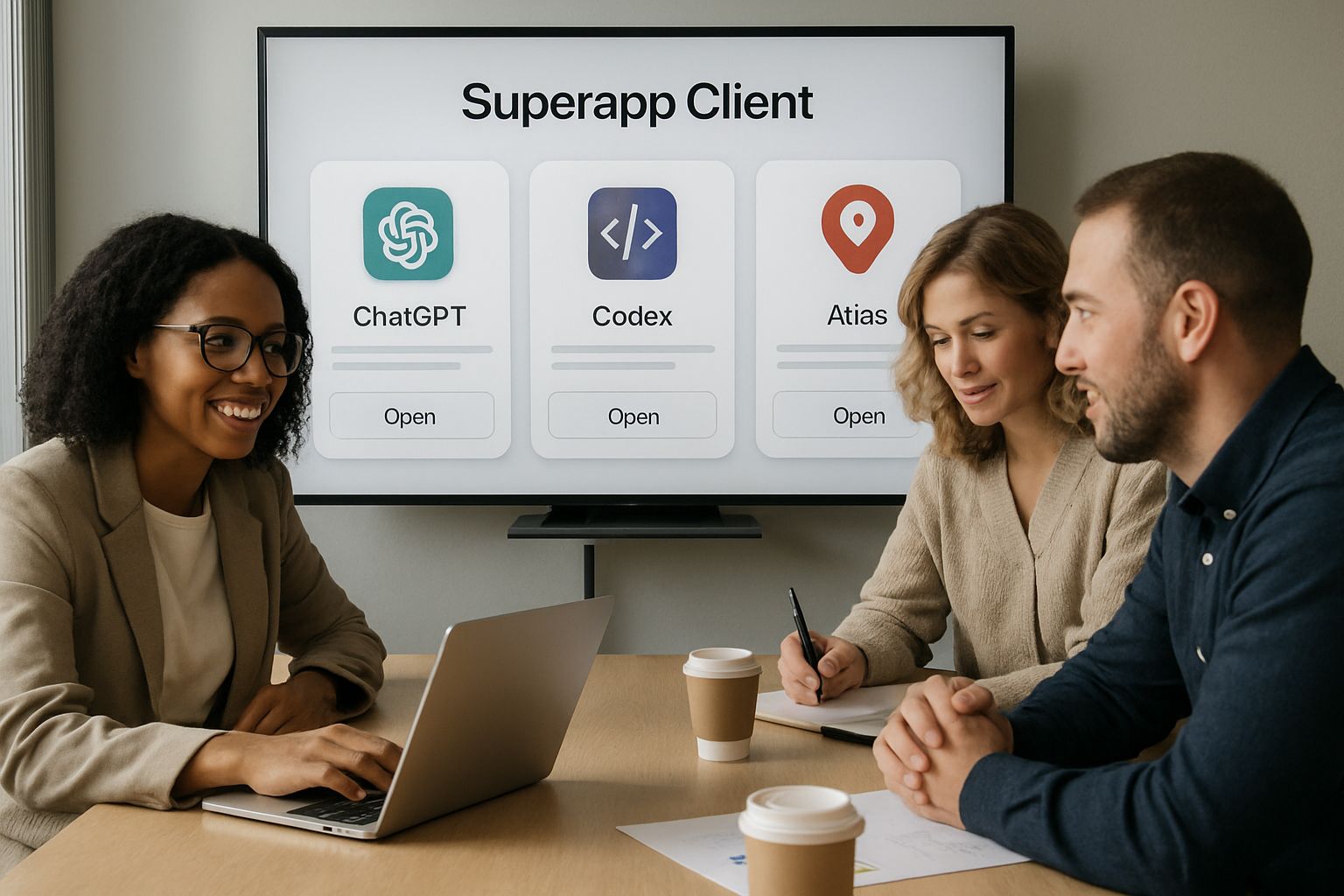
Rumors of a unified Superapp Client from OpenAI dominated headlines this week. Multiple reports cite an internal memo describing a single desktop app that merges ChatGPT, Codex, and Atlas. Fidji Simo, head of applications, reportedly drives the effort with support from Greg Brockman. OpenAI has declined to publish a launch date, yet investors and users watch closely.
Meanwhile, competitor Anthropic pushes agentic features onto the desktop, raising strategic pressure. Consequently, analysts frame the rumored consolidation as a defensive and offensive step. The stakes include 900 million weekly users, 50 million subscribers, and $110 billion in fresh capital. This article unpacks the strategy, competitive context, benefits, and risks surrounding the anticipated Superapp Client launch.
Drivers Behind Strategic Pivot
OpenAI leadership signaled frustration with product sprawl across separate apps. Therefore, Simo argued for a decisive merger that simplifies engineering focus. Her memo, leaked to the Wall Street Journal, urges teams to double down on Codex and core chat. Moreover, she warned against distraction from peripheral experiments.
Such clarity echoes Sam Altman’s February blog emphasizing scalable infrastructure. Consequently, the unified Superapp Client aligns investment with user demand. A single codebase should reduce duplicated staffing and expedite feature rollout. In contrast, past fragmentation forced teams to maintain parallel authentication, billing, and update pipelines.
These operational savings underpin the pivot. Leadership wants speed, focus, and cost discipline. These drivers justify consolidation; however, competitive forces further intensify the need, as the next section explains.
Competitive Landscape Pressures Rise
Anthropic’s Claude Cowork debuted agentic desktop workflows earlier this quarter. Consequently, enterprise buyers witnessed an alternative path that bypasses browser tabs. Google’s Gemini productivity suite and Microsoft’s Copilot integrations add further urgency. Moreover, analysts at The Information describe a looming platform land grab.
- 900 million weekly ChatGPT users
- 1.6 million weekly code assistant users
- Over 50 million consumer subscribers
- $110 billion new investment commitments
Whichever firm owns the operating layer can capture developer ecosystem revenues. Therefore, OpenAI seeks to install the Superapp Client as that layer before rivals entrench. Codex gives OpenAI a differentiated code generation advantage within such an environment. Meanwhile, the Atlas browser promises research depth and real-time web grounding.
Combining those pieces under one desktop roof undermines Anthropic’s current narrative. Nevertheless, history shows fast followers can still surge if incumbents stumble. Market pressure therefore remains relentless. These forces amplify urgency; consequently, architectural decisions become paramount in the following section.
Unified Product Architecture Overview
The planned Superapp Client will package chat, code, and browsing into a native installer. Developers expect cross-platform parity using Electron or a comparable framework. Furthermore, the design reportedly reserves a sidebar for agentic workflows. Users could allow agents to open local files, create drafts, or run scripts.
Consequently, security sandboxes and permission prompts will become critical. Codex modules may receive privileged access to repositories for on-device analysis. Meanwhile, Atlas integration should inject web citations directly into chat answers. A unified identity layer will manage subscriptions, tokens, and enterprise governance policies.
In contrast, today’s separate login flows create redundant recovery steps for administrators. The architecture also streamlines plugin distribution through a single marketplace. However, migrating existing plugins without breaking dependencies remains delicate. Execution success will hinge on coordinated backend rollouts and client updates.
These design choices promise cohesive power; nevertheless, revenue mechanics demand equal attention next.
Monetization And Ecosystem Stakes
OpenAI already monetizes ChatGPT Plus and Enterprise tiers, yet room for growth remains. Therefore, the Superapp Client could introduce tiered agentic bundles priced by action volume. Analysts expect an internal payments API supporting in-app purchases and third-party revenue sharing. Moreover, a plugin marketplace mirrors Apple’s model and deepens lock-in.
Codex subscription upsells may target professional developers seeking private repository inference. Meanwhile, Atlas could surface sponsored research links, creating advertising inventory. OpenAI’s $730 billion valuation assumes such monetization vectors materialize. Consequently, investors view the client as a necessary revenue accelerator, not a convenience feature.
However, platform partners like Apple may demand significant fees for in-app transactions. Regulators could also scrutinize bundling that resembles an anti-competitive merger of services. These financial stakes heighten external tension; consequently, operational risks grow, as the next part explores.
Risks And Open Questions
Any agentic client introduces expanded security and privacy attack surfaces. Furthermore, history shows early releases often expose unsafe file permissions. State attorneys general already monitor chatbot harms and could intensify oversight. Consequently, OpenAI must architect robust sandboxing and granular consent flows.
Desktop distribution also raises patch management demands compared with cloud-only offerings. Moreover, migrating 900 million weekly users without data loss remains daunting. A failed migration would erode trust built through ChatGPT’s rapid ascent. In contrast, a seamless rollout could establish a benchmark for AI software engineering.
Governance questions also linger around enterprise audit trails and data residency. Nevertheless, OpenAI can leverage fresh capital to hire compliance experts quickly. These risks remain front-of-mind; therefore, enterprises seek clarity, explored next.
Key Implications For Enterprises
Large organizations already rely on ChatGPT for code reviews, drafting, and research. A consolidated Superapp Client could simplify procurement because only one installer needs vetting. Consequently, internal IT might manage fewer update cycles and license agreements. Atlas driven citations would help audit knowledge sources for regulated teams.
Codex automation may accelerate legacy code modernization yet raises repository privacy concerns. Moreover, integration with existing single sign-on platforms appears planned, easing governance. Nevertheless, enterprises will demand roadmap visibility and service level guarantees. Professionals can enhance readiness through the AI Executive™ certification.
These enterprise requirements shape support models; consequently, OpenAI’s partnerships with AWS and NVIDIA gain importance. Considerable benefits exist, yet leadership alignment decides success. These enterprise themes show opportunity; however, broader market implications deserve a final look.
Conclusion And Future Outlook
OpenAI’s planned Superapp Client reflects a pivot from fragmented tools toward a platform vision. The merger promises smoother desktop experiences, tighter integration of Atlas browsing, and clearer monetization paths. However, execution risks, regulatory scrutiny, and security obligations remain significant hurdles. Consequently, enterprises will watch forthcoming roadmap disclosures before committing core workflows.
Investors meanwhile expect the Superapp Client to unlock new revenue layers and justify OpenAI’s valuation. Nevertheless, final judgment awaits a public beta where real users validate promises. For leaders planning adoption, continued due diligence and professional upskilling around agentic governance stay essential. Forward-looking teams should monitor OpenAI announcements and test the Superapp Client as soon as access opens.


