

AI CERTS
2 hours ago
OpenAI’s Academic AI funding reshapes campus innovation
However, stakeholders also worry that Academic AI partnerships could amplify vendor lock-in and compromise scholarly independence. Furthermore, critics argue transparency around awards, data terms, and evaluation must improve before the expansion proceeds.
Funding Fuels Academic AI
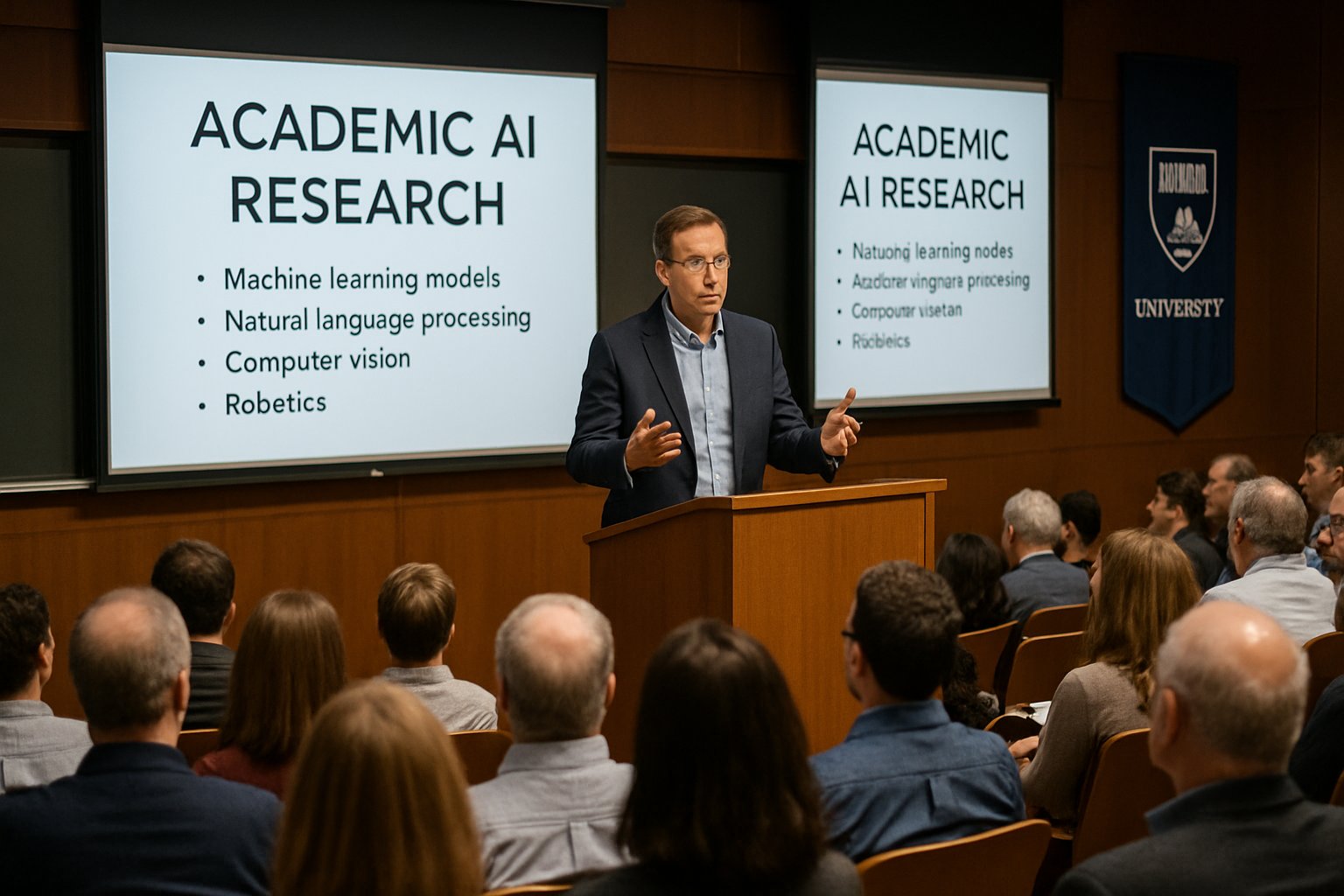
The consortium launched on 4 March 2025 with fifteen founding partners and a clear financial headline. Moreover, OpenAI offered $50 million split among grants, compute credits, and API access. Additionally, Brad Lightcap called the fund a down-payment on decade-long collaboration. Duke, MIT, and Caltech quickly published timetables for spending the first tranche. Nevertheless, most campuses still await precise breakdowns of dollars versus GPU hours.
Consequently, finance officers must plan budgets without knowing exactly how much Academic AI experimentation they can run yearly.
In brief, money flows but details remain opaque. The scale can still guide campus strategy. Therefore, the spotlight now shifts toward what early projects reveal.
Early Projects Illustrate Impact
Universities wasted no time launching pilot efforts across health, heritage, and literacy. Moreover, partner press releases outline concrete deliverables scheduled through 2026.
- Harvard and Boston Children’s Hospital: rare-disease diagnostics using foundation models.
- Oxford’s Bodleian Library: digitizing fragile manuscripts for multimodal search.
- Texas A&M: Generative AI Literacy initiative inside its Learning Lab program.
- Ohio State: multidisciplinary model testing across energy and agriculture.
Additionally, Caltech is building a physics sandbox that streams simulation results directly into the classroom. Meanwhile, the California State University system focuses on student feedback analytics inside a Learning Lab environment. Consequently, graduate fellows now pair with librarians, clinicians, and engineers on cross-domain prototypes.
These pilots demonstrate how small compute grants can yield discipline-specific breakthroughs. Nevertheless, most projects remain in proposal stages and still need formal Review Board clearance.
Research outcomes will depend on sustained mentoring from OpenAI scientists and robust campus oversight.
Early pilots showcase tangible possibilities. Yet final results hinge on execution quality. Consequently, attention turns toward skill development for students and faculty.
Student Skills And Tools
Campus leaders argue that talent pipelines justify the entire program. Moreover, API credits let students fine-tune models without large personal budgets. In contrast, many faculties still lack training frameworks that translate code demos into enduring Pedagogy.
Consequently, universities like Georgia are standing up micro-courses inside a virtual Learning Lab to teach prompt engineering, auditing, and safety testing. Moreover, program directors expect enrolment to double once assessment frameworks stabilize.
Professionals can enhance their expertise with the AI Educator™ certification, which aligns with course objectives.
Furthermore, administrators see Academic AI literacies as future accreditation criteria. Pedagogy experts, however, caution that tool-centric lessons must sit inside critical thinking modules, otherwise students learn shortcuts not principles.
Students gain hands-on exposure, yet instructional design must evolve. Balanced Pedagogy keeps automation from eclipsing reasoning. Subsequently, governance issues demand equal scrutiny.
Governance And Ethics Risks
Independent analysts question whether a single vendor’s stack can define Academic AI standards responsibly. Moreover, TechCrunch warned that OpenAI “isn’t a neutral party” and might nudge campus procurement.
In contrast, university counsel offices negotiate clauses covering data ownership, reproducibility, and publication rights. Nevertheless, few agreements are yet public, limiting external Research oversight.
Consequently, critics push for open board minutes, third-party audits, and sunset clauses on proprietary models. Equity concerns surface as well. Meanwhile, policy groups draft model clauses to defend academic freedom within licensing deals.
Vendor influence and opacity threaten trust. Shared standards and disclosures can mitigate risk. Therefore, instruction debates expand beyond classrooms into policy arenas.
Evolving Classroom Pedagogy Models
Faculty coalitions across CSU and Oxford prototype flipped seminars where generative agents assist rather than lecture. Moreover, instructors embed reflective journals that document every model interaction.
Pedagogy scholars argue such transparency lets students critique system outputs alongside human feedback. However, reliable rubrics remain under development, and assessment committees want empirical validation.
Learning Lab software logs prompts, errors, and revisions, giving educators granular insight into cognitive processes. Moreover, semester reviews will publish anonymized prompt logs for community scrutiny.
Academic AI scenarios thus become daily case studies, turning theoretical ethics into lived classroom practice.
Experimental teaching models cultivate adaptability and critique. Yet they demand new workload allowances and policy support. Consequently, attention shifts to metrics and future cohorts.
Future Cohorts And Metrics
OpenAI promises a second cohort during 2026, though guidelines remain unpublished. Additionally, partners seek clarity on success indicators spanning access, diversity, and scholarly output.
Therefore, consortia planners draft dashboards tracking compute hours, joint publications, and student placement rates. Moreover, several campuses appoint Academic AI liaisons to coordinate data collection and public reports.
Research councils may require standardized disclosures before releasing complementary grants, aligning funding streams and avoiding duplication. Subsequently, pilot dashboards will feed aggregated insights into open repositories.
Nevertheless, final impact will depend on sustained alignment between technology capabilities and Pedagogy evolution.
Clear metrics ensure accountability and trust. Timely publication of dashboards can demonstrate real value. Therefore, stakeholders now look to next steps and practical takeaways.
In summary, OpenAI’s $50 million strategy has repositioned universities at the forefront of Academic AI exploration. Moreover, early pilots highlight tangible health, heritage, and literacy wins, while governance debates remind leaders to safeguard independence. Pedagogy must mature so tools support reasoning, not replace it. Clear metrics and transparent agreements can balance opportunity with risk. Consequently, decision makers should request detailed grant guidelines, publish progress dashboards, and invest in faculty development. Meanwhile, interested educators can validate their expertise through the linked certification and join a growing community shaping responsible Academic AI adoption.


