

AI CERTs
3 hours ago
OpenAI vs Anthropic: Enterprise Turf War Reaches Private Equity
Private equity giants are suddenly vying for prime access to OpenAI's enterprise toolset. However, the negotiations are about more than model licenses. They spotlight a high-stakes Enterprise Turf War between OpenAI and rival Anthropic. Furthermore, multiple reports suggest OpenAI is offering deal sweeteners to lure buyout firms. Consequently, private investors could gain early model access plus preferred equity style economics. The unusual structure attempts to accelerate corporate deployments while clawing back enterprise market share. Moreover, Bloomberg sources peg the prospective joint venture at a $10 billion pre-money valuation. That scale, combined with aggressive terms, has sharpened scrutiny across the finance community. This article unpacks the latest facts, strategic context, and open questions driving the contest. Meanwhile, readers will discover how Funding flows, Returns expectations, and implementation Strategy intersect in this fast-moving landscape. Consequently, the Enterprise Turf War narrative shapes every negotiation detail.
OpenAI Courts Private Equity
OpenAI opened formal talks with TPG, Brookfield, Bain Capital, and Advent in mid-March. However, coverage indicates other firms are also circling the proposal. Fidji Simo, who leads applications, described the potential vehicle as an implementation arm on social media. Moreover, Axios reporting shows the joint venture could receive up to $4 billion in Funding from participating sponsors. Those sponsors would receive preferred equity inside the new entity and early access to forthcoming models. Consequently, portfolio companies could integrate agents, copilots, and custom LLMs faster than competitors. This accelerated timeline represents a direct strike in the ongoing Enterprise Turf War.
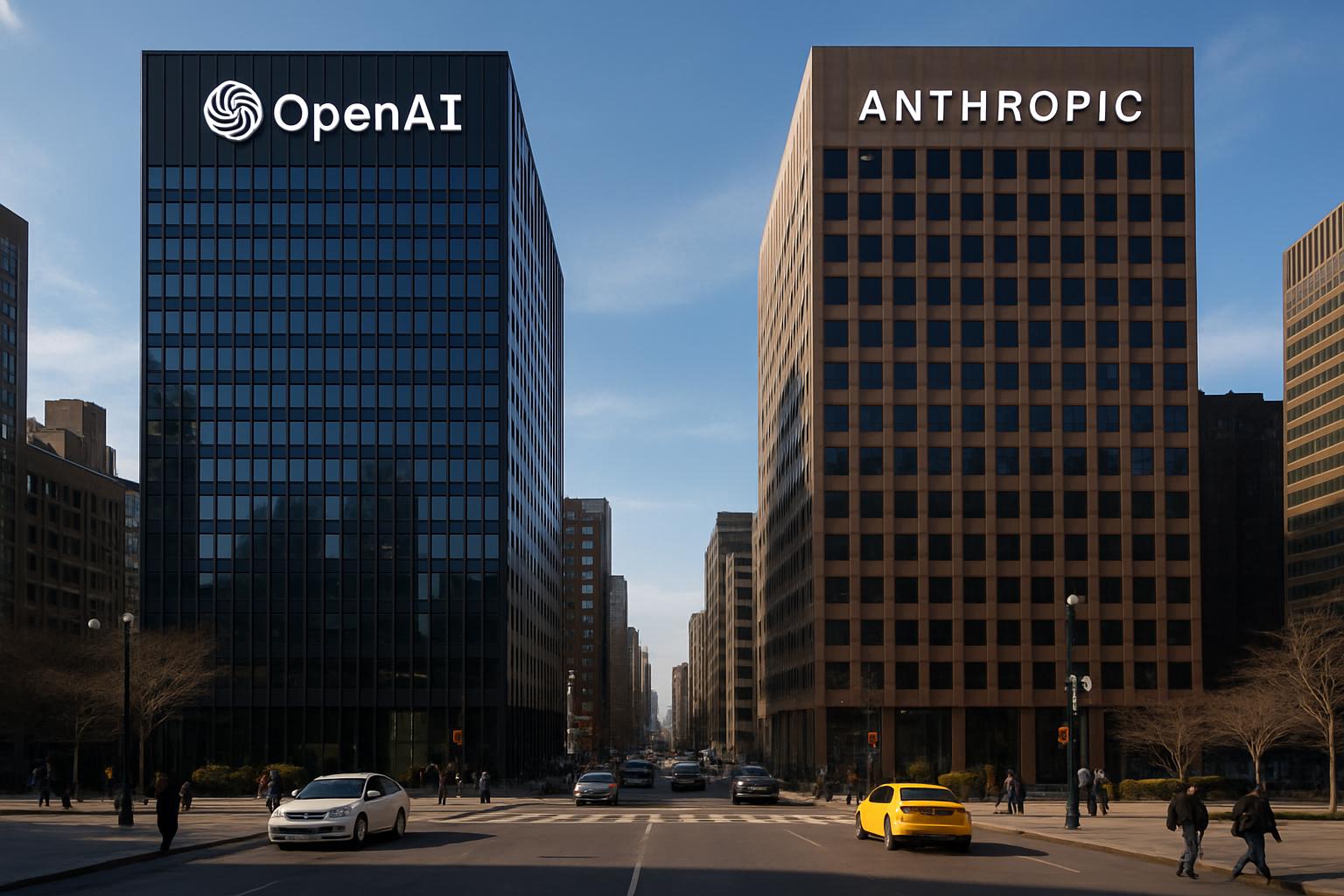
Competitive Framing Intensifies Rapidly
Competitive posturing defines the dialogue between OpenAI and its main rival. In contrast, Anthropic has pursued separate alliances with Blackstone, Hellman & Friedman, and Permira. TechCrunch data reveals Anthropic captured 40% enterprise LLM share by late 2025.
- $10 billion pre-money JV valuation (Bloomberg)
- $4 billion targeted PE capital contribution
- 40% 2025 enterprise LLM share held by leading rival
- 27% 2025 share held by OpenAI
Meanwhile, Menlo Ventures estimates OpenAI's share fell to 27% during that period. Therefore, OpenAI's PE play is a counteroffensive designed to reclaim deployments and revenue. The inflection also broadens the Enterprise Turf War beyond technical performance toward distribution control. Moreover, financial sweeteners such as preferred economics directly target private equity decision criteria. Analysts warn that Anthropic may respond with parallel incentives, turning price into a moving target. Consequently, negotiations could escalate quickly, risking untested precedent for AI vendor valuations. Consequently, private equity deal teams perceive immediate scale combined with defensible economics. Furthermore, early access to agentic "Frontier" modules could unlock novel operating models within traditional industries.
Deal Structure Essentials Explained
Reports describe a majority-owned subsidiary or joint venture with a $10 billion pre-money valuation. OpenAI would contribute intellectual property and forward-deployed engineers. Meanwhile, PE firms would inject capital and guarantee minimum consumption across their portfolio holdings. Preferred equity would sit above common, offering downside protection before profit splits. However, the widely cited 17.5% figure remains unverified as of press time. Therefore, editors should confirm exact language before quoting guaranteed Returns. Consequently, expectations must reflect typical preferred hurdles rather than debt-like coupons. Such nuances shape investor appetite and affect eventual distributions. These mechanics, though technical, are central in the Enterprise Turf War narrative. Legal advisors emphasize that preferred equity differs materially from debt obligations. Therefore, payout timing depends on distributable cash rather than fixed coupons. Nevertheless, headline percentages attract attention, especially when market volatility persists.
Economics And Potential Returns
Private equity buyers evaluate every project through an internal-rate-of-return lens. Therefore, OpenAI's sweeteners must outrun baseline portfolio targets near mid-teens. Rothschild & Co notes that Funding costs for late-stage AI deals have climbed over the past year. Moreover, compute expenses continue rising, pressuring gross margins. In contrast, early model access could accelerate enterprise upgrades and generate faster payback periods. Subsequently, PE firms may secure revenue uplifts through operational efficiencies across dozens of companies. Nevertheless, analysts caution that promised Returns depend on sustained adoption rather than one-off pilots. Consequently, Alignment between vendor incentives and long-term Strategy becomes crucial. These financial variables frame investor decisions and could tilt the Enterprise Turf War outcome. Industry CFOs model scenarios where usage based pricing generates incremental cash beyond pref obligations. However, those projections rely on continuous model upgrades sustaining performance leadership.
Risks And Caution Flags
Every JV carries execution risk, and AI deployments multiply the variables. However, lock-in concerns loom large for portfolio managers worried about exit multiples. Regulators also scrutinize data flows, export controls, and algorithmic bias. Furthermore, preferred equity may subordinate operating cash needed for reinvestment inside smaller businesses. In contrast, advocates argue the Strategy reduces technical debt and modernizes workflows quickly. Nevertheless, failed pilots could erode investor confidence and stall follow-on Funding. Consequently, due diligence must encompass vendor roadmaps, cost elasticity, and security protocols. Moreover, cyber insurance premiums rise when vendors control critical workflows, adding indirect costs. These checkpoints provide guardrails while the Enterprise Turf War accelerates.
Strategic Outlook For Stakeholders
Boards overseeing PE portfolios crave clarity on roadmap timing. Therefore, contract language should link milestone deliveries with capital calls. Moreover, OpenAI could bundle consulting hours, lowering friction for initial integrations. Subsequently, Anthropic may counter with similar offers to preserve share. Consequently, procurement teams must compare total cost of ownership, not headline discounts alone. Professionals can enhance their expertise with the AI Foundation Certification to evaluate such deals rigorously. These capability upgrades strengthen negotiation leverage amid the Enterprise Turf War. Additionally, open telemetry standards could mitigate fear of vendor lock-in while preserving governance over sensitive data.
Path Forward And Verification
Several material uncertainties still cloud the proposal. Most urgent, journalists must verify the rumored 17.5% preferred Returns figure directly with Reuters. Additionally, OpenAI and each named PE firm should confirm term-sheet status on record. Meanwhile, legal experts can dissect exclusivity clauses and governance rights. Consequently, transparent disclosures will help investors project Scenario-based Strategy outcomes. These follow-ups should close documentation gaps and steady nerves inside the unfolding Enterprise Turf War. Independent analysts advise comparing terms to historical software implementation funds launched after the 2008 crisis. In contrast, short deployment cycles today compress learning curves, potentially accelerating cash distributions. Subsequently, valuation resets could occur faster, amplifying both upside and downside.
Strategic Outlook For Stakeholders
Boards overseeing PE portfolios crave clarity on roadmap timing. Therefore, contract language should link milestone deliveries with capital calls. Moreover, OpenAI could bundle consulting hours, lowering friction for initial integrations. Subsequently, Anthropic may counter with similar offers to preserve share. Consequently, procurement teams must compare total cost of ownership, not headline discounts alone. Professionals can enhance their expertise with the AI Foundation Certification to evaluate such deals rigorously. These capability upgrades strengthen negotiation leverage amid the Enterprise Turf War. Additionally, open telemetry standards could mitigate fear of vendor lock-in while preserving governance over sensitive data.
Conclusion And Next Steps
OpenAI's plan to merge capital, engineering, and distribution could redefine enterprise AI adoption pace. However, execution hinges on investor patience, verifiable economics, and governance balance. Moreover, Anthropic stands ready with its own offers, ensuring the Enterprise Turf War continues with intensity. Consequently, professionals evaluating Funding terms and expected Returns must integrate risk-adjusted Strategy thinking. Readers seeking deeper analytical skills should pursue the AI Foundation Certification and stay ahead of rapid market shifts. These insights guard against surprises and position teams to win as enterprise AI financing evolves. Ultimately, vigilance and informed negotiation remain decisive advantages. Stay informed as disclosures emerge.


