

AI CERTS
3 hours ago
OpenAI Protest sparks industry debate on consumer AI boycotts
OpenAI Protest Origins Overview
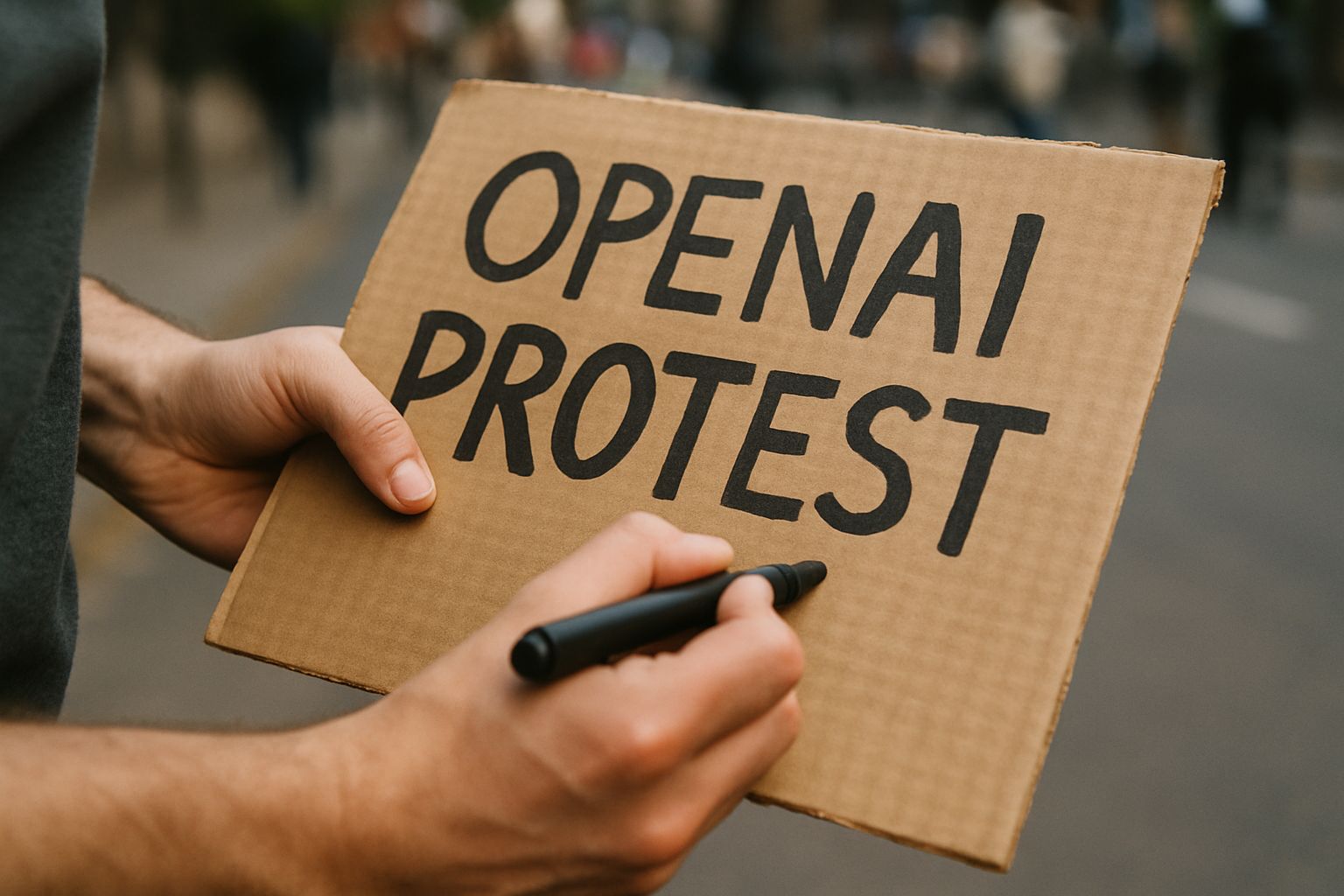
QuitGPT emerged online in early February 2026. Organizers built a pledge site, social channels, and Discord groups. Furthermore, they urged paid subscribers to cancel and delete the ChatGPT app. Supporters located as far as San Francisco staged a small rally outside OpenAI’s headquarters, highlighting local visibility. In contrast, the campaign’s leadership remains mostly anonymous, mirroring decentralized climate strikes. The OpenAI Protest message frames consumer payments as tacit approval for controversial executive decisions.
These origin stories reveal a playbook borrowed from prior tech consumer actions. Nevertheless, true momentum depends on sustained sign-ups and visible churn. These background elements set the stage. Consequently, readers can judge later metrics in context.
Political Funding Flashpoint Details
The single largest spark involved a $25 million donation by president Greg Brockman to MAGA Inc. Bloomberg and FEC filings confirmed the transfer. Additionally, WIRED quoted Brockman defending the gift as personal support for “AI-friendly” policies. Meanwhile, internal OpenAI researchers reportedly felt uneasy. Those mixed reactions intensified the boycott narrative.
Political giving by executives is legal. Nevertheless, large sums linked to polarizing campaigns attract scrutiny. Therefore, QuitGPT organizers framed the contribution as misaligned with community ethics. OpenAI has not issued a formal reply addressing the movement directly. Two crucial points surface here. Firstly, corporate funds were not used. Secondly, public perception rarely distinguishes personal from corporate when brands revolve around founders.
The donation controversy fuels passion. However, political anger alone seldom drives subscription churn at scale. These limitations push activists to broaden their case. Subsequently, military contracts entered headlines.
Military Surveillance Deal Concerns
Reports of AI vendors pitching the Pentagon reignited older debates about lethal autonomy and privacy. Moreover, QuitGPT statements referenced rumored OpenAI discussions with Immigration and Customs Enforcement. Although direct contracts remain unverified, the very possibility alarms civil-liberties advocates. In contrast, OpenAI leaders argue that responsible AI for defense can reduce harm.
Anthropic’s public refusal of a Pentagon bid created a sharp contrast. Consequently, protesters highlighted competitor stances to show feasible alternatives. The OpenAI Protest again positioned itself as a values alignment tool. Furthermore, app-store tracking suggested minor spikes for Claude and Google Gemini during late February.
Defense implications broaden stakeholder anxiety beyond pure politics. Yet, reliable contract evidence is scarce. These uncertainties complicate impact assessment. Nevertheless, perception still drives headlines. Therefore, organizers continue amplifying surveillance fears.
Measuring Campaign Momentum Claims
Organizer dashboards list lofty figures. Early stories mentioned 17,000 pledges. Subsequently, some media repeated claims of 700,000 sign-ups. One influencer even cited 1.5 million supporters. However, no independent auditor has verified these totals. Tom’s Guide cautioned that social-media reach can overstate real cancellations.
- ChatGPT weekly users: 800–900 million
- Estimated paid subscribers: 15–35 million
- Largest QuitGPT claim: 700k–1.5 million pledges
Consequently, even the highest organizer number equals under 10 % of paid users. Moreover, pledge counts include many free-tier users whose departure yields no revenue impact. Therefore, analysts advise focusing on confirmed churn, not clicks on a form.
Momentum stories energize supporters. Nevertheless, unverified metrics risk backlash if overstated. These measurement gaps feed skepticism. Consequently, attention shifts to the bottom line.
Financial Impact Reality Check
OpenAI earns from enterprise APIs, cloud partnerships, and consumer tiers. Therefore, consumer churn must persist to dent total revenue. The Information estimated 35 million paying users by mid-2025. Moreover, subscriptions renew monthly, allowing rapid re-engagement if outrage fades.
Industry analysts note that 500,000 lost subscribers could cut annual revenue by roughly $120 million. However, that still equals a fraction of projected multibillion-dollar 2026 turnover. Meanwhile, brand risk remains harder to quantify. Ethics debates may influence enterprise procurement committees, not just individuals.
Professionals can strengthen market credibility with the AI Sales Strategist™ certification. Such credentials demonstrate understanding of adoption dynamics amid public pressure.
Revenue math shows limits for a symbolic boycott. Nevertheless, repeated negative cycles can slow growth. These realities refine boardroom discussions. Subsequently, executives monitor sentiment while balancing policy stances.
Competitive Market Ripple Effects
Every protest wave sends users searching for alternatives. App-store analytics recorded download surges for Anthropic, Gemini, and smaller privacy-focused bots. Furthermore, some open-source projects leveraged social buzz to secure funding. In contrast, data indicate most switchers keep multiple chatbots installed, hedging bets.
For rivals, the OpenAI Protest offers low-cost marketing. However, retention requires product parity. Moreover, OpenAI continues rapid model upgrades. Consequently, switching friction may pull users back once tempers cool.
Competitor gains spotlight the broader San Francisco AI ecosystem, where talent flows freely among labs. These crosscurrents complicate long-term share forecasts. Nevertheless, episodic churn gives challengers valuable user feedback loops. Consequently, investors watch these metrics closely.
Strategic Takeaways And Forward
Several lessons surface from this saga. Firstly, executive political donations carry brand risk in polarized times. Secondly, transparency around Pentagon or law-enforcement work shapes public trust. Thirdly, metrics must withstand scrutiny to sustain activist credibility.
For enterprises evaluating vendors, ethical posture now joins price and performance. Moreover, communications teams should prepare rapid responses when leadership actions surprise consumers. Consequently, proactive disclosure beats defensive statements.
These insights underscore a maturing AI market. Nevertheless, open questions about verified subscriber loss remain. Therefore, upcoming quarterly disclosures will matter. Meanwhile, QuitGPT promises further rallies in San Francisco. Stakeholders should monitor both numbers and narratives.
Section Summary
The protest illustrates reputational volatility in AI. However, hard data on revenue damage lack clarity. These uncertainties demand vigilant observation. Consequently, strategic planning becomes essential.
Looking Ahead Transition
Future analysis will track official churn disclosures. Additionally, researchers will verify migration patterns using independent app analytics.
Conclusion
The OpenAI Protest highlights how political giving, defense debates, and consumer sentiment intersect in today’s AI economy. Moreover, unverified numbers blur actual impact, while perception still sways public discourse. Consequently, leaders must balance innovation speed with transparent ethics commitments and stakeholder engagement. Nevertheless, skilled professionals can guide organizations through such complexity.
Enhance your expertise now. Consequently, secure career advantage by exploring advanced credentials like the linked AI Sales Strategist™ program. Act today to steer responsible AI adoption.


