

AI CERTs
2 hours ago
OpenAI Funding Surge: Nvidia’s Billion-Dollar Bet Analyzed
September 2025 delivered a headline that rattled boardrooms worldwide. However, the shock did not stem solely from the dollar amount. OpenAI and Nvidia unveiled a letter of intent promising up to $100 billion for next-gen compute capacity. The plan also called for ten gigawatts of systems, dwarfing many national data center footprints. Consequently, investors proclaimed an OpenAI Funding Surge likely to redraw the AI supply chain. Yet the announcement remained a non-binding outline, not a definitive contract. Moreover, subsequent filings exposed significant execution risk and shifting financial contours. This article unpacks the evolving deal, its infrastructure hurdles, and the strategic calculus shaping global AI dominance.
Deal Origins And Scale
Analysts trace the proposal back to conversations between Sam Altman and Jensen Huang during mid-2025. They sought enough compute to keep frontier models advancing despite soaring GPU shortages. Therefore, the pair drafted a letter of intent outlining staged capital and hardware deployments.
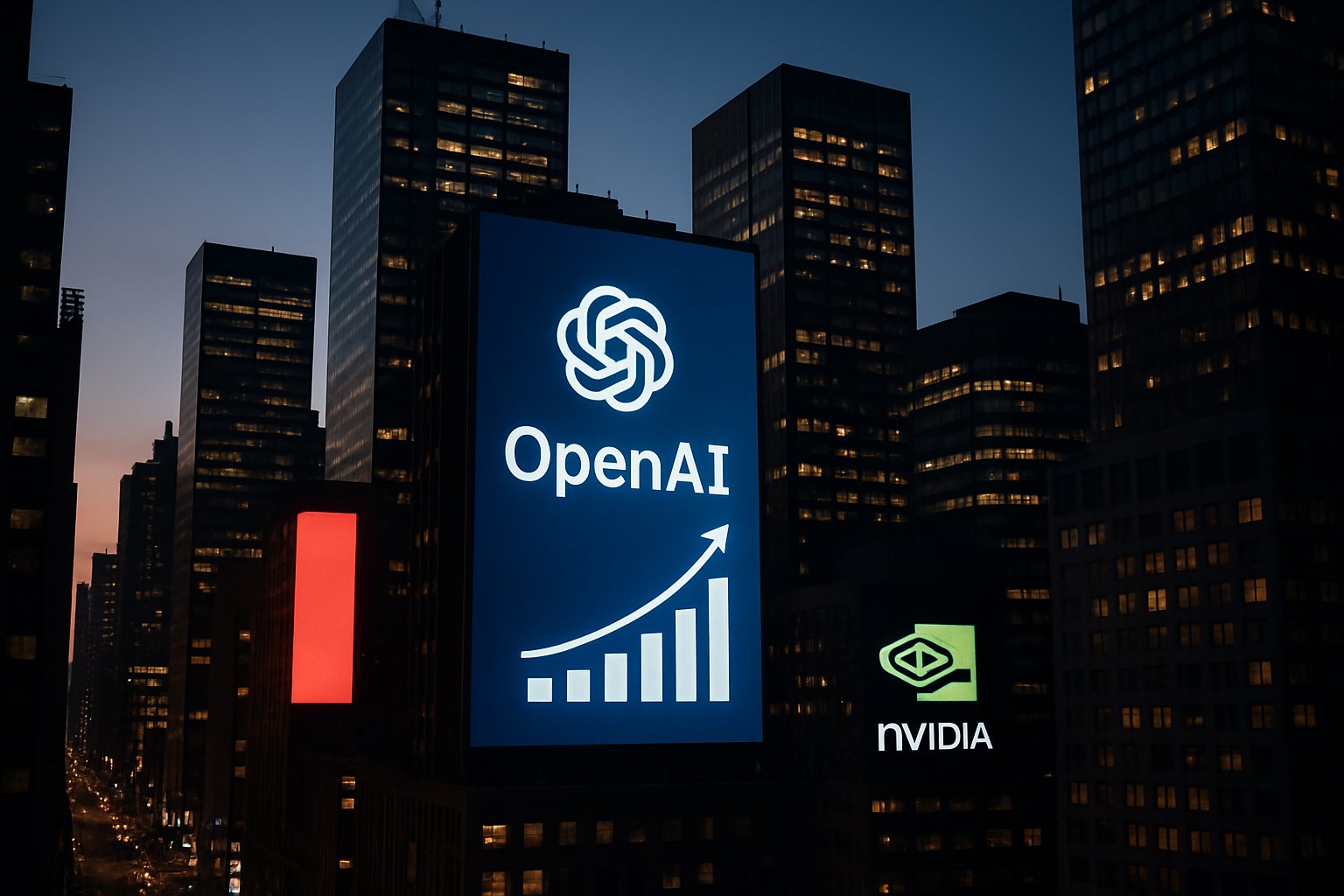
The LOI pledged up to $100 billion as each gigawatt of capacity reached production. This headline became shorthand for an OpenAI Funding Surge that could eclipse previous private tech raises. In contrast, Nvidia confirmed only an indicative framework, not an executed transfer of money or shares.
Experts note that ten gigawatts equals roughly ten large nuclear reactors worth of electrical load. Consequently, scale rivals national supercomputing programs and raises serious grid feasibility questions. These scale metrics underpin the conversation that follows.
The LOI promised capital and power beyond past technology projects. However, the non-binding status sets the stage for mounting uncertainty ahead.
Moving From LOI Uncertainty
December 2025 introduced reality checks. Colette Kress told analysts, “We still haven’t completed a definitive agreement.” Therefore, markets recalibrated expectations around timing, valuation, and structure.
Reuters later reported talks shifting toward a broader OpenAI Funding Surge with multiple backers. Reports suggested the chipmaker might supply equity between $20 billion and $30 billion, far below the LOI ceiling. Meanwhile, SoftBank and Amazon allegedly explored parallel contributions. Unidentified sources highlighted that each prospective investment would unlock corresponding compute tranches.
Consequently, observers debated whether staged lease financing or straight equity offered better risk allocation. Nevertheless, OpenAI maintained that fresh capital must arrive before first-gigawatt deployment in late 2026.
Investor chatter exposes fluid deal contours and conditional commitments. Next, we examine how financing mechanics could influence returns and governance.
Financing Models Under Debate
Industry veterans distinguish three primary structures under negotiation. First, classic equity where cash changes hands and shares flow to the chipmaker. Second, vendor financing in which hardware is leased, and repayments mirror usage. Third, a hybrid vehicle links equity milestones to confirmed infrastructure orders.
Each route influences reported revenue, margin visibility, and corporate governance. Moreover, regulators might examine circular flows if OpenAI buys GPUs using proceeds from the same supplier. Such scrutiny intensified during recent congressional hearings on AI market dominance.
Proponents argue the arrangement accelerates innovation by guaranteeing access to scarce Blackwell processors. Consequently, they frame it as another OpenAI Funding Surge necessary to keep models competitive. Critics counter that concentrating power with one chipmaker heightens systemic risk and stifles alternative architectures.
Debate over structure underscores that dollars alone will not settle strategic control. However, hardware economics and accounting treatment remain pivotal as we shift to physical constraints.
Power And Infrastructure Hurdles
Ten gigawatts equals the average consumption of small countries. Moreover, siting that capacity demands land, transformers, and cooling towers across several continents. Business Insider calculated that even aggressive buildouts rarely exceed one gigawatt annually per developer.
Therefore, the timeline tied to the OpenAI Funding Surge seems ambitious without parallel energy partnerships. Grid operators warn of multiyear permitting cycles, especially when transmission upgrades cross state lines. In contrast, renewable developers highlight storage and microgrid advances that could mitigate delays.
Nvidia signaled willingness to co-invest in on-site generation, yet formal commitments remain unpublished. Consequently, any capital deployment schedule must synchronize with regional utility approvals.
Infrastructure physics adds a non-negotiable gate to the financial plan. Next, we explore governance questions emerging from supplier capital entwined with customer strategy.
Governance And Circularity Risks
Corporate governance experts flag potential conflicts when a supplier also becomes a major shareholder. Furthermore, accounting rules require fair-value measurement of any reciprocal purchase obligations. If OpenAI were obligated to source GPUs from Nvidia, minority investors could challenge pricing fairness.
Meanwhile, antitrust attorneys monitor whether such ties reinforce chipmaker dominance over critical AI infrastructure. Reuters noted regulators have already queried similar vertical arrangements in cloud computing deals. Nevertheless, proponents liken the model to historical automotive keiretsu structures that accelerated postwar industrial expansion. They argue parallel oversight bodies kept those ecosystems competitive despite intertwined capital flows.
- Related-party revenue recognition risk
- Board representation and voting rights dilution
- Disclosure obligations for staged investments
These issues surface whenever an OpenAI Funding Surge invites supplier equity. However, sound contracts and independent audits can temper concerns moving forward. Our final section outlines future milestones that will clarify open questions.
Competitive Landscape And Dominance
Microsoft, Amazon, AMD, and Oracle are courting OpenAI with alternative compute proposals. Consequently, each suitor hopes to dilute Nvidia influence and carve recurring revenue streams. AMD even pledged six gigawatts of rival GPUs, signaling supply diversity. In contrast, hyperscalers frame multicloud routing as essential for resilience and cost optimization.
Yet the sheer scale of the OpenAI Funding Surge could lock purchasing power for years. Furthermore, analysts predict that whichever vendor secures the surge gains unprecedented market dominance. Investors also watch secondary impacts on the public cloud balance of supply and pricing. Therefore, smaller AI startups may confront higher costs if capacity gravitates toward one flagship client. Such spillover effects explain why regulators scrutinize every proposed investment.
Competitive dynamics remain fluid and contingent on contract execution. Finally, a concrete timeline for GPUs, dollars, and power will decide which strategy prevails. Observers note that a delayed OpenAI Funding Surge could open windows for alternative architectures.
Conclusion And Next Steps
The coming months will reveal whether the OpenAI Funding Surge becomes tangible capital or remains marketing theater. Moreover, a finalized investment agreement would clarify governance, timelines, and power procurement. If deadlines slip, rival chipmaker consortia may seize strategic ground. Consequently, policy makers and investors should monitor utility filings as closely as term sheets. Professionals can strengthen expertise through the AI Cloud Strategist™ certification. In contrast, ignoring skills development risks falling behind as capital and compute reorder value chains. Stay tuned for securities filings and grid agreements that will confirm the final scale of this OpenAI Funding Surge.


